
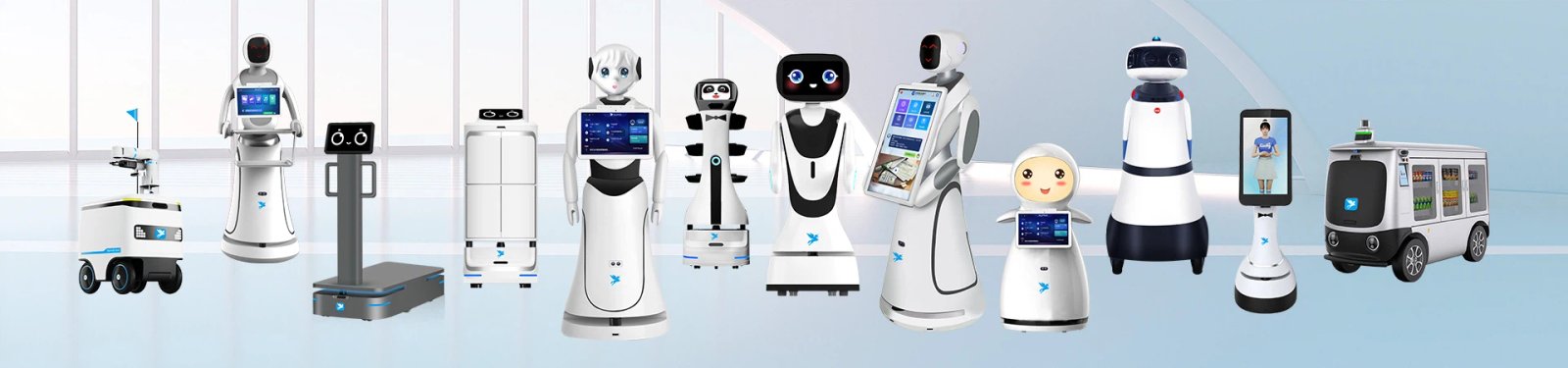
In an era where convenience, efficiency, and contactless service are paramount, intelligent delivery robots have emerged as a game-changer in last-mile logistics. These autonomous systems streamline the delivery process, reduce human labor, and provide 24/7 service—making them indispensable for e-commerce, hospitality, healthcare, and retail sectors. But how exactly do they work? Below is a detailed, step-by-step breakdown of their operational process, designed to help you understand the technology behind these smart machines and their impact on modern logistics.
1. Order Initiation: The Starting Point of the Journey
In e-commerce or food delivery, a customer might use Uber Eats, Serve Robotics, or a retailer’s app to order groceries, meals, or packages. In hospitality, a hotel guest could request amenities (towels, snacks) through the hotel’s app or front desk.
In healthcare, a nurse would log a medication or supply order into the hospital’s electronic health record (EHR) system.
The order details—including destination (e.g., customer’s address, hotel room number, hospital ward), item type (e.g., food, medicine, package), and delivery instructions (e.g., contactless delivery)—are automatically transmitted to the robot’s central dispatch system.
2. Dispatch and Loading: Preparing for the Mission
Key Steps:
Staff or Automated Loading: A human worker places the items into the robot’s secure, compartmentalized cargo hold. For example: In food delivery, a restaurant staff member loads hot meals into a temperature-controlled compartment. In healthcare, a pharmacist loads medication into a locked drawer labeled with the patient’s name. Destination Programming: The staff sets the robot’s destination using a touchscreen interface or the central system. The robot cross-references this with its internal map to plan the optimal route. 3. Route Planning: Navigating with Precision
a. Sensor Fusion for Mapping
Lidar (Light Detection and Ranging): Emits laser beams to measure distances to objects, creating a 3D map of the surroundings. Cameras: Capture visual data to identify obstacles (e.g., pedestrians, other robots) and read traffic signs or room numbers.
Ultrasonic Sensors: Detect nearby objects (e.g., walls, furniture) to avoid collisions.
For example, Serve Robotics’ robots use 12 cameras, radar, and lidar to navigate busy city sidewalks, while hospital robots like those from 诺亚® (Noah) rely on lidar and cameras to move through hospital corridors.
b. Real-Time Route Optimization
If a sidewalk is blocked by construction, the robot will reroute to a nearby alley or crosswalk. If a hotel corridor is crowded with guests, the robot will slow down and wait for a clear path.
4. Autonomous Mobility: Moving from Point A to Point B
a. Obstacle Avoidance
Slow down or stop. Calculate a new path around the obstacle. Resume movement once the path is clear.
b. Multi-Floor Navigation (for Indoor Use)
The robot sends a request to the elevator via Wi-Fi or Bluetooth. It waits for the elevator to arrive, then enters and selects the desired floor. Once the elevator stops, the robot exits and continues to the destination.
5. Delivery and Retrieval: The Final Step
A mobile app notification (e.g., Uber Eats, hotel app). A text message or phone call (for contactless delivery).
a. Secure Retrieval
App-Based Unlocking: The recipient scans a QR code or enters a unique code from the app to open the robot’s cargo hold. RFID/NFC Authentication: In healthcare, nurses use RFID cards or fingerprints to unlock the robot’s locked drawers. Voice Command: Some robots (e.g., those used in hotels) respond to voice commands like “Open the compartment.”
b. Confirmation and Feedback
6. Return and Recharging: Preparing for the Next Task
Recharge: The robot automatically docks with a wireless charger to replenish its battery. Most robots have a battery life of 8–12 hours, allowing them to complete multiple deliveries per day. Restock: If needed, staff can reload the robot with more items for the next batch of orders.
Key Technologies Behind the Operational Process
AI and Machine Learning: The robot’s algorithm learns from past deliveries to optimize routes and improve obstacle avoidance. Sensor Fusion: Combining data from lidar, cameras, and ultrasonic sensors creates a comprehensive view of the environment. 5G Connectivity: Enables real-time communication between the robot and the central system, ensuring fast data transfer and updates. Cloud Computing: Stores and analyzes delivery data (e.g., route efficiency, customer feedback) to improve future operations.
Benefits of Intelligent Delivery Robots
Efficiency: They can work 24/7, reducing delivery times and increasing throughput. Cost Savings: Over time, they reduce labor costs associated with hiring and training delivery staff. Contactless Service: Ideal for post-pandemic environments, as they eliminate direct human interaction. Accuracy: They minimize errors (e.g., wrong deliveries) by using automated routing and authentication.