
Stainless-Steel Food-Grade Sanitary Delivery Robots: Revolutionizing Hygienic Logistics
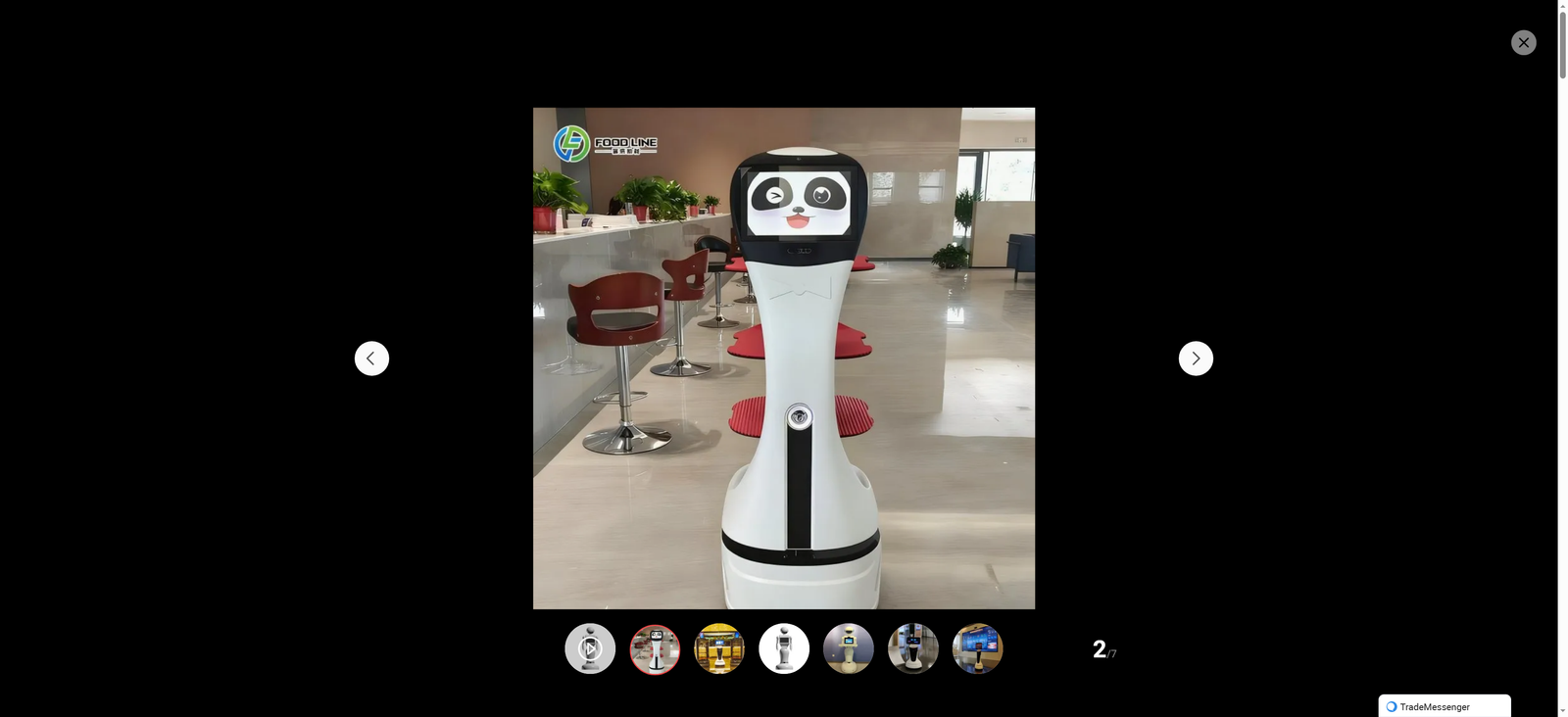
In industries where hygiene and safety are non-negotiable, such as food processing, catering, and healthcare, the demand for efficient, contamination-free material handling solutions has never been higher. Stainless-steel food-grade sanitary delivery robots emerge as a transformative force, integrating the corrosion resistance of stainless steel, the safety of food-grade materials, and the precision of automated delivery to redefine hygienic logistics standards. These robots not only address the strictest sanitation requirements but also boost operational efficiency, marking a new era in intelligent and safe material transportation.
The Core Advantage: Stainless Steel as the Foundation of Sanitation
The adoption of stainless steel is the cornerstone of these robots' hygienic performance, especially 304 stainless steel, a material widely recognized for its food-grade compatibility and environmental resilience. Unlike ordinary metals, 304 stainless steel contains 18% chromium and 8% nickel, forming a dense chromium oxide protective film on its surface that effectively isolates moisture, corrosive substances, and microbial contaminants . This inherent corrosion resistance makes it ideal for high-humidity environments like cold storage facilities, where condensation and cleaning agents could easily rust conventional equipment. Even in extreme temperatures ranging from -40℃ to high washdown temperatures, stainless steel maintains stable mechanical properties, avoiding cold brittleness or structural degradation that could compromise safety .
Beyond corrosion resistance, stainless steel's smooth, non-porous surface is designed for easy cleaning and disinfection. It can withstand high-pressure washing and exposure to alkaline or acidic sanitizers without damage, meeting IP 67 or even IP 69K protection standards . This eliminates hidden corners where bacteria might breed, ensuring compliance with stringent food safety regulations such as China's GB 4806.9-2016, the US FDA, and Germany's LFGB . For food and medical applications, this level of cleanability is non-negotiable, as it directly prevents cross-contamination between materials and equipment.
Food-Grade Compliance: Safeguarding the Integrity of Sensitive Goods
Food-grade certification is more than a label—it is a guarantee that every component of the robot that comes into contact with food or medical supplies is free of harmful substances and meets strict safety standards. Stainless-steel food-grade delivery robots go beyond just using food-grade materials; their entire design prioritizes material safety and contamination prevention. For example, FANUC's DR-3iB/6 Stainless robot uses NSF H1 food-grade lubricants and features secondary oil catch basins with viewing windows to monitor potential leaks, eliminating the risk of lubricant contamination . Its self-draining surfaces and mirror-like finish further ensure that any residues or contaminants are easily washed away, maintaining the purity of the goods being transported.
In food production and catering scenarios, these robots handle a wide range of items, from frozen meats and fresh produce in cold storage to ready-to-eat meals in commercial kitchens. The 304 stainless steel telescopic forks used in AGV robots for cold storage, for instance, can be customized to handle different payloads—from hundreds of kilograms to several tons—and adapt to various packaging types, all while adhering to food-grade safety requirements . In catering settings, they can autonomously deliver food from kitchens to dining areas, reducing human contact and minimizing the risk of contamination from hand contact or improper handling.
Scenario Expansion: From Food Industry to Healthcare and Beyond
While the food industry is a primary application area, stainless-steel food-grade sanitary delivery robots are also making significant inroads into healthcare, where hygiene and precision are equally critical. Medical facilities require strict control over the transportation of drugs, test samples, and medical supplies to prevent cross-infection and ensure the integrity of sensitive materials. These robots, with their stainless steel construction and sanitary design, can navigate busy hospital corridors, delivering supplies between pharmacies, laboratories, and patient wards with high accuracy.
In healthcare settings, compliance with medical standards is paramount. The robots' stainless steel bodies can be easily disinfected with medical-grade sanitizers, reducing the risk of pathogen transmission. They also support multiple authentication methods such as facial recognition and fingerprint scanning, ensuring that only authorized personnel can access sensitive medical supplies . By automating these delivery tasks, hospitals can reduce the time医护人员 spend on non-clinical work—saving 2-3 hours per day on average—and minimize the risk of human error, such as incorrect or delayed deliveries .
Other industries, such as pharmaceuticals and cosmetics, are also adopting these robots to meet their strict hygiene requirements. In pharmaceutical manufacturing, where even minor contamination can render products unusable, stainless-steel robots ensure that raw materials and finished products are transported in a sterile environment. Similarly, in cosmetics production, which requires compliance with food-grade safety standards for certain products, these robots provide a reliable solution for hygienic material handling.
Technological Innovation: Balancing Sanitation, Efficiency, and Flexibility
Modern stainless-steel food-grade sanitary delivery robots are not just hygienic—they are also highly intelligent and flexible, designed to adapt to diverse operational needs. Advanced navigation technologies, such as multi-sensor fusion and visual positioning, enable them to navigate dynamic environments with high precision, avoiding obstacles and ensuring accurate delivery . For example, KUKA's KR DELTA robot uses KUKA.VisionTech and KUKA.PickControl software to identify the position of items on moving conveyor belts, enabling fast and accurate picking and placing with a cycle time as short as 0.5 seconds . This level of speed and precision is crucial for high-volume food production lines, where efficiency directly impacts profitability.
Customization is another key feature of these robots, allowing them to adapt to different场景 and requirements. Manufacturers offer customized solutions for size, payload capacity, and functionality—from lightweight robots for small-batch food delivery to heavy-duty AGVs for cold storage pallet handling . Interface customization ensures seamless integration with existing automation systems, such as AGV control platforms and production line management software, enabling end-to-end automated logistics . Offline programming tools, like KUKA.Sim, allow users to test and optimize robot programs in a 3D simulation environment, reducing downtime and improving operational efficiency .
Conclusion: Shaping the Future of Hygienic Logistics
Stainless-steel food-grade sanitary delivery robots represent a perfect synergy of material science and automation technology, addressing the dual challenges of hygiene and efficiency in critical industries. Their stainless steel construction ensures compliance with the strictest sanitation standards, while their intelligent design and flexibility boost operational productivity and reduce risks. As food safety and healthcare standards continue to rise globally, these robots will play an increasingly important role in ensuring the integrity of sensitive goods, protecting public health, and driving the digital transformation of logistics operations.
From cold storage facilities and food production lines to hospitals and pharmaceutical factories, stainless-steel food-grade sanitary delivery robots are revolutionizing how we transport materials in hygienically sensitive environments. As technology advances, we can expect further innovations—such as enhanced AI navigation, real-time contamination monitoring, and even more compact designs—that will expand their applications and solidify their position as indispensable tools in the future of hygienic logistics.