
Ai-Powered Interactive Food Delivery Robot with Lidar Navigation: Transforming the Future of Catering Services
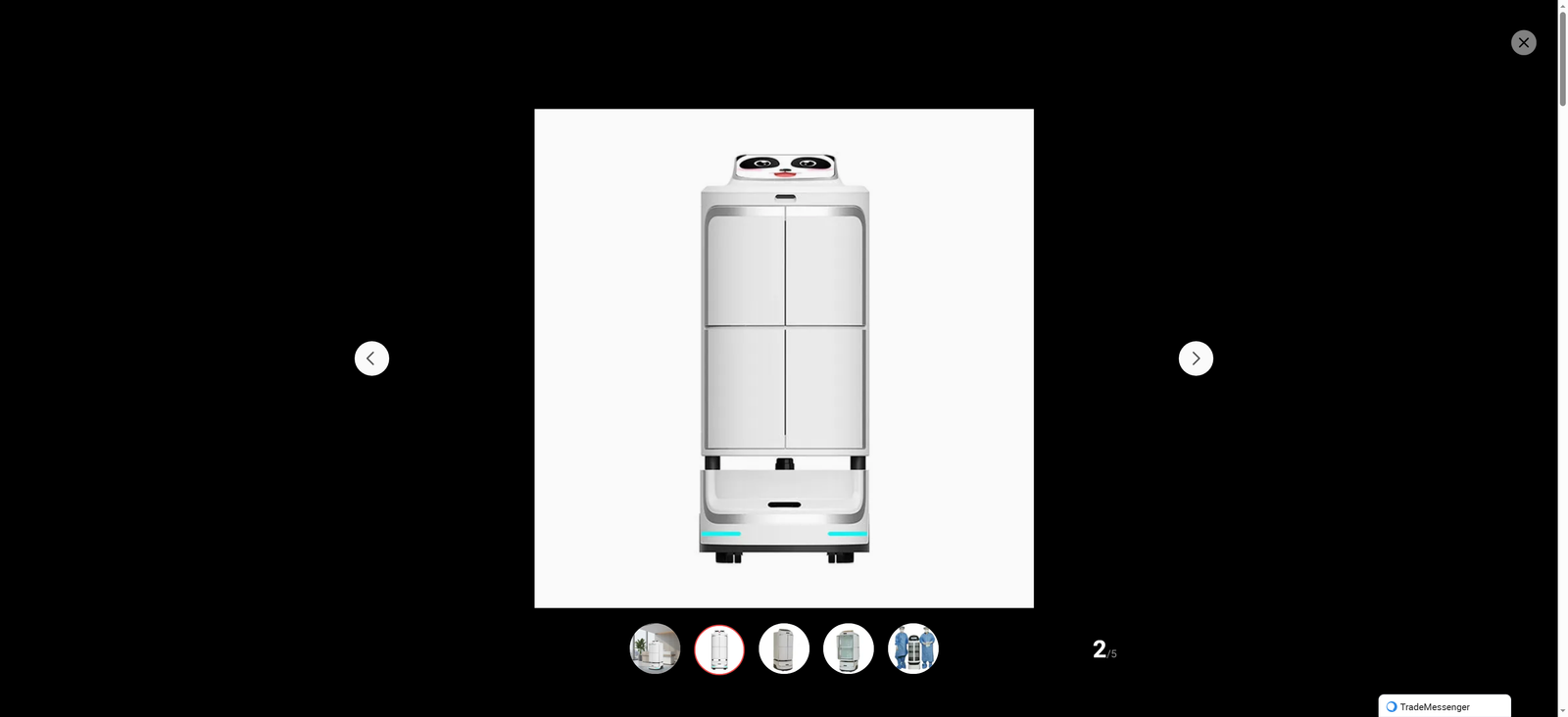
In the era of digital transformation, the catering industry is undergoing a profound revolution driven by advanced technologies. Among these innovations, the AI-powered interactive food delivery robot with LiDAR navigation stands out as a game-changer, seamlessly integrating artificial intelligence, precision navigation, and human-computer interaction to redefine efficiency, convenience, and customer experience. This cutting-edge solution is not just a novelty; it has become a practical tool that addresses long-standing pain points in catering operations, from labor shortages to delivery inefficiencies, while opening up new possibilities for personalized service.
At the core of this robot’s exceptional performance lies LiDAR (Light Detection and Ranging) navigation technology, a critical component that enables autonomous and accurate movement in complex environments. Unlike traditional navigation systems that rely solely on cameras or GPS—often hindered by poor lighting, occlusions, or signal loss—LiDAR works by emitting millions of laser pulses per second to map its surroundings in three dimensions. This active sensing technology allows the robot to create real-time, high-precision environmental models, identify dynamic and static obstacles (such as diners, chairs, or sudden spills), and adjust its path instantly with remarkable accuracy. According to industry data, mainstream food delivery robots equipped with LiDAR and high-definition camera fusion systems achieve an obstacle recognition accuracy of up to 99.2% and a maximum detection distance of 200 meters, ensuring safe and smooth navigation even in crowded restaurants, hotels, or campus canteens .
RoboSense, a leading provider of digital LiDAR technology, has launched products like the Fairy LiDAR, which weighs only 350g and features a 360° circular field of view and 150-meter detection distance—ideal for food delivery robots that require compact design and reliable performance . This LiDAR solution, when combined with advanced algorithms, enables robots to complete 3D mapping, obstacle avoidance, and path planning in real time, even in challenging conditions such as rain, fog, or strong light. For example, the Amy food delivery robot from Suzhou Pangolin Robot uses SLAM LiDAR navigation, paired with infrared and ultrasonic sensors, to achieve indoor positioning accuracy of ±50mm, ensuring that meals are delivered to the correct table without deviation . Such precision not only reduces delivery errors but also minimizes the risk of collisions, protecting both the robot and the surrounding environment.
While LiDAR navigation ensures the robot’s mobility, artificial intelligence empowers it with interactive capabilities that elevate the customer experience from functional to engaging. These AI-powered robots are equipped with multi-modal interaction systems, supporting voice, touch, and even visual communication to interact with diners and staff seamlessly. For instance, Pudu Robotics’ BellaBot features dozens of original facial expressions, light interactions, and haptic feedback, making it more approachable and human-like . When delivering meals, the robot can greet customers by name (via face recognition), introduce dishes, explain special offers, and even respond to simple queries—transforming a routine delivery into a personalized interaction .
In catering operations, this interactivity translates to tangible benefits for both businesses and customers. For restaurant owners, AI-powered robots reduce labor costs significantly: a single robot can work continuously for up to 12 hours, delivering 400-600 plates per day—equivalent to the workload of 2-3 human servers . This is particularly valuable during peak hours, when staff shortages often lead to delayed deliveries and frustrated customers. Additionally, the robot’s built-in touchscreen can display promotional content, videos, or menu updates, serving as a mobile marketing tool to boost exposure for new dishes or special offers . For customers, the interactive experience adds a fun, tech-savvy element to dining, reducing wait times and enhancing overall satisfaction .
The versatility of AI-powered interactive food delivery robots with LiDAR navigation is evident in their wide range of applications across diverse catering scenarios. Beyond traditional restaurants and火锅店, these robots are deployed in hotels, bars, KTVs, campus canteens, and even large theme parks . In hospitals, they deliver meals to patients without human contact, improving hygiene and reducing staff workload; in corporate campuses, they transport meals to offices efficiently; in theme parks, they handle high-volume delivery and dirty dish recovery, boosting table turnover rates .擎朗智能’s T10 robot, which won the 2025 German iF Design Award, has even expanded to 60 countries worldwide, serving multiple industries beyond catering .
As technology continues to advance, the future of AI-powered interactive food delivery robots with LiDAR navigation looks even more promising. Ongoing innovations in LiDAR technology are driving down costs and improving performance—for example, RoboSense’s digital LiDAR solutions have enabled large-scale mass production of delivery robots, with companies like Neolithic expecting to deliver 15,000 units in a single year . AI algorithms are becoming more sophisticated, enabling robots to learn from user interactions, predict customer needs, and adapt to different regional accents or dining customs. Moreover, the integration of cloud platforms (such as PUDU CLOUD) allows for remote management, automated maintenance, and data analysis, helping businesses optimize their operations further .
However, the widespread adoption of these robots also faces certain challenges. High initial investment costs, the need for infrastructure adaptation, and public acceptance of AI-driven service are among the key hurdles. Nevertheless, as the technology matures and the benefits become more apparent—lower labor costs, improved efficiency, and enhanced customer experience—more catering businesses are embracing this innovation. According to Allied Market Research, the global autonomous last-mile delivery market is projected to reach $1179.5 billion by 2031, with a compound annual growth rate of 25.8%, indicating a massive market potential for these robots .
In conclusion, the AI-powered interactive food delivery robot with LiDAR navigation represents a pivotal innovation in the catering industry, blending precision navigation and intelligent interaction to solve operational pain points and create new value. By leveraging LiDAR’s reliable positioning and AI’s interactive capabilities, these robots are not just replacing manual labor—they are transforming the way we dine, making services more efficient, personalized, and engaging. As technology evolves and market demand grows, these robots will undoubtedly become an integral part of the catering landscape, paving the way for a more intelligent and convenient future.