
Smart Hotel Room Service Delivery Robot: Redefining Efficiency and Experience in Hospitality
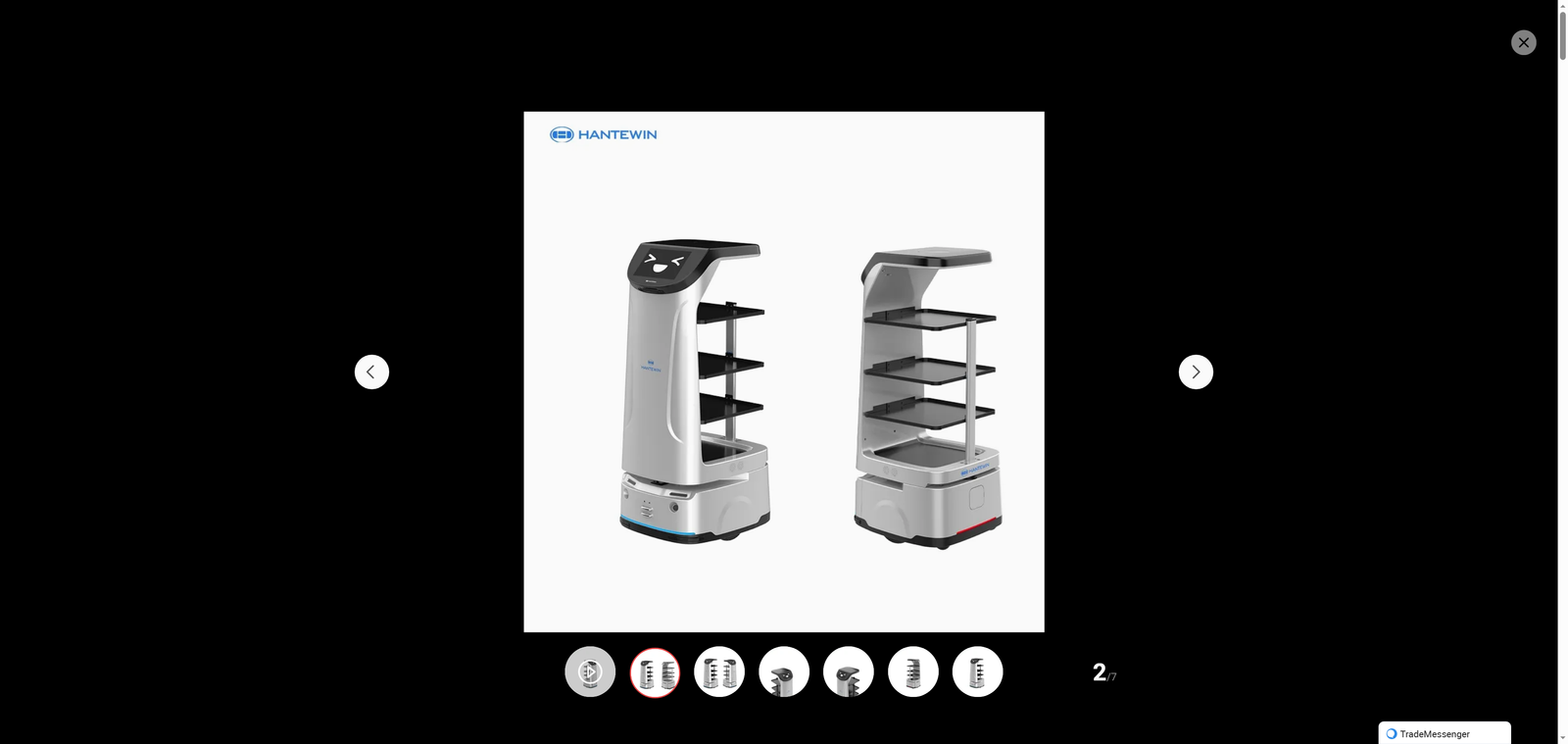
In the era of digital transformation, the hospitality industry is undergoing a profound revolution driven by technological innovation. Among the emerging smart devices, smart hotel room service delivery robots have emerged as a game-changer, breaking the limitations of traditional manual service models. These intelligent robots are not only reshaping the operational efficiency of hotels but also redefining the guest experience with their precise, efficient, and humanized services. As a key carrier of smart hospitality, they are gradually becoming a core competitive advantage for high-end hotels and a new benchmark for the industry’s upgrading.
The rise of smart hotel room service delivery robots is closely linked to the dual demands of the hospitality industry for cost optimization and service upgrading. In traditional hotels, room service relies heavily on human resources—housekeepers and service staff need to spend a lot of time on repetitive tasks such as delivering towels, water, snacks, and parcels. This not only leads to high labor costs but also easily causes service delays due to factors such as staff shortages, busy peak hours, or human negligence. For guests, the waiting time for service has become one of the main pain points affecting their stay experience. Smart delivery robots perfectly solve these problems by virtue of their 24/7 uninterrupted work capability, high-precision navigation, and efficient task execution.
The core advantage of smart hotel room service delivery robots lies in their efficient and stable service capabilities, which are supported by advanced technological configurations. First of all, in terms of navigation and positioning, most robots adopt multi-sensor fusion technology, integrating laser radar, visual sensors, and ultrasonic sensors. This enables them to accurately map the hotel’s internal environment, identify obstacles in real-time (such as pedestrians, luggage, and cleaning tools), and plan the optimal delivery route. Whether it is a complex corridor layout, an elevator with frequent people flow, or a sudden obstacle, the robot can respond flexibly, avoid collisions, and ensure that the items are delivered to the designated room on time. Compared with manual delivery, which is easily affected by human factors, robot delivery has higher stability and punctuality, with a delivery accuracy rate of over 99% in practical applications.
Secondly, in terms of operational efficiency, smart delivery robots can significantly reduce the workload of service staff and improve the overall service turnover rate. A single robot can complete 30-50 delivery tasks per day, which is equivalent to the workload of 1-2 full-time service staff. During peak hours such as check-in and meal times, when service demands surge, multiple robots can work collaboratively, responding to multiple guest requests at the same time without mutual interference. This not only reduces the hotel’s labor costs but also frees up human resources to focus on high-value services such as guest reception, personalized consultation, and emergency handling—services that require emotional interaction and professional skills. In this way, hotels can achieve a "human-machine collaboration" service model, where humans and robots complement each other to maximize service efficiency and quality.
Beyond efficiency, smart hotel room service delivery robots also bring a new and personalized experience to guests, enhancing the hotel’s brand image. For modern guests, especially young people who are familiar with smart technology, interacting with delivery robots has become a novel and interesting part of their stay. When a guest places a service order through the hotel’s mobile app or in-room control panel, the robot will quickly respond, and the guest can track the robot’s real-time location and arrival time through the app. Upon arriving at the room door, the robot will send a notification to the guest’s mobile phone or ring the doorbell, and after the guest takes the items, it will automatically return to the charging station to recharge, completing the whole process without human intervention. This contactless service model not only meets the guests’ demand for convenience but also reduces direct contact between people, which is more in line with the health and safety needs of the post-epidemic era.
Moreover, smart delivery robots can be customized according to the hotel’s brand positioning and guest needs, adding more humanized and personalized elements. For example, some high-end hotels equip robots with voice interaction functions, allowing guests to communicate with robots in natural language to place orders, ask for hotel information, or even chat. The robots are designed with a friendly appearance, soft lighting, and gentle voices, which can alleviate guests’ sense of strangeness to smart devices and create a warm service atmosphere. Some family-friendly hotels also design robots in cartoon shapes to attract children’s attention and bring more joy to family guests. These personalized designs not only improve the guest experience but also make the hotel’s service more distinctive, leaving a deep impression on guests.
Of course, the popularization of smart hotel room service delivery robots also faces certain challenges, such as initial investment costs, technical maintenance, and guest acceptance. For some small and medium-sized hotels, the high purchase cost of robots may become a barrier to their application. In addition, although robots have high stability, they still need regular maintenance and technical updates to ensure their normal operation, which requires hotels to have corresponding technical support capabilities. For elderly guests who are not familiar with smart technology, they may prefer traditional manual service and have a certain resistance to robot service. However, with the continuous advancement of technology and the gradual reduction of production costs, the price of smart robots is showing a downward trend, making them more accessible to small and medium-sized hotels. At the same time, hotels can guide guests to use robot services through simple explanations and demonstrations, and retain manual service channels to meet the needs of different groups of guests.
Looking to the future, with the development of artificial intelligence, the Internet of Things, and 5G technology, smart hotel room service delivery robots will become more intelligent, functional, and integrated. In terms of intelligence, robots will have stronger learning and adaptive capabilities, which can accurately identify guest preferences based on historical service data and provide personalized service recommendations (such as automatically delivering favorite drinks to regular guests). In terms of functions, robots will no longer be limited to delivering items—they may also undertake tasks such as room cleaning, linen replacement, and safety inspections, becoming a multi-functional smart service terminal. In terms of integration, robots will be deeply connected with the hotel’s intelligent management system, realizing seamless docking of service orders, personnel scheduling, and equipment management, helping hotels achieve full-process digital operation.
In conclusion, smart hotel room service delivery robots are not only a technological innovation in the hospitality industry but also a powerful driving force for the industry’s high-quality development. By improving service efficiency, reducing operational costs, and enhancing guest experience, they are gradually changing the traditional service model and promoting the transformation of the hospitality industry towards intelligence, refinement, and humanization. For hotels, embracing smart delivery robots is not only a response to the digital age but also a strategic choice to enhance core competitiveness. In the future, as technology continues to evolve, smart robots will play a more important role in the hospitality industry, creating a more efficient, convenient, and warm stay experience for guests and writing a new chapter in smart hospitality.