
Smart Hotel Delivery Robot for Efficient Guest Services
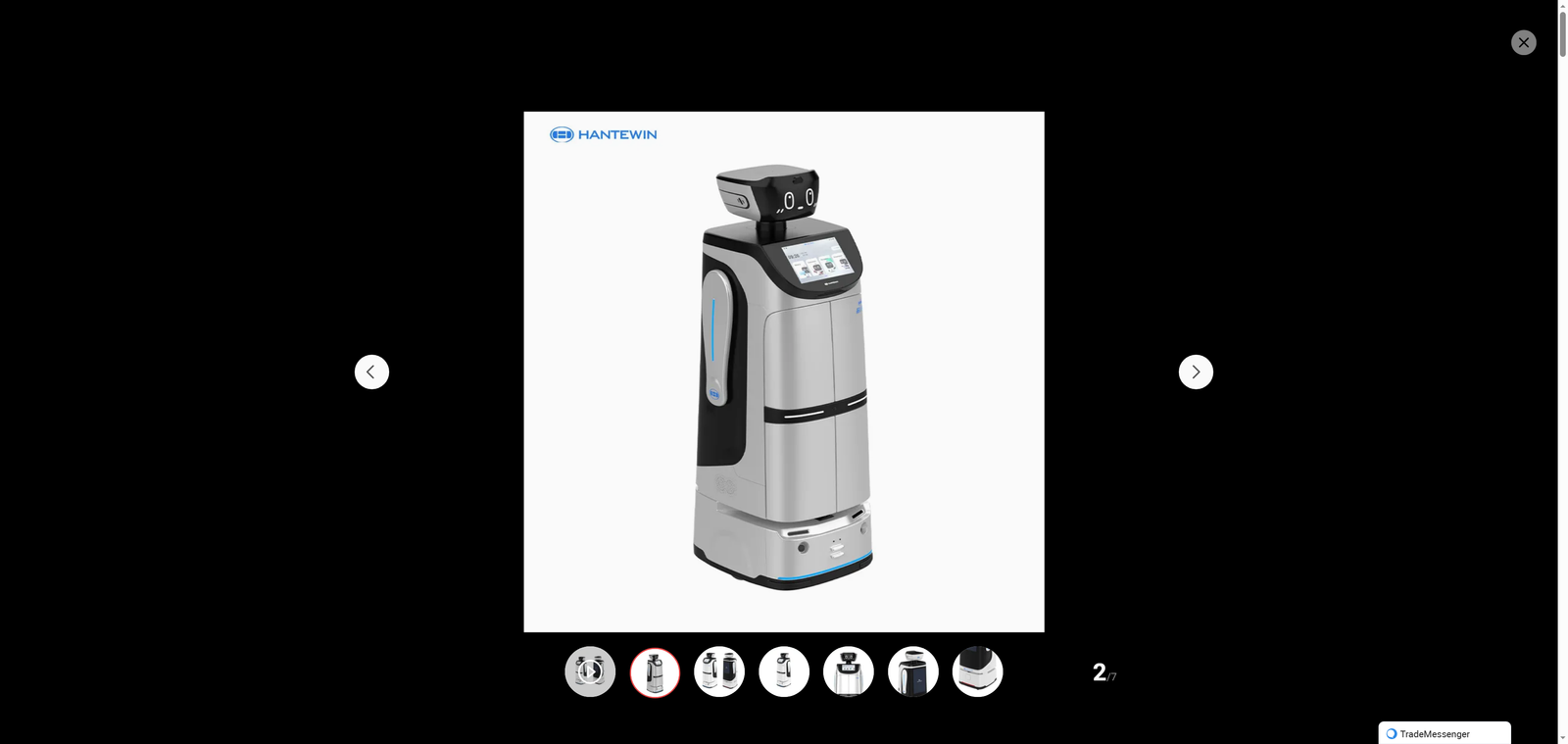
In the era of digital transformation, the hotel industry is undergoing a profound revolution driven by intelligent technology. Among various innovative applications, smart hotel delivery robots have emerged as a key force in optimizing guest services, breaking through the limitations of traditional manual services and redefining the efficiency and quality of hotel operations. These intelligent devices, equipped with advanced navigation, sensing and interaction technologies, are no longer just "novelty items" in hotels but have become indispensable core service tools that connect hotel facilities, staff and guests, injecting new vitality into the sustainable development of the hotel industry.
The most prominent value of smart hotel delivery robots lies in their ability to significantly improve service efficiency and solve the pain points of traditional manual delivery. In traditional hotels, tasks such as delivering room service, laundry, mineral water, towels and other daily necessities, as well as receiving and sending parcels, all rely on hotel attendants. However, limited by factors such as staff shifts, workload distribution and human error, manual delivery often faces problems such as long waiting times, delayed responses and missed deliveries. Especially during peak hours such as check-in and meal times, the shortage of staff is more obvious, which easily leads to guest complaints and affects the overall service experience. Smart delivery robots have completely changed this situation. They can work 24 hours a day without rest, fatigue or mistakes. After receiving the service order through the hotel management system, they can independently plan the optimal route, avoid obstacles such as pedestrians and furniture, and accurately reach the designated guest room or public area. Whether it is delivering a bottle of water in the middle of the night or a stack of laundry during the day, the robot can complete the task efficiently and quickly, shortening the guest's waiting time from tens of minutes to a few minutes. This not only relieves the work pressure of hotel staff, allowing them to focus more on high-value services such as guest reception and experience care, but also ensures the timeliness and stability of delivery services, laying a solid foundation for improving guest satisfaction.
Beyond efficiency, smart delivery robots also bring a personalized and technological service experience to guests, enhancing the hotel's brand competitiveness. In the context of consumption upgrading, guests' demands for hotel services are no longer limited to basic accommodation and catering, but pay more attention to the sense of experience and novelty. Smart delivery robots, with their cute appearance, intelligent interaction and humanized design, have become a "net red check-in point" in many hotels, bringing unexpected surprises to guests. When the robot arrives at the guest room door, it can send a reminder to the guest through voice broadcast, and even complete simple interactive conversations, such as responding to the guest's greetings and introducing hotel services. For family guests with children, the robot's vivid image and friendly interaction can easily win the favor of children, adding more warmth and fun to the family trip. For business guests who pursue efficiency and quality, the robot's fast, accurate and contactless service mode is in line with their lifestyle needs, reflecting the hotel's humanized care. In addition, smart robots can also record guest service preferences through the background system, such as the frequency of requesting mineral water and the time of laundry delivery, and provide more personalized services for guests in subsequent stays. This kind of technological experience that integrates functionality and fun not only improves the guest's sense of identity and recognition of the hotel, but also helps the hotel form a unique brand label, standing out in the fierce market competition.
From the perspective of hotel operation and management, smart delivery robots also play an important role in cost control and refined management. The hotel industry is a labor-intensive industry, and labor costs account for a large proportion of the total operating costs. In recent years, with the rising labor costs and the difficulty in recruiting and retaining staff, many hotels are facing increasing cost pressure. The introduction of smart delivery robots can effectively reduce the demand for front-line service staff, especially for repetitive and mechanical delivery tasks, which can be completely undertaken by robots, thereby reducing the hotel's labor cost input in the long run. Compared with manual services, robots have lower maintenance costs, longer service life and no need to bear costs such as social security and training, which can help hotels achieve cost optimization and improve profit margins. At the same time, the background management system of smart robots can realize real-time monitoring and data statistics of the robot's working status, task completion and service quality. Hotel managers can grasp the operation of delivery services in real time through data, find out potential problems and bottlenecks in a timely manner, and adjust service strategies and resource allocation accordingly. For example, according to the peak period of delivery orders, the number of robots put into use can be reasonably arranged; according to the statistics of guest demand for goods, the inventory of the hotel's logistics warehouse can be adjusted in advance. This data-driven management mode helps hotels realize refined operation, improve management efficiency and decision-making accuracy, and promote the transformation of hotel operation from "experience-driven" to "data-driven".
Of course, the popularization and application of smart hotel delivery robots also need to face some challenges, such as the high initial investment cost, the need for regular maintenance and technical updates, and the need to further optimize the robot's adaptability to complex hotel environments. However, with the continuous progress of artificial intelligence, Internet of Things and other technologies, the performance of smart robots is constantly improving, and the cost is gradually reducing, which provides favorable conditions for their large-scale application in the hotel industry. More and more hotels have realized the important value of smart robots, and have taken the introduction of smart delivery robots as an important measure to promote service upgrading and operation transformation.
In conclusion, smart hotel delivery robots, with their efficient, intelligent and humanized characteristics, have become an important part of the intelligent transformation of the hotel industry. They not only solve the pain points of traditional manual services, improve service efficiency and quality, but also bring a new technological experience to guests, help hotels control costs and realize refined management. In the future, with the in-depth integration of intelligent technology and the hotel industry, smart delivery robots will be more intelligent and diversified, and will play a more important role in aspects such as multi-scene service expansion and personalized service customization. The hotel industry will also rely on these intelligent devices to build a more efficient, high-quality and humanized service system, and move towards a new stage of sustainable development.