
Smart Delivery Robots: Transforming Hotel Services and Airport Luggage Transportation
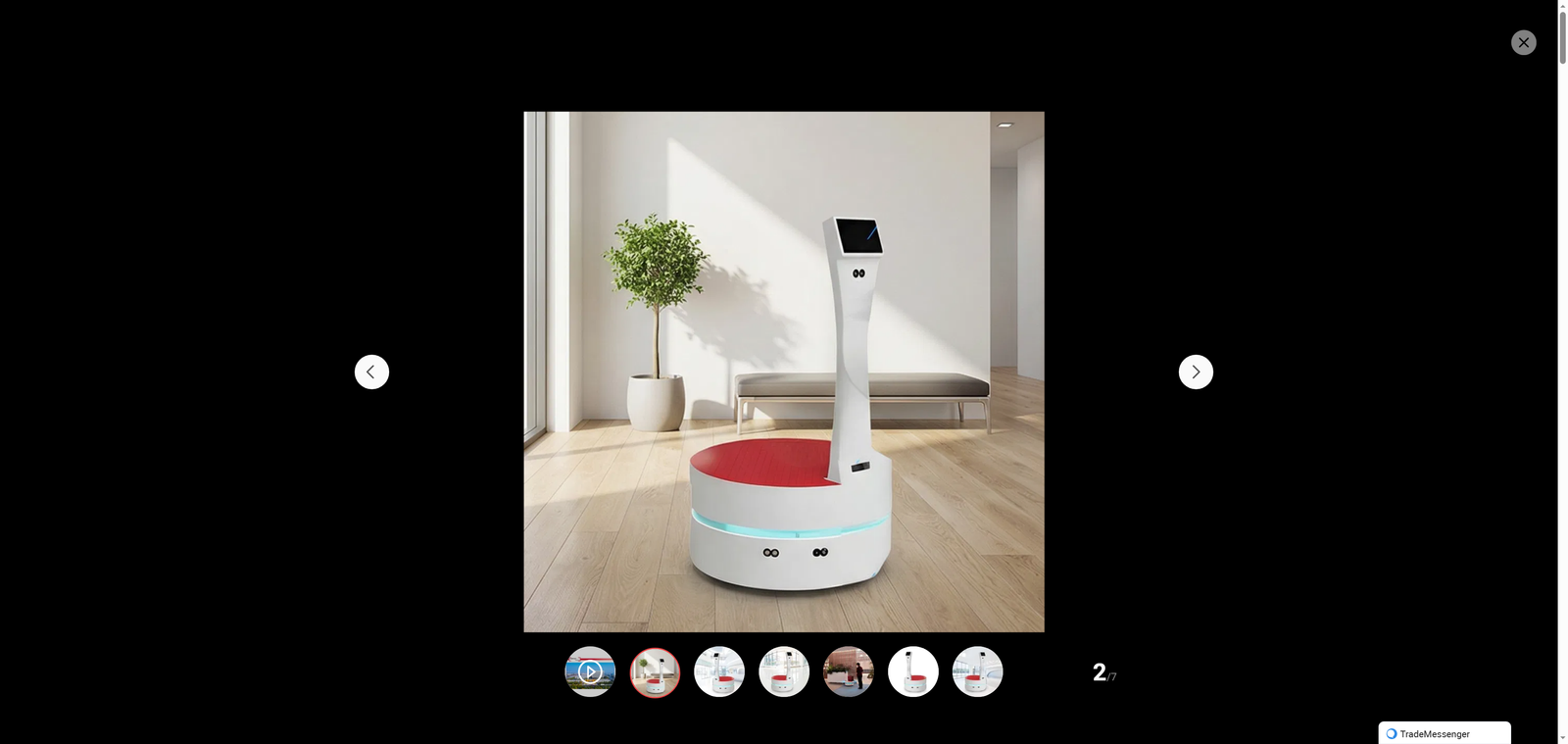
In the era of rapid digital transformation, smart technology is reshaping the operational logic and service experience of traditional industries. Among them, smart delivery robots, as a typical representative of intelligent equipment, have gradually become a new force in optimizing service efficiency and upgrading user experience in the hotel and airport industries. With their accurate navigation, stable operation and 24/7 uninterrupted service capabilities, these robots are breaking through the limitations of manual services, solving pain points such as high labor costs, uneven service quality and low peak efficiency, and injecting a strong impetus into the intelligent upgrading of the two industries.
The hotel industry, which takes "high-quality service" as its core competitiveness, has an urgent demand for efficient and standardized service support. Smart delivery robots have perfectly matched this demand and become an indispensable part of modern hotel operations. Unlike traditional manual delivery, smart delivery robots can realize full-process unmanned operation from order receiving, path planning to door-to-door delivery. Whether it is delivering room service such as meals, drinks and toiletries, or transferring items between guests and the front desk, robots can complete the task accurately and quickly without being affected by factors such as working hours, physical strength and emotions.
For hotels, the application of smart delivery robots brings multiple operational dividends. On the one hand, it significantly reduces labor costs. Hotels no longer need to arrange a large number of service staff for repetitive delivery work, and can reallocate human resources to high-value services such as guest consultation and experience improvement, thereby improving the overall service quality. On the other hand, it enhances the service efficiency and guest satisfaction. Guests only need to place an order through the room control system or mobile app, and the robot can arrive at the door in a short time, avoiding the long waiting time caused by manual delivery during peak hours. At the same time, the novel and intelligent service form also adds a sense of technology and fun to the guest's stay experience, becoming a unique selling point for hotels to attract customers.
In airport luggage transportation, which is characterized by high traffic volume, heavy tasks and high timeliness requirements, smart delivery robots are also showing huge application potential. Airports have always faced challenges such as cumbersome luggage handling processes, easy loss during transportation, and heavy manual labor. Smart delivery robots, relying on advanced technologies such as laser navigation, visual recognition and Internet of Things, can realize the whole-process intelligent transportation of luggage from the check-in counter to the boarding gate, from the arrival carousel to the airport exit or hotel, breaking the information island and process barriers in traditional luggage transportation.
In the departure link, after passengers check in their luggage, the smart robot can automatically identify the luggage information, plan the optimal transportation path, and transport the luggage to the corresponding aircraft cargo hold accurately and safely, reducing the time of manual sorting and transportation and the risk of luggage damage or loss. In the arrival link, the robot can receive the luggage information in real time, pick up the luggage from the carousel according to the passenger's order, and deliver it directly to the passenger's designated location, such as the airport pick-up area, high-speed rail station or nearby hotel. This not only saves passengers the trouble of waiting for luggage and carrying heavy luggage, but also relieves the pressure of airport passenger flow and improves the efficiency of luggage transportation.
The stable operation of smart delivery robots in hotels and airports is inseparable from the support of core technologies. First of all, the high-precision navigation and positioning technology is the foundation. Robots adopt a multi-sensor fusion navigation scheme, including laser radar, visual camera, ultrasonic sensor, etc., which can accurately identify the surrounding environment, avoid obstacles in real time, and ensure stable operation in complex scenes such as hotel corridors, elevator cars, airport halls and passageways. Secondly, the intelligent control system is the core. The system can realize functions such as order management, path planning, task scheduling and remote monitoring, and can flexibly adjust the work plan according to the real-time service demand and traffic situation, ensuring the efficient allocation of robot resources. In addition, the Internet of Things and big data technology provide data support for the operation of robots. By collecting and analyzing the operation data of robots, service demand data and user feedback data, managers can optimize the operation strategy, improve the service process and realize refined management.
At present, more and more hotels and airports around the world have begun to deploy smart delivery robots and achieved remarkable results. For example, many high-end hotels in China have introduced smart delivery robots, which can complete meal delivery, laundry delivery and other services 24 hours a day, and the guest satisfaction rate has increased by more than 30%. Some large international airports have also launched smart luggage transportation robots, which have reduced the luggage loss rate by nearly 50% and shortened the average luggage transportation time by 20%. These practical cases fully prove that smart delivery robots can not only optimize the operational efficiency of hotels and airports, but also bring a better service experience to users, and have broad market application prospects.
Looking to the future, with the continuous progress of technologies such as artificial intelligence, 5G and autonomous driving, smart delivery robots will show more powerful functions and broader application scenarios in hotels and airports. In terms of function, robots will become more intelligent and humanized, which can realize voice interaction, emotional recognition and other functions, and better meet the personalized needs of users. For example, hotel robots can actively greet guests according to their preferences and provide customized service recommendations; airport robots can guide passengers to check in, go through security checks and other processes while transporting luggage. In terms of application scope, robots will realize more seamless connection with other intelligent equipment, forming a full-scenario intelligent service system. For example, hotel robots can connect with the room control system, elevator system and catering system to realize the whole-process intelligent service from check-in to check-out; airport robots can connect with the flight information system, security inspection system and luggage handling system to improve the efficiency of the whole airport operation.
Of course, the popularization and application of smart delivery robots also face some challenges, such as high initial investment cost, imperfect relevant technical standards and regulations, and the need for further improvement of robot adaptability in complex environments. However, with the continuous reduction of intelligent equipment costs, the gradual improvement of technical standards and the continuous strengthening of market demand, these challenges will be gradually solved.
In conclusion, smart delivery robots are bringing a profound transformation to the hotel and airport industries with their unique advantages of efficiency, standardization and intelligence. They not only solve the practical pain points of industry operation, but also upgrade the user service experience, and become an important direction for the intelligent development of the two industries. In the future, with the continuous innovation and development of technology, smart delivery robots will play a more important role, helping the hotel and airport industries to move towards a more efficient, intelligent and high-quality development path.