
Smart Delivery Robot for Commercial Food Service in Hotels and Conference Centers: Transforming Service Efficiency and Experience
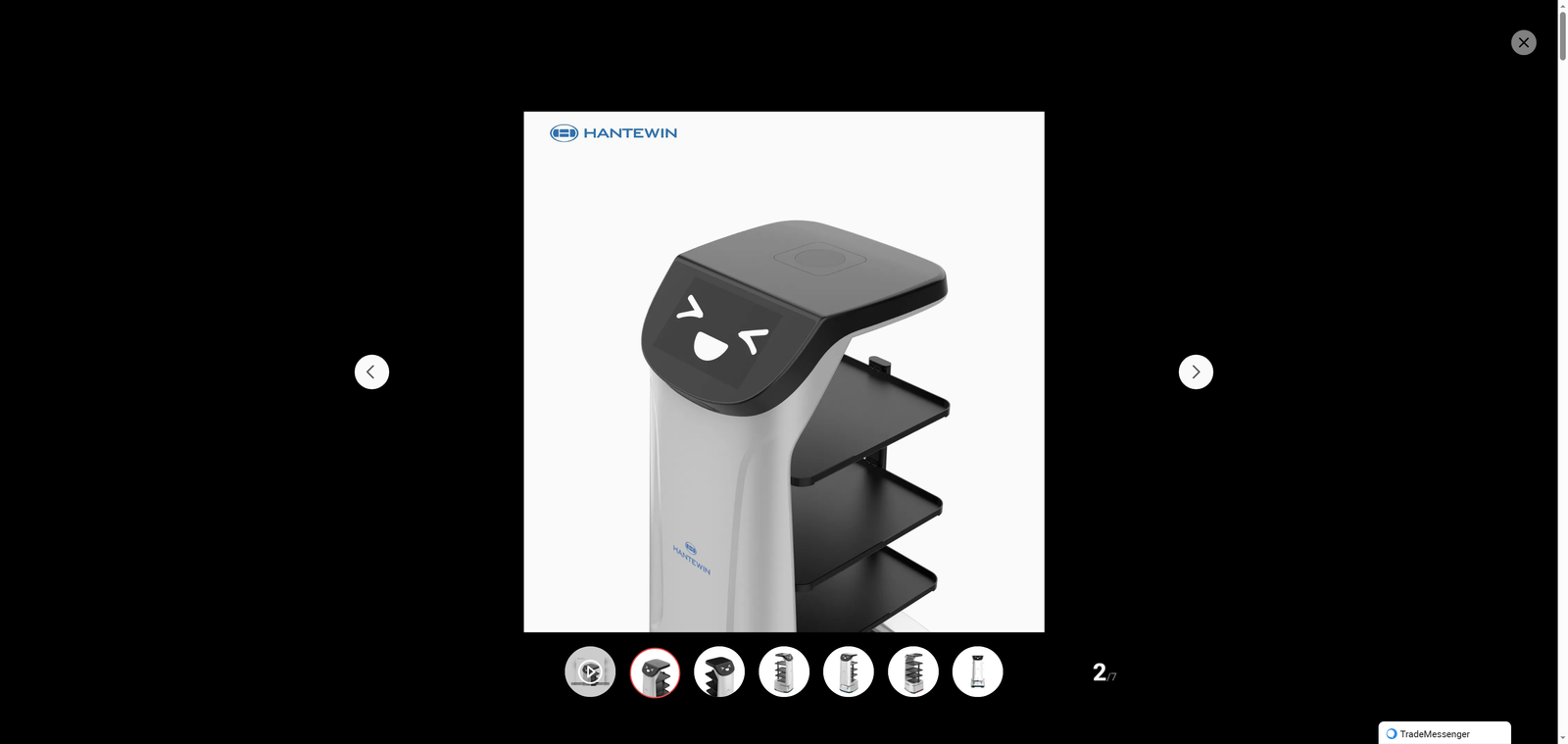
In the era of intelligent upgrading of the service industry, hotels and conference centers, as important windows of commercial service, are constantly exploring ways to optimize service quality, improve operational efficiency and reduce comprehensive costs. Against this background, smart delivery robots for commercial food service have emerged as the times require, breaking the limitations of traditional manual service, and injecting new vitality into the service system of hotels and conference centers. These intelligent devices, with their precise navigation, stable operation and humanized interaction, are gradually becoming an indispensable core supporting force in the commercial food service field, redefining the new standard of modern service.
Hotels and conference centers have the characteristics of large service scope, high peak demand and diverse service scenarios, which put forward strict requirements for the timeliness and accuracy of food service. In traditional service mode, manual delivery is not only limited by factors such as labor cost, work intensity and human error, but also often faces the dilemma of insufficient staff during peak periods such as meal time and large-scale conferences. For example, in a five-star hotel, during the breakfast peak, waiters need to shuttle between the restaurant, kitchen and guest rooms, which is easy to cause delays in food delivery; in a large conference center, when hundreds of participants need simultaneous catering supply, manual delivery is difficult to ensure that each person gets food at the same time, and the risk of food cooling and wrong delivery also increases significantly. Smart food delivery robots can perfectly solve these pain points, realizing the efficient connection of food from the kitchen to the service terminal.
The core advantage of smart food delivery robots lies in their efficient and stable delivery capacity, which is supported by advanced technical systems. First of all, in terms of navigation and positioning, most robots adopt multi-sensor fusion technology, integrating laser radar, visual recognition, ultrasonic sensing and other modules, which can accurately map the indoor environment of hotels and conference centers, automatically avoid obstacles such as pedestrians, furniture and equipment, and plan the optimal delivery route in real time. Even in complex scenarios with dense crowds and frequent personnel movement, the robot can move flexibly and ensure that food is delivered to the designated location on time. Secondly, in terms of load capacity and food preservation, the robot is equipped with a multi-layer insulated storage compartment, which can carry a certain amount of meals, drinks and tableware according to the needs of the scene. The insulated layer can effectively maintain the temperature of hot food and the freshness of cold drinks, ensuring that the food quality remains unchanged during delivery. In addition, the robot supports intelligent scheduling and management. Through the background management system, the staff can uniformly dispatch multiple robots, assign delivery tasks, monitor the operation status and task progress of the robots in real time, and realize the efficient collaboration of the entire delivery link.
Beyond improving operational efficiency, smart food delivery robots also bring a new upgrade to the service experience of guests and participants. For hotels, the robot can provide 24-hour uninterrupted delivery service, whether it is a guest who needs in-room dining at midnight or a conference participant who needs a quick snack supplement, the robot can respond quickly to meet the personalized needs of users. At the same time, the humanized design of the robot, such as voice broadcast, touch screen interaction and automatic door opening, also enhances the sense of technology and interest of the service. When the robot arrives at the designated location, it will automatically send a reminder to the user through voice or SMS, and the user can take the food by simply scanning the code or touching the screen, which is convenient and fast. For conference centers, the application of food delivery robots can reduce the movement of service personnel in the conference hall, maintain the order and quietness of the conference site, and create a more professional and comfortable conference environment for participants. In addition, the robot can also be customized according to the brand image of the hotel or conference center, such as printing the brand logo, matching the overall decoration style, which not only plays a role in delivery but also becomes a mobile brand display carrier.
The application of smart food delivery robots also brings significant economic benefits to hotels and conference centers. In the long run, although the initial investment of the robot is relatively high, it can effectively reduce the labor cost in the long run. A smart food delivery robot can replace 2-3 manual waiters in terms of delivery tasks, which greatly reduces the recruitment, training and management costs of the hotel and conference center. At the same time, the robot has the advantages of low failure rate, long service life and low maintenance cost, which can maintain stable operation for a long time, further reducing the comprehensive operational cost. In addition, the efficient delivery service of the robot can improve the user satisfaction and praise rate, enhance the brand competitiveness of the hotel and conference center, and bring more business opportunities. For example, many hotels have become "net red check-in spots" because of the application of smart delivery robots, attracting a large number of young consumers who pursue a sense of technology, and promoting the growth of room occupancy and catering revenue.
Of course, the popularization and application of smart food delivery robots in hotels and conference centers still face certain challenges. On the one hand, the adaptability of the robot to complex scenarios needs to be further improved. For example, in some old hotels with narrow corridors and irregular layouts, the robot may face difficulties in navigation and turning; in the case of extreme weather or power failure, the robot's operation will be affected. On the other hand, the acceptance of intelligent equipment by individual users, especially the elderly, still needs to be improved, and some users may prefer manual service with a stronger human touch. In response to these problems, robot manufacturers need to continuously optimize product technology, enhance the adaptability and stability of the robot, and design more humanized interaction modes; hotels and conference centers also need to strengthen the guidance and explanation for users, balance the relationship between intelligent service and manual service, and realize the complementary advantages of the two.
Looking to the future, with the continuous progress of artificial intelligence, Internet of Things, big data and other technologies, smart food delivery robots will show a more diversified and intelligent development trend. In terms of function, the robot will not only be limited to food delivery, but also integrate more functions such as meal ordering, table clearing, and information consultation, becoming a multi-functional intelligent service terminal. In terms of interaction, the robot will realize more natural voice interaction and emotional recognition, which can accurately understand the user's needs and provide personalized service. In terms of scenario expansion, the robot will be more closely integrated with the intelligent management system of hotels and conference centers, realizing the information sharing and collaborative operation of the entire service chain. For example, the robot can automatically receive the meal ordering information from the guest room system, go to the kitchen to pick up the meal, and automatically update the delivery status to the background system, forming a closed-loop service.
In conclusion, smart delivery robots for commercial food service have brought a revolutionary change to the service mode of hotels and conference centers. They not only improve the operational efficiency and reduce the comprehensive cost, but also upgrade the user service experience and enhance the brand competitiveness. With the continuous breakthrough of technology and the gradual maturity of the market, smart food delivery robots will play a more important role in the commercial food service field, helping hotels and conference centers to move towards a more intelligent, efficient and high-quality development path. It is believed that in the near future, smart food delivery robots will become a common scene in hotels and conference centers, bringing more convenience and surprises to every user.