
In the era of rapid technological advancement, the integration of smart devices into the service industry has become an irreversible trend. Among these innovations, smart autonomous food delivery robots have emerged as game-changers for restaurants and hotels, redefining the standards of service efficiency, customer experience, and operational management. These intelligent machines, equipped with advanced navigation, sensing, and automation technologies, are no longer just novelty additions but essential tools that address the pain points of traditional food delivery services, such as labor shortages, inconsistent service quality, and operational inefficiencies.
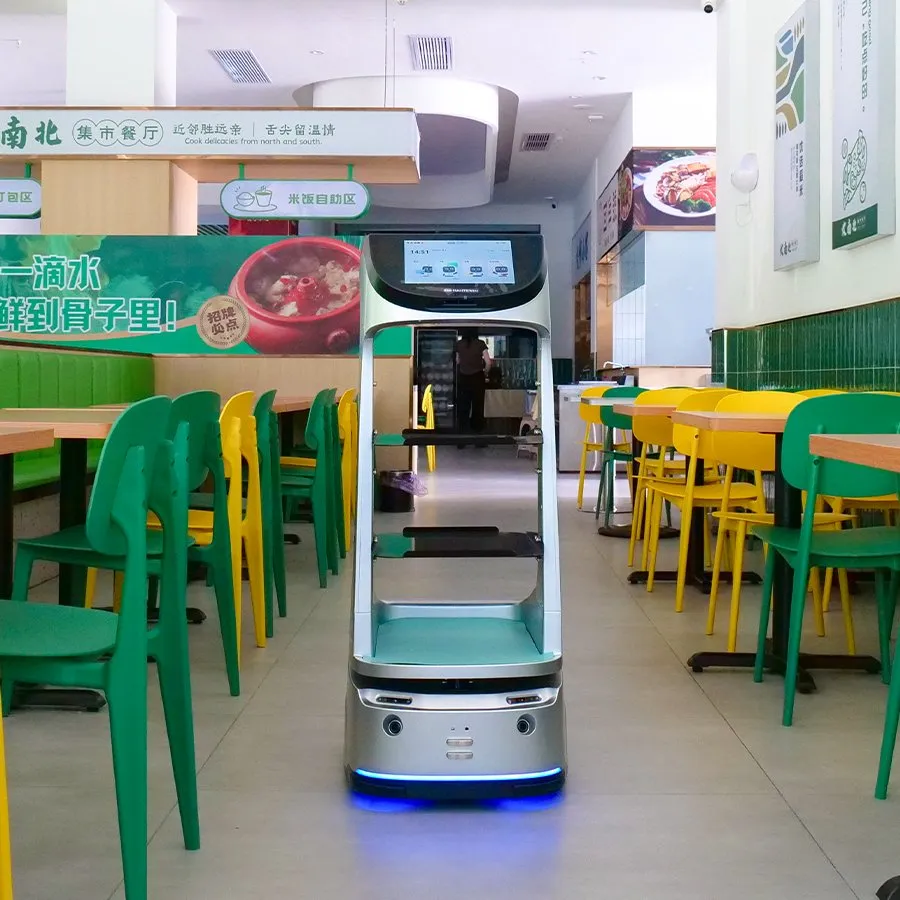
Restaurants and hotels, as core scenarios of the service industry, have long faced challenges in the food delivery link. For busy restaurants during peak hours, waitstaff often struggle to keep up with the high volume of orders, leading to delayed deliveries, mix-ups, and even customer complaints. Hotels, especially large-scale ones with sprawling layouts, require efficient delivery services for room service, banquets, and conference catering, which can be a heavy burden on manual labor. Smart autonomous food delivery robots step in to solve these problems by taking over the repetitive and labor-intensive delivery tasks, allowing human staff to focus on more value-added services such as customer consultation and personalized care.
The core advantage of smart autonomous food delivery robots lies in their high-precision autonomous navigation and reliable environmental adaptation capabilities. Equipped with lidar, cameras, ultrasonic sensors, and advanced algorithms, these robots can accurately map their surroundings in real-time, identify obstacles (such as pedestrians, tables, and pillars), and plan the optimal delivery routes. Whether it is a narrow restaurant aisle, a crowded dining area, or a complex hotel corridor with multiple floors and elevators, the robots can move smoothly and safely. Some high-end models even support elevator interaction and call functions, enabling seamless delivery from the kitchen to guest rooms or designated banquet halls without manual intervention.
In addition to improving delivery efficiency, these robots also enhance the consistency and safety of services. Unlike human staff who may be affected by fatigue, mood, or lack of training, autonomous robots can maintain stable performance throughout their operation. They strictly follow preset delivery procedures, ensuring that food is delivered at the right temperature and to the correct destination. Moreover, during the post-pandemic era, the contactless delivery feature of these robots has become a significant selling point. By minimizing direct human contact between staff and customers, they reduce the risk of virus transmission, meeting the growing demand for hygienic and safe services in restaurants and hotels.
From an operational perspective, investing in smart autonomous food delivery robots also brings long-term economic benefits to restaurants and hotels. Although the initial purchase cost may be relatively high, the robots can significantly reduce labor costs in the long run. They can work 24 hours a day without the need for rest, overtime pay, or employee benefits, which is particularly cost-effective for businesses that operate around the clock, such as hotels and 24-hour diners. Additionally, the data collected by the robots (such as order volume, delivery time, and customer flow) can be integrated into the restaurant or hotel's management system, providing valuable insights for optimizing menu design, staffing arrangements, and operational processes. For example, by analyzing peak delivery times, managers can adjust kitchen staffing to improve order preparation efficiency, further enhancing overall operational performance.
The application of smart autonomous food delivery robots also enriches the customer experience. For diners in restaurants, the sight of a cute and intelligent robot delivering food can bring a sense of novelty and fun, enhancing the dining experience and even becoming a social media-worthy moment. For hotel guests, the fast and accurate room service delivery by robots can improve their satisfaction with the hotel's service quality. Moreover, the robots can be customized with brand elements, such as logo printing, voice prompts, and interactive functions, which helps to strengthen brand image and leave a deep impression on customers.
Looking to the future, the development potential of smart autonomous food delivery robots in restaurants and hotels is enormous. With the continuous advancement of artificial intelligence, 5G, and Internet of Things technologies, these robots will become more intelligent and versatile. In the future, they may be able to interact with customers more naturally (such as answering simple dining or hotel service questions), recognize customer preferences to provide personalized recommendations, and even collaborate with other smart devices (such as smart kitchens and smart hotel systems) to form a fully automated service chain. Furthermore, the cost of these robots is expected to decrease as technology matures and production scales up, making them more accessible to small and medium-sized restaurants and hotels.
However, it should be noted that smart autonomous food delivery robots are not intended to replace human staff entirely, but to complement and enhance human services. The warmth, empathy, and personalized care provided by humans are irreplaceable in the service industry. The optimal model is to let robots handle the tedious and repetitive delivery tasks, while human staff focus on providing emotional connection and high-quality personalized services. This human-machine collaboration model will become the mainstream trend in the future development of the restaurant and hotel industry.
In conclusion, smart autonomous food delivery robots are bringing a profound transformation to the restaurant and hotel industry. With their advantages in efficiency, safety, cost-saving, and customer experience enhancement, they have become an important driving force for the digital and intelligent upgrading of the service industry. As technology continues to evolve, these robots will play an increasingly important role in optimizing operational processes, improving service quality, and promoting the sustainable development of restaurants and hotels. For businesses in the service industry, embracing this intelligent innovation is not only a response to the current market challenges but also a strategic investment in the future.