
With the deep integration of intelligent technology and the hospitality industry, the demand for efficient, refined and humanized services in hotels is increasingly prominent. Against this background, the small lightweight intelligent scheduling food delivery robot has emerged as the times require, breaking the limitations of traditional manual food delivery, and becoming a key equipment to optimize service processes, reduce operational costs and enhance customer experience. This kind of robot, which takes "small size, light weight, intelligence and efficient scheduling" as the core advantages, is quietly reshaping the service ecology of the hotel industry.
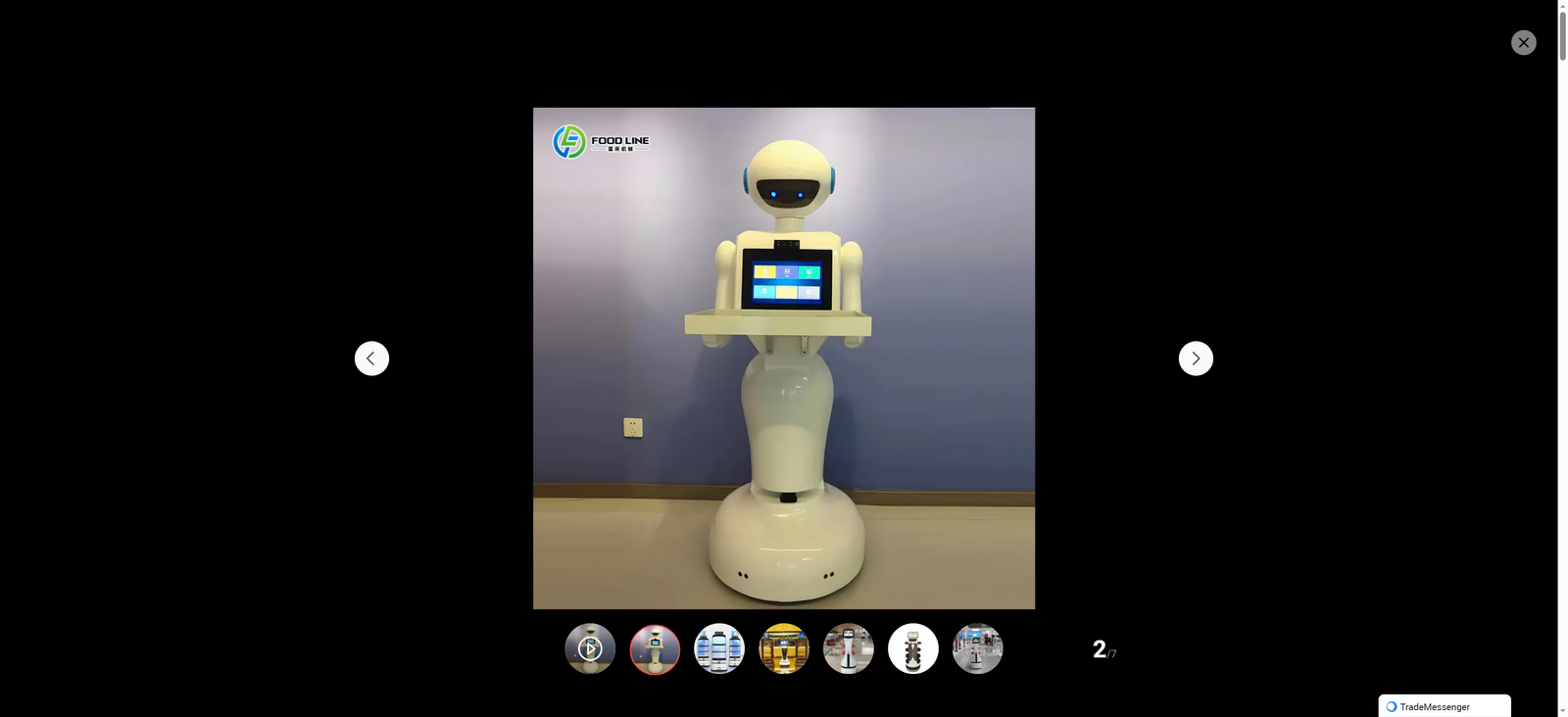
The design concept of the small lightweight intelligent scheduling food delivery robot is closely linked to the actual service scenarios of hotels. Unlike the large-scale delivery equipment in catering malls, hotels have complex spatial structures, including narrow corridors, crowded elevators, and turning stairwells. The "small and lightweight" design makes the robot have excellent passability. Its body volume is precisely controlled to adapt to the narrow passage space between hotel rooms, and it can easily turn around and avoid obstacles in the elevator car with limited space. At the same time, the lightweight body not only reduces the energy consumption of the robot, extends the battery life (generally, it can work continuously for 8-12 hours after a single charge), but also reduces the potential safety hazards caused by collision with people or objects, ensuring the safety of guests and hotel facilities.
Intelligent scheduling is the core competitiveness of this kind of food delivery robot, which realizes the transformation from "single-point delivery" to "multi-task efficient collaboration". The robot is equipped with an advanced intelligent scheduling system, which is connected with the hotel's PMS (Property Management System), catering order system and elevator control system in real time. When a guest places a food order through the room phone, WeChat mini-program or front desk, the scheduling system will automatically receive the order information, including the guest's room number, order content, delivery time requirement, etc., and then generate the optimal delivery route according to the real-time status of each robot (idle, busy, charging), the distribution of orders in the hotel, and the flow of people in the corridor. It can even realize the batch scheduling of multiple robots, allowing one robot to be responsible for delivering food to multiple adjacent rooms in the same floor, and another robot to undertake cross-floor delivery tasks, maximizing the delivery efficiency.
In addition to efficient scheduling, the robot also has a variety of intelligent functions to ensure the stability and comfort of the delivery process. It is equipped with a high-precision positioning module (integrating GPS, Bluetooth and visual navigation) and a multi-sensor obstacle avoidance system, which can accurately locate the room position with an error of less than 5cm, and flexibly avoid moving objects such as guests, cleaning staff and luggage carts during the movement. The food delivery compartment is designed with heat preservation and anti-spill functions, which can maintain the temperature of hot food and the freshness of cold food, and prevent the food from spilling during transportation. When arriving at the guest's room door, the robot will send a reminder to the guest through voice broadcast (such as "Dear guest, your food has arrived, please take it") and mobile phone message, and automatically open the compartment door after the guest confirms, realizing contactless delivery.
The application of small lightweight intelligent scheduling food delivery robots brings multiple benefits to hotels. For hotel operators, it can significantly reduce labor costs. A single robot can replace 1-2 full-time food delivery staff, and the annual labor cost saved is about 50,000-80,000 yuan. At the same time, the robot can work 24 hours a day without rest, which effectively solves the problem of insufficient staff during peak meal hours, late nights and holidays. For guests, it can enjoy more efficient and private delivery services. The average delivery time of the robot is 3-5 minutes per order, which is much faster than manual delivery. Moreover, contactless delivery can reduce the contact between people, which is more in line with the health and safety needs of guests in the post-epidemic era. In addition, the novel intelligent experience brought by the robot can also enhance the guest's sense of satisfaction and recognition of the hotel, and help the hotel build a differentiated competitive advantage.
With the continuous progress of artificial intelligence, Internet of Things and other technologies, the small lightweight intelligent scheduling food delivery robot will have a broader development space. In the future, it can not only undertake food delivery tasks, but also be extended to multiple service scenarios such as delivering daily necessities (towels, mineral water), receiving and sending luggage, and reminding guests of check-in and check-out. The intelligent scheduling system will be more intelligent, which can predict the order peak according to the hotel's operation data (such as guest check-in rate, meal order time) and make pre-scheduling arrangements. At the same time, the integration of 5G technology will further reduce the delay of the scheduling system and improve the response speed of the robot.
In conclusion, the small lightweight intelligent scheduling food delivery robot is not only a simple "tool for delivering food", but also an important part of the intelligent transformation of hotels. It takes the advantages of small size, light weight and intelligent scheduling to solve the pain points of traditional hotel food delivery services, and realizes a win-win situation for hotel operation efficiency improvement and guest experience upgrade. In the tide of intelligent development of the hospitality industry, this kind of robot will surely become a standard configuration in more hotels, helping the hotel industry move towards a more efficient, refined and intelligent future.