
Self-Driving Customized Smart Intelligent Service Delivery Robot: Reshaping Service Scenarios in Hotels and Shopping Malls
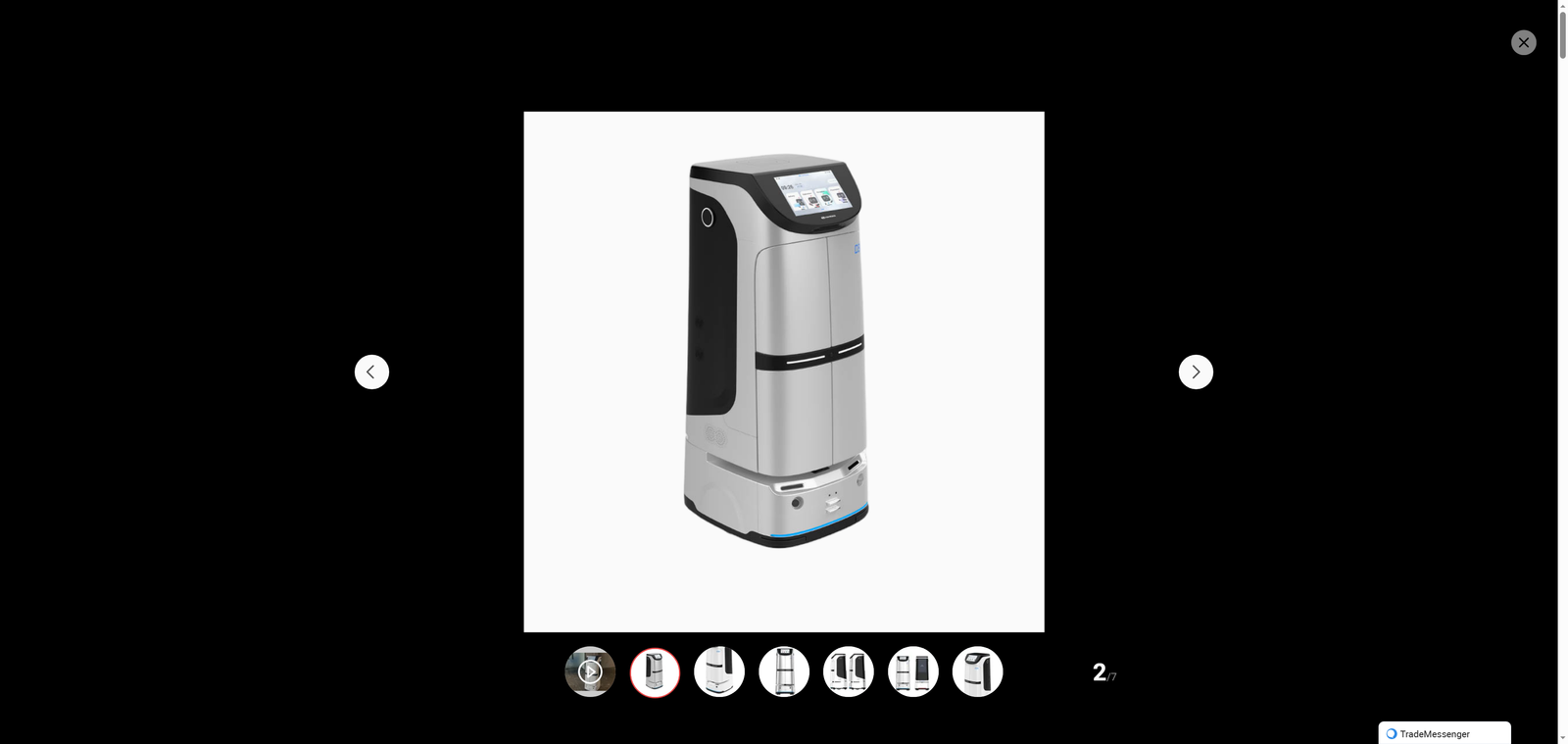
With the rapid development of artificial intelligence, autonomous driving and smart IoT technologies, the service industry is ushering in a new round of transformation driven by intelligence. Among them, the self-driving customized smart intelligent service delivery robot (hereinafter referred to as "smart delivery robot") has emerged as a key carrier of smart service upgrading, and has been widely applied in high-traffic and high-demand scenarios such as hotels and shopping malls. It breaks through the limitations of traditional manual services, with the advantages of high efficiency, accuracy, 24-hour operation and personalized customization, and gradually becomes an indispensable part of building a smart service ecosystem.
The smart delivery robot integrates multiple cutting-edge technologies, laying a solid foundation for its stable operation in complex scenarios. In terms of autonomous driving, it adopts multi-sensor fusion technology, including lidar, visual camera, ultrasonic radar and inertial navigation module. Lidar can accurately detect the distance and shape of surrounding obstacles, with a recognition accuracy of up to 99.5%, ensuring that the robot can avoid pedestrians, shopping carts, hotel luggage carts and other objects in real time; visual camera can identify traffic signs, elevator buttons, door handles and other key information, realizing automatic door opening, elevator calling and path planning; ultrasonic radar is mainly used for short-distance obstacle avoidance, making up for the blind area of lidar detection. With the support of these technologies, the robot can adapt to the dynamic and complex environments of hotels and shopping malls, with a path planning error of less than 5cm, and can flexibly adjust its route according to real-time changes in the environment.
In terms of intelligence and customization, the smart delivery robot has realized the integration of "perception - decision - execution", and can meet the personalized service needs of different scenarios. For hotels, the robot can be customized with functions such as room delivery, front desk guidance, and information consultation. Guests can place orders through the hotel APP, WeChat mini-program or in-room landline, and the robot will take the elevator autonomously, accurately reach the designated room door, and send a reminder to the guest through voice broadcast or message push. It can deliver items such as mineral water, towels, takeaways and express delivery, solving the problem of low efficiency of manual delivery during peak hours and reducing the labor burden of hotel staff. At the same time, the robot is equipped with a voice interaction system, which can answer guests' questions about hotel services, such as check-in and check-out procedures, restaurant opening hours, and scenic spot introductions, providing 24-hour uninterrupted service and improving guests' sense of experience.
For shopping malls, the smart delivery robot has more diversified customized functions, becoming a "smart assistant" for merchants and consumers. On the one hand, it can undertake the task of commodity delivery. Consumers can scan the code to place an order in the mall's offline stores, and the robot will deliver the purchased commodities to the designated pick-up point or even the mall's parking lot, saving consumers the trouble of carrying heavy goods. For merchants, it can realize the inter-store transfer of goods, especially for large shopping malls with multiple floors and large areas, which can greatly improve the efficiency of goods circulation and reduce the cost of manual handling. On the other hand, the robot can also act as a mobile promotion terminal. Through the touch screen on the body, it can push preferential information, new product introductions and store guides of merchants, and even realize intelligent recommendation based on consumers' shopping preferences, helping merchants accurately reach potential customers. In addition, the robot can also collect passenger flow data, consumption habits and other information in real time, providing data support for the mall's operation decision-making.
The application of smart delivery robots in hotels and shopping malls not only brings tangible benefits to operators, but also optimizes the service experience of consumers. For operators, first of all, it reduces labor costs. A smart delivery robot can replace 2-3 manual workers, and can operate 24 hours a day without rest, vacation or salary increase, which significantly reduces the long-term labor expenditure of hotels and shopping malls. Secondly, it improves service efficiency. The robot can complete the delivery task in the shortest time through intelligent path planning, avoiding the delay caused by manual fatigue, mistake or busy work, and improving the service response speed. Finally, it enhances the brand image. The introduction of smart robots is a symbol of the intelligent upgrading of hotels and shopping malls, which can give consumers a fresh and high-end experience, enhance the brand's sense of technology and competitiveness.
For consumers, the smart delivery robot brings a more convenient, fast and intimate service experience. In hotels, guests no longer need to wait for a long time for manual delivery, and can get the required items at any time; the voice interaction function also makes the consultation service more efficient and humanized. In shopping malls, consumers can enjoy "home delivery" service in the mall, avoiding the trouble of carrying goods; the accurate push of preferential information also helps consumers save time in searching for preferential activities. At the same time, the cute appearance and intelligent interaction of the robot also add fun to the consumption and accommodation experience, especially popular with children and young people.
Of course, the popularization and application of smart delivery robots still face some challenges. On the one hand, the initial investment cost is relatively high. The research and development, production and deployment of a single smart delivery robot require a lot of capital investment, which may bring certain financial pressure to small and medium-sized hotels and shopping malls. On the other hand, the adaptability to complex scenarios needs to be further improved. For example, in the case of excessive passenger flow in shopping malls or special terrain in hotels, the robot may have problems such as path blockage and signal interference. In addition, the issue of data security also needs to be paid attention to. The robot collects a lot of user information and operational data during the operation process, and how to ensure the security and privacy of the data is an important problem that needs to be solved.
Facing these challenges, the industry is constantly promoting technological innovation and model optimization. With the maturity of artificial intelligence and autonomous driving technologies, the cost of smart delivery robots will gradually decrease, and the adaptability to complex scenarios will be further enhanced. At the same time, relevant laws and regulations on data security are constantly improving, which will provide a strong guarantee for the healthy development of the industry. In the future, the smart delivery robot will also realize more functions through technological iteration, such as multi-robot collaboration, automatic charging, and intelligent sorting, and will be more closely integrated with the service scenarios of hotels and shopping malls.
In conclusion, the self-driving customized smart intelligent service delivery robot is an important product of the intelligent transformation of the service industry. It has brought revolutionary changes to the service modes of hotels and shopping malls with its unique technical advantages and personalized service capabilities, realizing a win-win situation for operators and consumers. Although there are still some challenges in the development process, with the continuous progress of technology and the continuous improvement of the industry ecosystem, the smart delivery robot will surely play a more important role in the future smart service field, and create a more efficient, convenient and intelligent service experience for people.