
Robot Delivery Food for Hotel: The New Engine of Intelligent Service Driven by AI
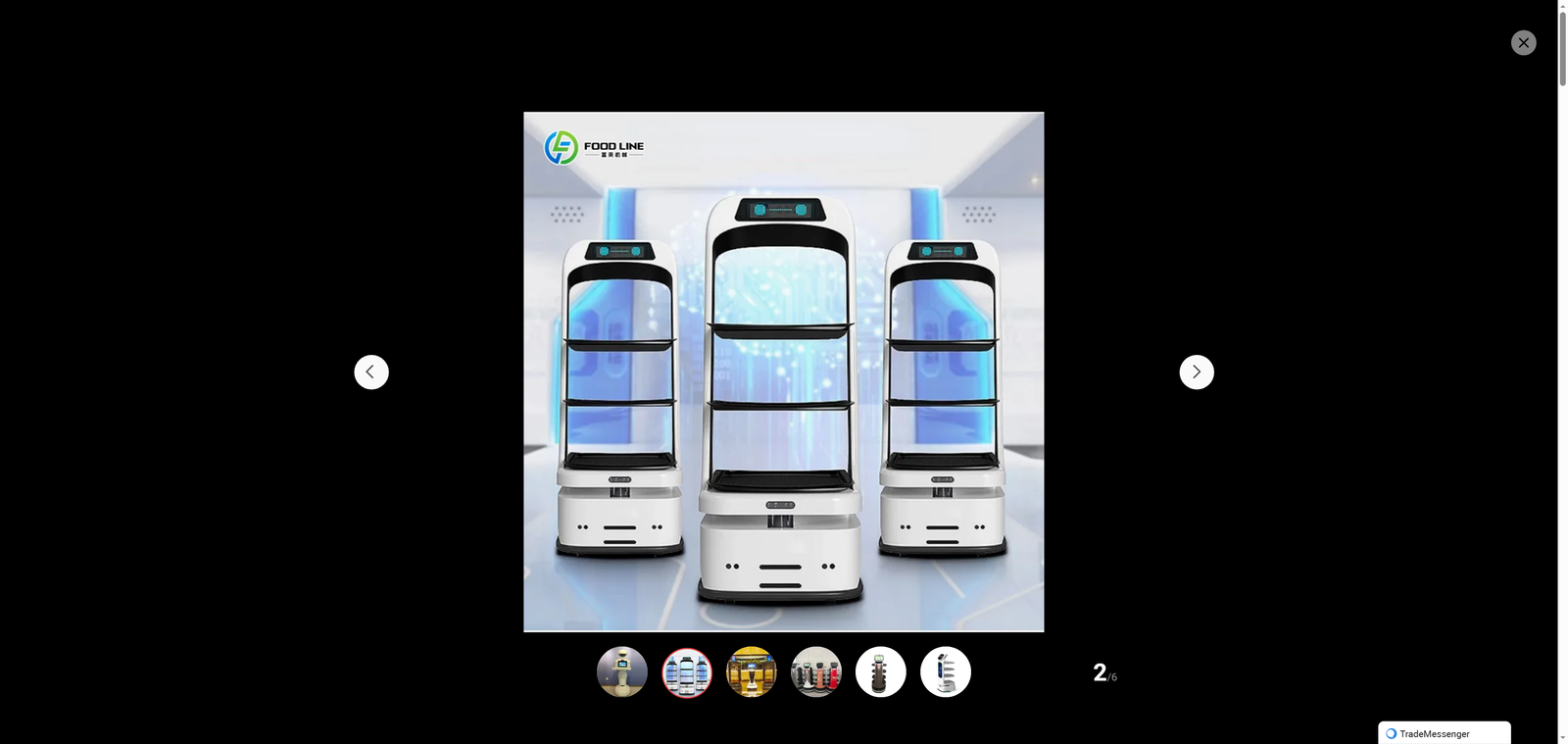
With the rapid development of artificial intelligence technology, the hotel industry, as a typical representative of the service industry, is undergoing a profound transformation from traditional manual service to intelligent service. Among them, the application of AI commercial delivery robots in hotel food delivery scenarios has become a highlight of industrial upgrading. These intelligent robots, with their efficient, accurate, and standardized service capabilities, are not only changing the way hotels deliver food but also redefining the quality of customer experience and the operational efficiency of hotels. They have gradually become an indispensable "new employee" in the modern hotel service system.
The rise of hotel food delivery robots is an inevitable result of the dual drive of market demand and technological progress. On the one hand, with the improvement of people's living standards, consumers' requirements for hotel services are no longer limited to basic accommodation and catering, but pay more attention to the efficiency, convenience and personalization of services. In traditional hotels, food delivery mainly relies on manual work. There are often problems such as long delivery time, easy wrong delivery, and uneven service quality due to factors such as busy peak hours and staff fatigue. These problems not only affect the customer's living experience but also increase the hotel's labor cost and management pressure. On the other hand, the continuous breakthrough of core technologies such as artificial intelligence, Internet of Things, and automatic control has provided a solid technical foundation for the birth and popularization of delivery robots. The advanced navigation and positioning system, obstacle avoidance algorithm, and intelligent interaction module enable robots to move freely in the complex environment of hotels, accurately complete food delivery tasks, and realize seamless connection with hotel management systems.
AI commercial delivery robots have shown unique advantages in hotel food delivery scenarios, which are mainly reflected in three aspects: efficiency, standardization, and cost control. In terms of service efficiency, robots can work 24 hours a day without rest, fatigue or emotional fluctuations. During the peak meal period, multiple robots can cooperate with each other to deliver food to different guest rooms or dining areas at the same time, which greatly shortens the delivery time. Compared with manual delivery, which usually takes 15-20 minutes, the delivery time of robots can be shortened to 5-10 minutes, and the delivery efficiency is increased by more than 50%. In terms of service standardization, robots strictly follow the preset procedures to complete each link of food delivery, from taking food from the kitchen to arriving at the guest room door, and then reminding customers to pick up food through voice or APP. Every step is standardized and standardized, avoiding the impact of human factors on service quality. At the same time, the robot is equipped with a constant temperature and fresh-keeping compartment, which can ensure that the food maintains the best taste during delivery, further improving the customer's dining experience. In terms of cost control, although the initial investment in purchasing delivery robots is relatively high, in the long run, it can significantly reduce the hotel's labor cost. A robot can replace 2-3 manual delivery staff, and the annual labor cost saved is considerable. In addition, the maintenance cost of the robot is low, and the service life is long, which can bring long-term economic benefits to the hotel.
The application of food delivery robots not only optimizes the hotel's operational efficiency but also brings a new intelligent experience to customers. For hotel guests, the appearance of delivery robots is full of technological sense, which has become a new "check-in point" for many young customers. When the robot arrives at the guest room door, it will send a warm voice reminder, and customers can take the food by scanning the code or clicking the button, which is simple and convenient. At the same time, robots can also realize intelligent interaction with customers, such as answering common questions about the hotel, recommending surrounding scenic spots and catering, etc., which enriches the form of customer service. For business travelers who pursue efficiency, the fast and accurate delivery service of robots can save them more time; for family travelers with children, the cute appearance and intelligent interaction of robots can bring more fun to children. It can be said that delivery robots have become a new carrier of hotel service quality, helping hotels enhance customer satisfaction and brand influence.
Of course, the popularization and application of hotel AI commercial delivery robots still face some challenges. On the one hand, the adaptability of robots to complex environments needs to be further improved. Some old hotels have narrow corridors, irregular layouts, or frequent personnel flow, which may affect the movement efficiency of robots. On the other hand, the acceptance of robots by individual customers, especially the elderly, is relatively low. They may be more accustomed to manual service and have a sense of distance from intelligent robots. In addition, the after-sales service and technical support system of robots also need to be further improved to ensure that the robots can be maintained and repaired in a timely manner when they fail. However, with the continuous progress of technology and the continuous upgrading of products, these problems will be gradually solved.
Looking forward to the future, with the in-depth integration of artificial intelligence technology and the hotel industry, AI commercial delivery robots will have a broader development space. In terms of function, future delivery robots will be more intelligent and humanized. They can not only deliver food but also undertake more service tasks such as delivering daily necessities, collecting garbage, and guiding guests. At the same time, with the development of 5G technology and cloud computing, robots can realize interconnection and intercommunication with other intelligent devices in the hotel, forming a complete intelligent service ecosystem. In terms of form, the appearance design of robots will be more diversified and personalized, which can be customized according to the positioning and style of the hotel to better integrate into the hotel environment. In addition, the application scope of delivery robots will also be further expanded, from high-end hotels to mid-range hotels, budget hotels and other types of hotels, bringing intelligent changes to the entire hotel industry.
In conclusion, the application of AI commercial delivery robots in hotel food delivery scenarios is a major innovation in the hotel service industry. It not only solves the pain points of traditional manual delivery such as low efficiency, high cost, and uneven service quality but also brings a new intelligent experience to customers, helping hotels realize the transformation and upgrading of service quality and operational efficiency. With the continuous development of technology and the continuous maturity of the market, delivery robots will become an indispensable part of the hotel industry, leading the hotel industry into a new era of intelligent services.