
The New Era of Catering and Hospitality: Intelligent Delivery Robots Reshape Service Experience
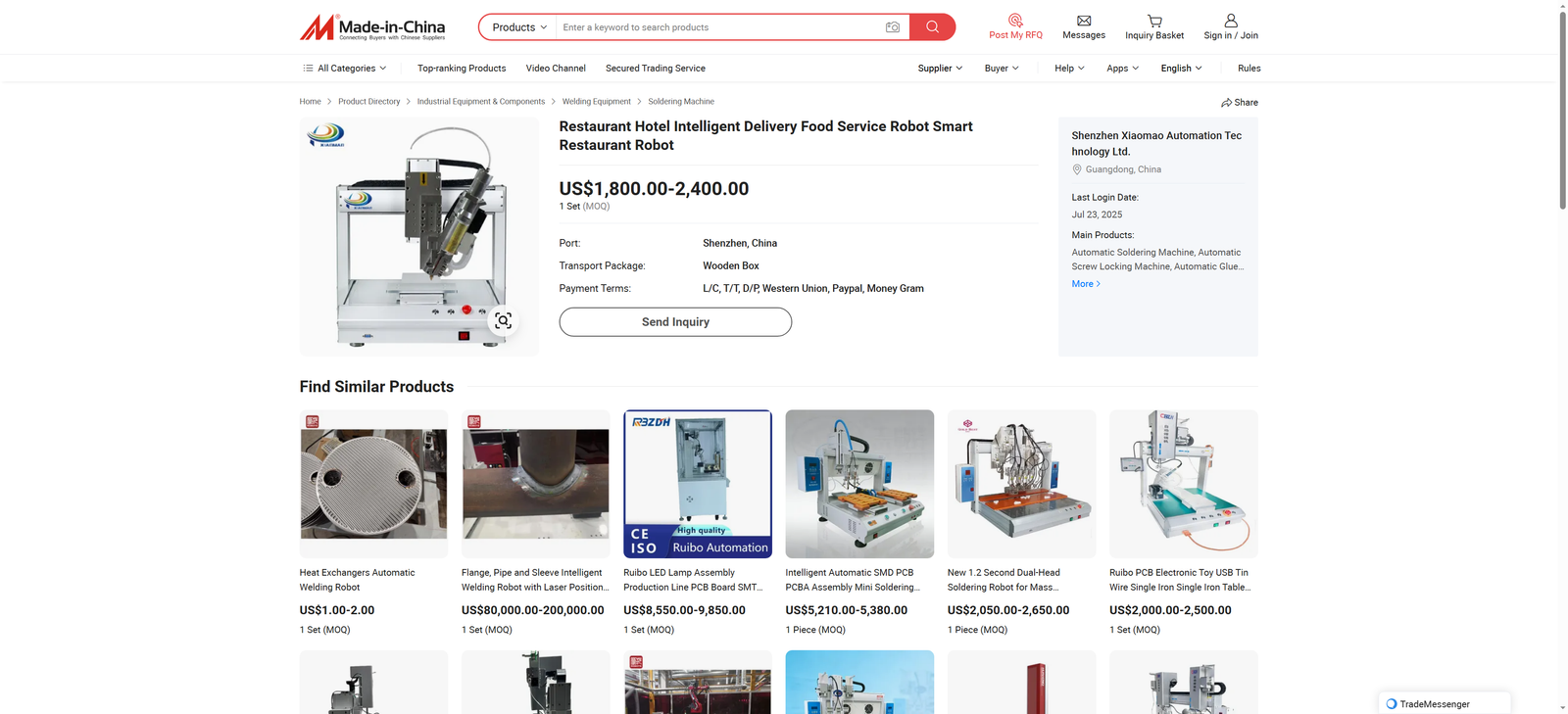
In the fast-paced modern world, the catering and hotel industries are constantly seeking innovations to enhance efficiency, improve customer experience, and reduce operational costs. Amid this wave of digital transformation, Restaurant Hotel Intelligent Delivery Food Service Robots, also known as Smart Restaurant Robots, have emerged as game-changers. These intelligent machines are no longer sci-fi fantasies but practical tools that are revolutionizing daily operations in restaurants, hotels, and various hospitality venues, bridging the gap between technology and human-centric service.
Smart Restaurant Robots are specially designed to adapt to the complex and dynamic environments of restaurants and hotels, focusing on intelligent food and item delivery services. Unlike traditional manual delivery, these robots integrate advanced technologies such as artificial intelligence (AI), machine vision, laser radar, and autonomous navigation, enabling them to complete delivery tasks efficiently, accurately, and safely without constant human supervision. From bustling restaurants to high-end hotels, they are gradually replacing repetitive manual labor, allowing staff to focus on more value-added services that require human care and interaction.
The core advantage of Restaurant Hotel Intelligent Delivery Food Service Robots lies in their high efficiency and stability, which effectively solves the pain points of labor shortages and high costs in the catering and hotel industries. With the continuous rise of labor costs and the difficulty in recruiting and retaining employees in the service industry, these robots have become a cost-effective solution for many businesses. For instance, a single delivery robot can work continuously for 10 to 12 hours a day, delivering 400 to 600 dishes or items, which is equivalent to the workload of 2 to 3 human servers. They never get tired, never take leave, and can maintain consistent service quality even during peak hours, significantly reducing waiting times for customers and improving table turnover rates for restaurants.
In terms of technological configuration, modern Smart Restaurant Robots are equipped with multiple advanced functions to adapt to diverse service scenarios. Most robots adopt SLAM (Simultaneous Localization and Mapping) navigation technology, which allows them to automatically build environmental maps, achieve centimeter-level positioning, and flexibly avoid obstacles such as customers, tables, and other equipment. Some high-end models are also equipped with 3D cameras and optical radar, enabling them to perceive the surrounding environment in all directions and pass through narrow channels as narrow as 65cm smoothly. In addition, they can be seamlessly connected to the restaurant’s order system and hotel’s management system, realizing real-time order tracking, automatic path optimization, and intelligent call response, ensuring that each delivery task is completed accurately and efficiently.
Beyond efficiency, these intelligent delivery robots also bring a new and interesting experience to customers, helping businesses enhance their brand image and competitiveness. With their cute or sleek appearance, coupled with voice interaction and touch control functions, the robots can actively greet customers, introduce dishes, and even perform simple entertainment interactions such as singing and dancing. For example, some catering brands deploy robots at the store entrance to attract customers, complete daily interactions, and drive customer flow conversion. In hotels, delivery robots can send room service, towels, and other items to guests’ rooms 24 hours a day, protecting guests’ privacy while providing convenient and quick service, which is highly recognized by modern consumers, especially the Z-generation who pursue technological sense and personalized experience.
The application of Restaurant Hotel Intelligent Delivery Food Service Robots also reflects the trend of green and sustainable development in the service industry. Compared with traditional manual delivery, robots consume less energy and avoid the waste of resources caused by human errors. Many robots are equipped with high-energy-density solid-state batteries, which are safer and have a longer battery life, reducing the frequency of charging and energy consumption. At the same time, by optimizing the delivery path, robots reduce unnecessary movement, further saving energy and reducing carbon emissions, which is in line with the concept of low-carbon operation advocated by the whole society.
Looking to the future, with the continuous advancement of AI, big data, and Internet of Things technologies, Smart Restaurant Robots will become more intelligent and humanized. They will not only be limited to delivery tasks but also expand to more fields such as intelligent ordering, table cleaning, and customer needs analysis. For example, through big data analysis of customers’ dining habits, robots can provide personalized dish recommendations for customers; by integrating with the intelligent supply chain, they can help businesses optimize inventory management and reduce food waste. It is foreseeable that intelligent delivery robots will not replace human beings in the catering and hotel industries, but will form a complementary relationship with human services, creating a more efficient, convenient, and warm service experience for customers.
In conclusion, Restaurant Hotel Intelligent Delivery Food Service Robots are not only a technological innovation but also a profound transformation in the service model of the catering and hotel industries. They solve the practical pain points of businesses, bring new experiences to customers, and promote the high-quality development of the service industry. As technology continues to iterate and mature, these intelligent robots will be more widely used in various hospitality venues, becoming an indispensable part of the intelligent service system, and opening a new era of integration between technology and hospitality services.