
Reliable Service Robots for Enhanced Hotel Delivery and Handling
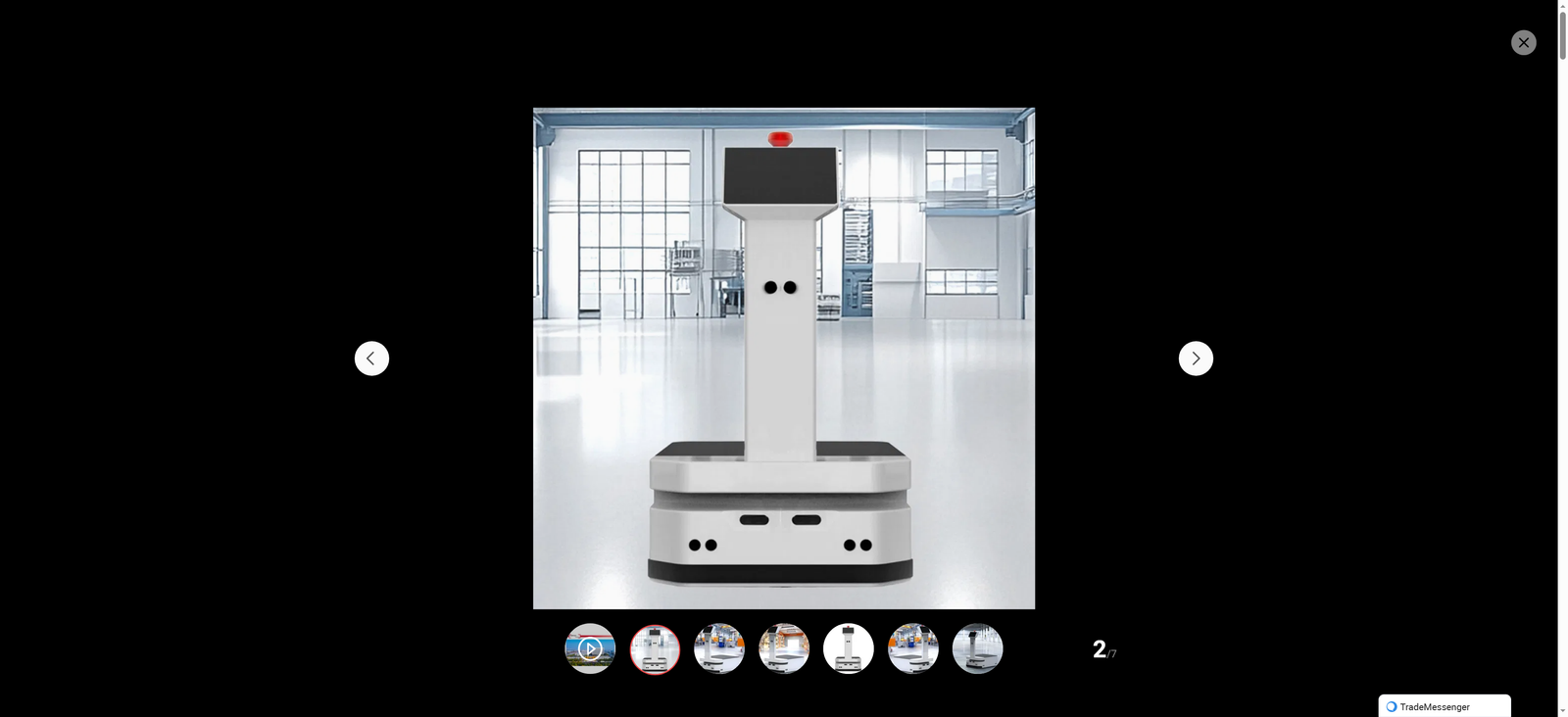
In the era of intelligent hospitality, the pursuit of efficient, accurate and personalized services has become a core competitive edge for hotels. With the rapid advancement of robotics technology, reliable service robots have gradually emerged as a key force transforming hotel operations, especially in optimizing delivery and handling services. These intelligent devices not only break through the limitations of traditional manual services but also inject new vitality into the hotel industry by virtue of their high stability, strong adaptability and continuous service capabilities, redefining the standards of guest experience and operational efficiency.
The reliability of service robots is the cornerstone of their large-scale application in hotels, especially in delivery and handling scenarios that require high accuracy and timeliness. Unlike manual services, which are easily affected by factors such as fatigue, emotion and human error, service robots equipped with advanced sensor technology, path planning algorithms and stable motion control systems can maintain consistent service quality 24 hours a day. For example, in room delivery services, robots can accurately identify elevator signals, navigate through complex corridors, and even avoid sudden obstacles such as guests or cleaning tools, ensuring that items such as food, drinks or toiletries are delivered to the designated room on time without damage. This high reliability not only reduces the probability of service errors but also alleviates the work pressure of hotel staff, allowing them to focus more on providing high-value emotional services.
Enhancing hotel delivery and handling efficiency is another important value of reliable service robots. In traditional hotel operations, delivery and handling tasks such as transporting linen, tableware, and guest luggage often require a large number of manual inputs, and the efficiency is limited by factors such as working hours and physical strength. Service robots, however, can achieve continuous operation without rest, significantly improving the turnover rate of tasks. Taking luggage handling as an example, when guests check in or check out, robots can quickly respond to requests, carry luggage safely and smoothly from the lobby to the room or vice versa, reducing guests’ waiting time. In addition, robots can be connected to the hotel’s central management system to realize intelligent task scheduling. For instance, during peak meal hours, the system can automatically assign multiple robots to deliver meals to different rooms simultaneously, avoiding the backlog of delivery tasks and improving the overall operational efficiency of the hotel.
The application of reliable service robots also helps to optimize the guest experience and enhance the hotel’s brand image. In the context of increasing consumer demand for personalized and intelligent services, robots have become a new highlight of hotel services. For guests, interacting with intelligent robots—such as using voice commands to call for delivery services or watching robots complete handling tasks—adds a sense of novelty and technology to their stay experience. Moreover, robots can provide standardized services without being affected by subjective factors, ensuring that every guest receives consistent and high-quality services. For example, the temperature of delivered food can be maintained stably through the thermal insulation compartment of the robot, and the handling of fragile items can be achieved through stable shock absorption technology, which further improves guest satisfaction. At the same time, the introduction of service robots also reflects the hotel’s commitment to technological innovation and refined management, helping to establish a progressive and high-end brand image.
Behind the reliable operation of hotel service robots lies the support of mature technological systems. On the hardware side, high-precision lidar, visual sensors and infrared detectors enable robots to accurately perceive the surrounding environment and achieve seamless navigation and obstacle avoidance. The high-load-bearing chassis and stable motion mechanism ensure that robots can safely complete handling tasks of different weights and sizes. On the software side, advanced artificial intelligence algorithms, cloud management platforms and Internet of Things (IoT) technology realize the intelligent connection between robots and hotel systems. For example, through the IoT, robots can automatically update room information, elevator status and task lists, and the cloud platform can monitor the operation status of robots in real time, conduct fault early warning and remote maintenance, ensuring the long-term stable operation of robots and further enhancing their reliability.
Of course, the popularization and application of reliable service robots in hotel delivery and handling still face certain challenges. For example, the high initial investment cost may bring financial pressure to some small and medium-sized hotels; the complex indoor environment of hotels (such as narrow corridors, frequent personnel flow) may put forward higher requirements for the adaptability of robots; and some guests may have a sense of distance from robot services. However, with the continuous maturity of robotics technology and the gradual reduction of production costs, these challenges are being gradually resolved. More and more hotels have realized the long-term value of service robots—reducing operational costs, improving service quality and enhancing core competitiveness—and have begun to accelerate the layout of intelligent robot services.
Looking to the future, reliable service robots will play a more important role in hotel delivery and handling services, showing a trend of intelligence, diversification and humanization. With the development of artificial intelligence and big data technology, robots will be able to learn guest preferences through data analysis, providing more personalized delivery services—such as automatically delivering favorite drinks to regular guests. At the same time, the functional integration of robots will be further strengthened, realizing the integration of multiple functions such as delivery, handling, guidance and cleaning, and becoming a multi-functional intelligent service terminal in hotels. In addition, the interaction between robots and humans will become more natural, through more advanced voice recognition, facial recognition and emotional interaction technologies, making robot services more warm and humanized.
In conclusion, reliable service robots have become an indispensable part of the intelligent transformation of the hotel industry. By optimizing delivery and handling services, they not only improve the operational efficiency and service quality of hotels but also bring guests a more intelligent and high-quality stay experience. With the continuous advancement of technology and the continuous upgrading of market demand, service robots will surely create more value for the hotel industry, promoting the continuous development of the hospitality industry towards a more efficient, intelligent and refined direction. For hotels, seizing the opportunity of robot technology innovation and accelerating the layout of intelligent services will be the key to winning the future market competition.