
With the accelerating pace of intelligent transformation in the service industry, smart robots represented by food delivery robots, collaborative cleaning robots, and hotel customer service robots have gradually become core elements in optimizing service efficiency, improving user experience, and reducing operational costs. However, the R&D and iteration of these service robots face challenges such as long development cycles, high trial-and-error costs, and difficulty in matching diverse scenario demands. Against this background, rapid prototype service has emerged as a key driving force, breaking through the bottlenecks of traditional R&D models and injecting strong impetus into the innovation and landing of smart service robots.
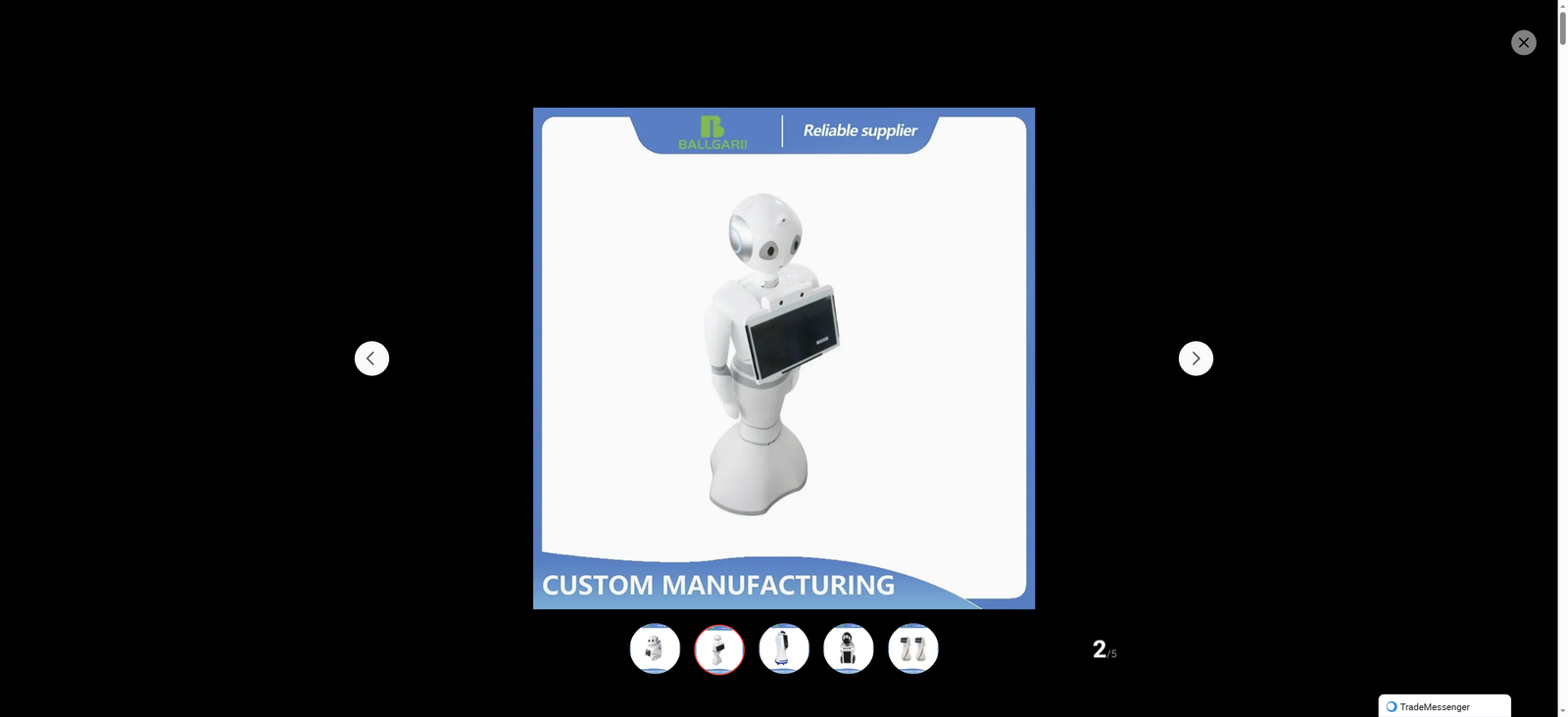
Rapid prototype service for smart service robots refers to the rapid conversion of design concepts, functional requirements and scenario logic into tangible, testable prototype products through advanced technologies such as 3D printing, modular assembly, and rapid programming. Compared with the traditional R&D model that takes months or even years, this service can shorten the prototype development cycle to weeks or even days, allowing R&D teams to quickly verify the feasibility of product design, adjust functional details, and match scenario needs. For food delivery, collaborative cleaning, hotel customer service and other service scenarios with strong demand for personalization and high sensitivity to efficiency, the value of rapid prototype service is particularly prominent.
In the field of smart food delivery robots, rapid prototype service solves the pain points of difficult adaptation to complex catering environments and diverse delivery needs. Catering scenarios involve narrow passages, crowded crowds, and variable table layouts. Through rapid prototyping, R&D teams can quickly produce prototypes with different structural designs, test the flexibility of obstacle avoidance and path planning in real catering environments, and adjust the size, load capacity and movement mode of the robot in a timely manner. For example, for small and medium-sized restaurants with narrow spaces, prototypes of compact food delivery robots can be quickly developed to ensure smooth passage; for large canteens with large delivery ranges, prototypes with strong battery life and large load capacity can be prioritized. At the same time, rapid prototyping can also verify the rationality of functional designs such as automatic meal taking, intelligent calling and voice interaction, ensuring that the final product can truly meet the needs of catering operators and consumers.
For collaborative cleaning robots in hotels and public areas, rapid prototype service helps to improve the adaptability of robots to diverse cleaning scenarios. Hotel cleaning involves multiple areas such as guest rooms, corridors, lobbies and kitchens, and the cleaning needs of different areas vary greatly—for example, guest rooms require careful cleaning of furniture gaps, while lobbies need efficient cleaning of large areas. Rapid prototype service enables R&D teams to quickly develop prototypes with different cleaning modules, such as prototypes with rotating brushes for hard floors, prototypes with vacuum suction nozzles for carpets, and prototypes with disinfection functions for public areas. By testing these prototypes in real hotel environments, the R&D team can quickly screen out the most suitable cleaning module combination, optimize the robot's movement accuracy and cleaning efficiency, and avoid the waste of resources caused by blind R&D. In addition, rapid prototyping can also verify the collaborative work ability of multiple cleaning robots, ensuring that they can coordinate operations without interfering with each other, further improving cleaning efficiency.
In the field of hotel customer service robots, rapid prototype service focuses on optimizing the interaction experience between robots and guests. Hotel customer service robots need to undertake tasks such as check-in guidance, luggage handling, information consultation and elevator coordination. The friendliness of their appearance design, the accuracy of voice interaction and the intelligence of service logic directly affect the guest experience. Through rapid prototyping, R&D teams can quickly produce prototypes with different appearance designs, conduct user experience tests among guests, and select the most popular appearance style. At the same time, rapid programming and debugging in the prototype stage can verify the accuracy of voice recognition, the rationality of service process planning, and the smoothness of docking with hotel management systems. For example, by testing the prototype's check-in guidance function, the R&D team can adjust the interaction process in a timely manner to make it more concise and efficient, helping guests complete check-in quickly and improving the overall service level of the hotel.
The realization of rapid prototype service for smart service robots is inseparable from the support of multiple advanced technologies. 3D printing technology enables the rapid manufacturing of robot structural parts, reducing the cost and time of mold opening; modular design allows the flexible combination of different functional modules, improving the efficiency of prototype assembly and adjustment; intelligent programming tools and simulation test platforms enable the rapid debugging of robot control systems and the verification of scenario adaptability. With the continuous progress of these technologies, the rapid prototype service is also evolving towards higher precision, more diverse functions and lower costs, providing more comprehensive support for the R&D of smart service robots.
Looking to the future, with the continuous expansion of the application scope of smart service robots in hotel and catering scenarios, the demand for rapid prototype service will continue to grow. On the one hand, the service will be more refined, targeting the unique needs of different sub-scenarios to provide customized prototype solutions; on the other hand, it will be more integrated, integrating technologies such as artificial intelligence and Internet of Things into the prototype development process, enabling prototypes to have more intelligent functions and better scenario adaptability. Rapid prototype service will not only accelerate the iteration and upgrading of smart service robots, but also promote the in-depth integration of intelligence and the service industry, helping the service industry achieve higher quality development.
In conclusion, rapid prototype service plays an irreplaceable role in the innovation and landing of smart food delivery, collaborative cleaning and hotel customer service robots. It shortens the R&D cycle, reduces trial-and-error costs, and ensures that products can accurately match scenario needs. With the continuous advancement of technology and the continuous expansion of application scenarios, rapid prototype service will surely become a key link in the industrial chain of smart service robots, empowering the intelligent transformation of the service industry and bringing a more efficient and high-quality service experience to society.