
In the wave of intelligent transformation, the demand for specialized service robots represented by intelligent food delivery robots, collaborative hotel cleaning robots, and smart customer service robots is soaring. These robots are expected to optimize service efficiency, reduce labor costs, and enhance user experience in scenarios such as catering, hospitality, and commerce. However, the design and development of intelligent service robots involve multiple disciplines including mechanics, electronics, software, and human-computer interaction, which often faces challenges such as long development cycles, high iteration costs, and difficulty in matching actual service scenarios. Against this background, rapid prototype service has emerged as a key supporting force, breaking through the bottlenecks in the design process of intelligent service robots and accelerating the pace of their marketization.
Rapid prototype service refers to the use of advanced manufacturing technologies such as 3D printing, CNC machining, and vacuum casting to quickly convert design concepts into physical prototypes or functional prototypes. Compared with traditional prototype production methods, it has obvious advantages such as short production cycle, low cost, high precision, and strong customization. For the design of intelligent service robots, this service is not just a "tool for verifying appearance", but a core link that runs through the entire design process from concept validation to functional testing and user feedback collection.
In the design of intelligent food delivery robots, rapid prototype service plays a vital role in optimizing the overall structure and improving the adaptability of delivery scenarios. Food delivery robots need to have compact structures to navigate in narrow restaurant aisles, while also ensuring sufficient load capacity to carry multiple food trays. Through rapid prototyping, designers can quickly produce physical prototypes of the robot's body structure, wheel system, and storage compartment. By conducting actual navigation tests and load-bearing tests in simulated restaurant environments, they can promptly find and modify structural defects such as poor maneuverability and insufficient load-bearing capacity. For example, if the initial prototype has difficulty turning in narrow spaces, designers can adjust the wheelbase and steering structure, and print a new prototype for testing in a short time. In addition, the appearance design of food delivery robots also affects the user's dining experience. Rapid prototyping allows designers to produce multiple appearance prototypes with different styles, conduct user preference surveys, and finally determine the most popular design scheme, which helps to enhance the market competitiveness of the product.
For collaborative hotel cleaning robots, rapid prototype service focuses on verifying the rationality of the cleaning mechanism and the coordination of human-machine collaboration functions. Hotel cleaning involves a variety of tasks such as floor mopping, dust collection, and table wiping, which requires the robot to be equipped with different cleaning modules. Rapid prototyping can quickly realize the production of key components such as the robot's cleaning brush, suction nozzle, and water tank. Through actual cleaning tests in hotel rooms, corridors, and other scenarios, designers can optimize the structure and working parameters of the cleaning modules to improve cleaning efficiency and cleanliness. At the same time, collaborative hotel cleaning robots need to interact with hotel staff harmoniously, such as automatically avoiding staff and responding to manual control instructions. Rapid prototype service can help test the accuracy of the robot's sensor system and the stability of the human-machine interaction interface. By producing prototypes with integrated sensor modules and control panels, designers can conduct repeated tests and adjustments to ensure that the robot can smoothly complete collaborative work with humans in complex hotel environments.
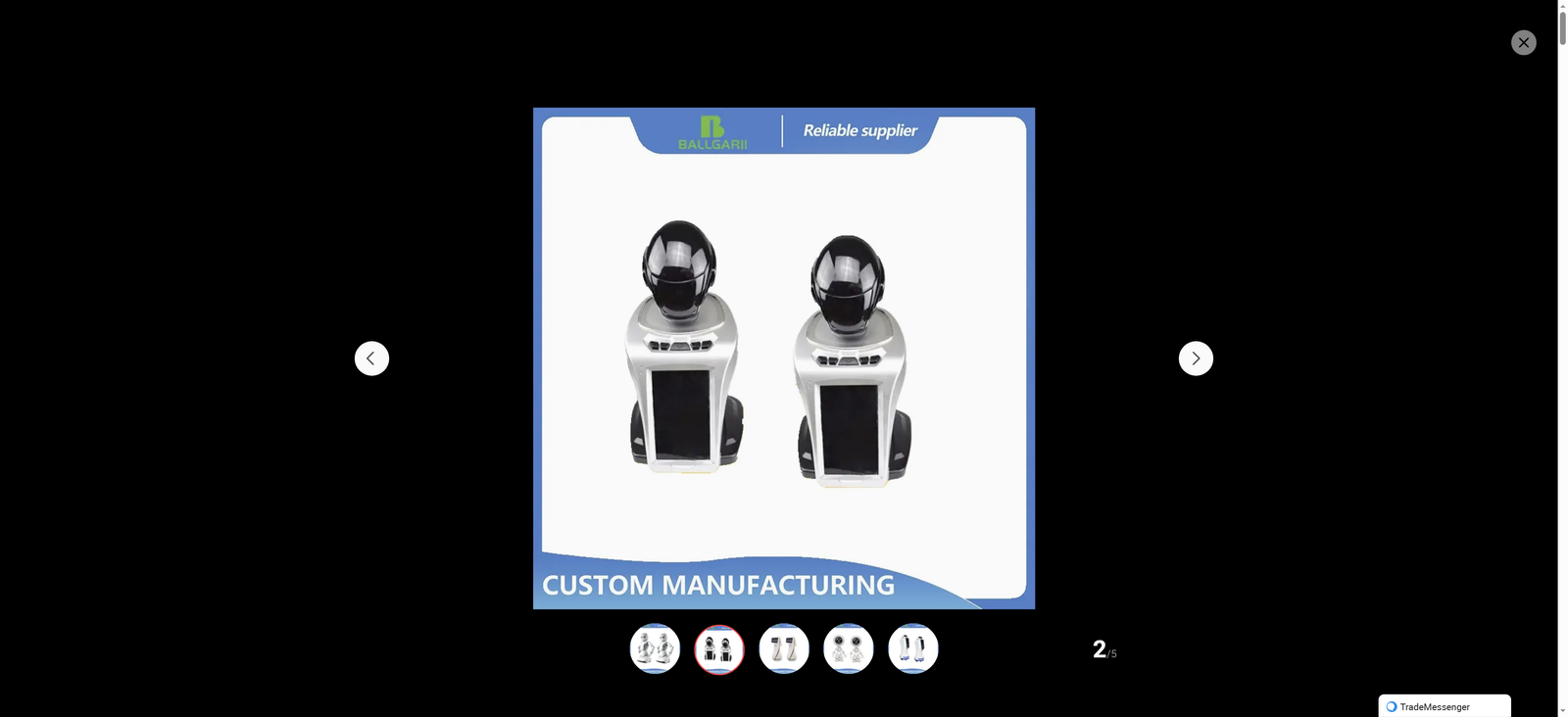
In the design of smart customer service robots, rapid prototype service mainly contributes to optimizing the human-computer interaction experience and verifying the stability of functional modules. Smart customer service robots are often deployed in shopping malls, hotels, banks and other public places, and need to have friendly appearance and smooth interaction methods to provide users with consulting, guidance and other services. Rapid prototyping allows designers to quickly produce prototypes of the robot's interactive components such as touch screens, microphones, and cameras. By conducting user interaction tests, they can adjust the position of the interactive components, the response speed of the system, and the accuracy of voice recognition to improve the user's interaction experience. In addition, the movement mechanism and battery life of smart customer service robots are also key design indicators. Through rapid prototyping, designers can test the robot's movement flexibility and battery endurance, and optimize the power system and movement structure to ensure that the robot can work stably for a long time in public places with large pedestrian flow.
Beyond the specific design links of different types of robots, rapid prototype service also promotes the innovation and iteration efficiency of the entire intelligent service robot industry. In the traditional design process, the production of a single prototype may take several weeks or even months, and the cost is high, which limits the frequency of design iterations. With rapid prototype service, the production cycle of prototypes can be shortened to a few days or even hours, and the cost is significantly reduced. This allows designers to try more innovative design schemes, conduct more sufficient tests and verifications, and accelerate the transformation of innovative ideas into practical products. At the same time, rapid prototype service also lowers the threshold for small and medium-sized enterprises and start-ups to enter the intelligent robot industry, promoting the diversification and vitality of the industry.
However, to give full play to the role of rapid prototype service in the design of intelligent service robots, there are still some key issues that need to be addressed. On the one hand, the material performance of rapid prototyping needs to be continuously improved. At present, some prototype materials cannot fully meet the requirements of actual working conditions, such as insufficient wear resistance and pressure resistance, which may affect the accuracy of functional tests. On the other hand, the integration of rapid prototype service with digital design tools such as simulation analysis needs to be strengthened. By realizing the seamless connection between digital simulation and physical prototyping, the efficiency of design verification can be further improved. In addition, the professional level of rapid prototype service providers also needs to be enhanced to better meet the personalized design needs of different types of intelligent service robots.
In conclusion, rapid prototype service has become an indispensable support in the design of intelligent food delivery, collaborative hotel cleaning, and smart customer service robots. It optimizes the design process, improves product performance, and accelerates marketization. With the continuous advancement of rapid prototyping technology and the deep integration with the intelligent robot industry, it is believed that more high-quality, efficient and user-friendly intelligent service robots will emerge in the future, bringing revolutionary changes to the service industry. For enterprises and designers engaged in the field of intelligent service robots, giving full play to the value of rapid prototype service will be the key to gaining competitive advantages in the fierce market competition.