
Qbi Intelligent Service Robot Operates Stably in Complex Environments
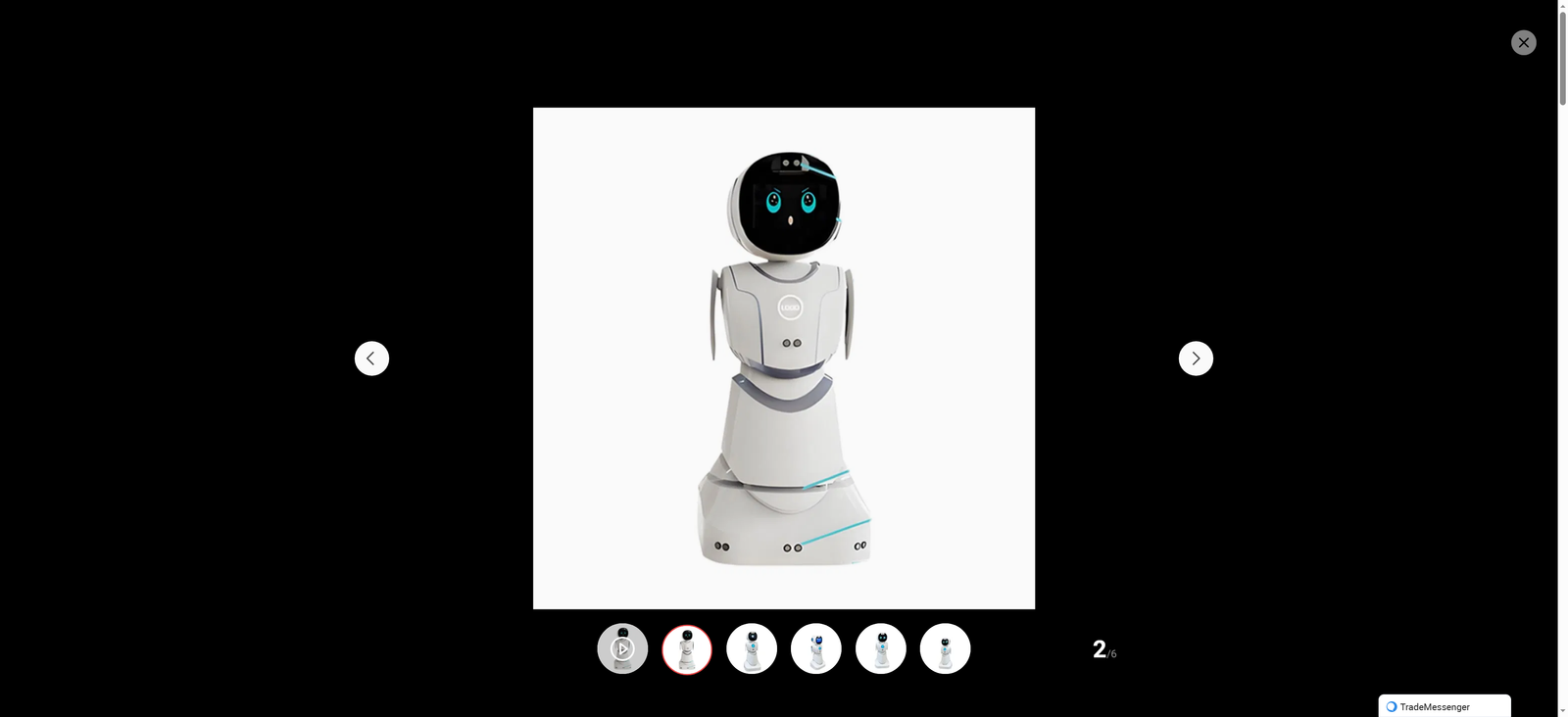
With the rapid advancement of intelligent manufacturing and service industry upgrading, intelligent service robots have gradually become a key force in optimizing production efficiency and improving service quality. However, in real-world application scenarios, complex environments—characterized by dense crowds, dynamic obstacles, uneven ground, and variable lighting—have long been a major challenge restricting the stable operation of robots. As a leader in the field of intelligent service robots, Qbi has broken through multiple technical bottlenecks through in-depth research and development, achieving reliable and stable operation in various complex environments and injecting strong momentum into the intelligent transformation of industries.
The stable operation of Qbi intelligent service robot in complex environments is first supported by its advanced environmental perception and positioning system. Equipped with a multi-sensor fusion module, including high-precision lidar, industrial cameras, ultrasonic sensors, and infrared sensors, Qbi can achieve 360-degree all-round perception of the surrounding environment without blind spots. The lidar can accurately measure the distance and shape of obstacles even in low-light or dusty environments, with a measurement accuracy of up to millimeters; the industrial camera, combined with AI image recognition technology, can quickly identify dynamic targets such as pedestrians, vehicles, and moving goods, and predict their movement trajectories in real time; the ultrasonic sensor and infrared sensor form a double guarantee, effectively avoiding collisions with small obstacles or transparent objects that are easily ignored by other sensors. Based on the multi-dimensional perception data, Qbi's built-in intelligent positioning algorithm can quickly match with the pre-stored map, realize high-precision positioning with an error of less than 5 centimeters, and ensure that it will not get lost or deviate from the route even in large-scale and complex spaces such as shopping malls, factories, and hospitals.
Excellent motion control and path planning capabilities are the core guarantees for Qbi's stable operation in complex environments. Aiming at the problems of uneven ground, steps, and slopes in complex scenarios, Qbi adopts a self-developed adaptive motion chassis. The chassis is equipped with shock-absorbing suspension systems and adjustable height brackets, which can automatically adjust the height and posture of the body according to the ground conditions, ensuring that the robot remains stable and does not tilt when passing through potholes, steps (within 15 centimeters), or slopes (within 30 degrees). At the same time, the dual-drive motor system with independent control provides strong power support, enabling Qbi to move flexibly at different speeds according to the environment—slowly and steadily in crowded areas, and efficiently and quickly in open spaces—without jitter or stagnation. In terms of path planning, Qbi adopts a dynamic path optimization algorithm based on real-time environmental data. When encountering sudden obstacles (such as pedestrians suddenly crossing, temporary stacking of goods), it can complete path re-planning in 0.1 seconds, avoiding obstacles reasonably while ensuring the smooth progress of the task, without causing traffic jams or task interruptions.
In addition to hardware support, the powerful software system and intelligent decision-making capabilities of Qbi further enhance its stability and adaptability in complex environments. The robot's core control system adopts a distributed architecture, which can realize parallel processing of multiple tasks such as perception, positioning, motion, and task execution, ensuring that the system will not crash or lag even when facing massive environmental data. At the same time, relying on the self-learning ability of AI, Qbi can continuously accumulate experience in the process of operation, optimize the parameters of perception algorithms, motion control, and path planning according to the characteristics of different complex environments, and gradually improve its adaptability to specific scenarios. For example, in a busy shopping mall, Qbi can learn the peak hours of pedestrian flow and the distribution of crowded areas, and automatically adjust the operation route and speed in advance; in a factory workshop, it can remember the location of fixed equipment and the movement rules of production lines, and avoid conflicts with production operations.
The stable operation of Qbi intelligent service robot in complex environments has been fully verified in a variety of practical application scenarios. In large shopping malls, Qbi undertakes tasks such as customer guidance, commodity promotion, and environmental cleaning. It can flexibly shuttle among dense crowds, accurately reach the designated location, and complete the task with a success rate of over 99%; in industrial factories, Qbi is responsible for material transportation, equipment inspection, and data collection. It can stably pass through workshops with complex layouts, avoid moving production equipment and stacked materials, and ensure the timely and accurate completion of logistics and inspection tasks; in hospitals, Qbi provides services such as drug delivery, medical waste recycling, and patient guidance. It can move quietly and stably in the ward area, accurately identify medical staff and patients, and avoid disturbing the rest of patients. These practical applications fully prove that Qbi has excellent environmental adaptability and stable operation capabilities, and can meet the diverse needs of different industries in complex environments.
The stable operation of Qbi intelligent service robot in complex environments is the result of the deep integration of hardware innovation, software optimization, and AI technology. It not only breaks through the technical bottlenecks restricting the development of intelligent service robots, but also provides a reliable solution for the intelligent transformation of various industries. In the future, with the continuous progress of technology, Qbi will continue to deepen the research and development of core technologies, further improve its adaptability and stability in more extreme and complex environments, and contribute more to the development of the global intelligent service industry.