
Precision Positioning, Reliable Navigation: The New Era of Multi-Floor Food Delivery Robots
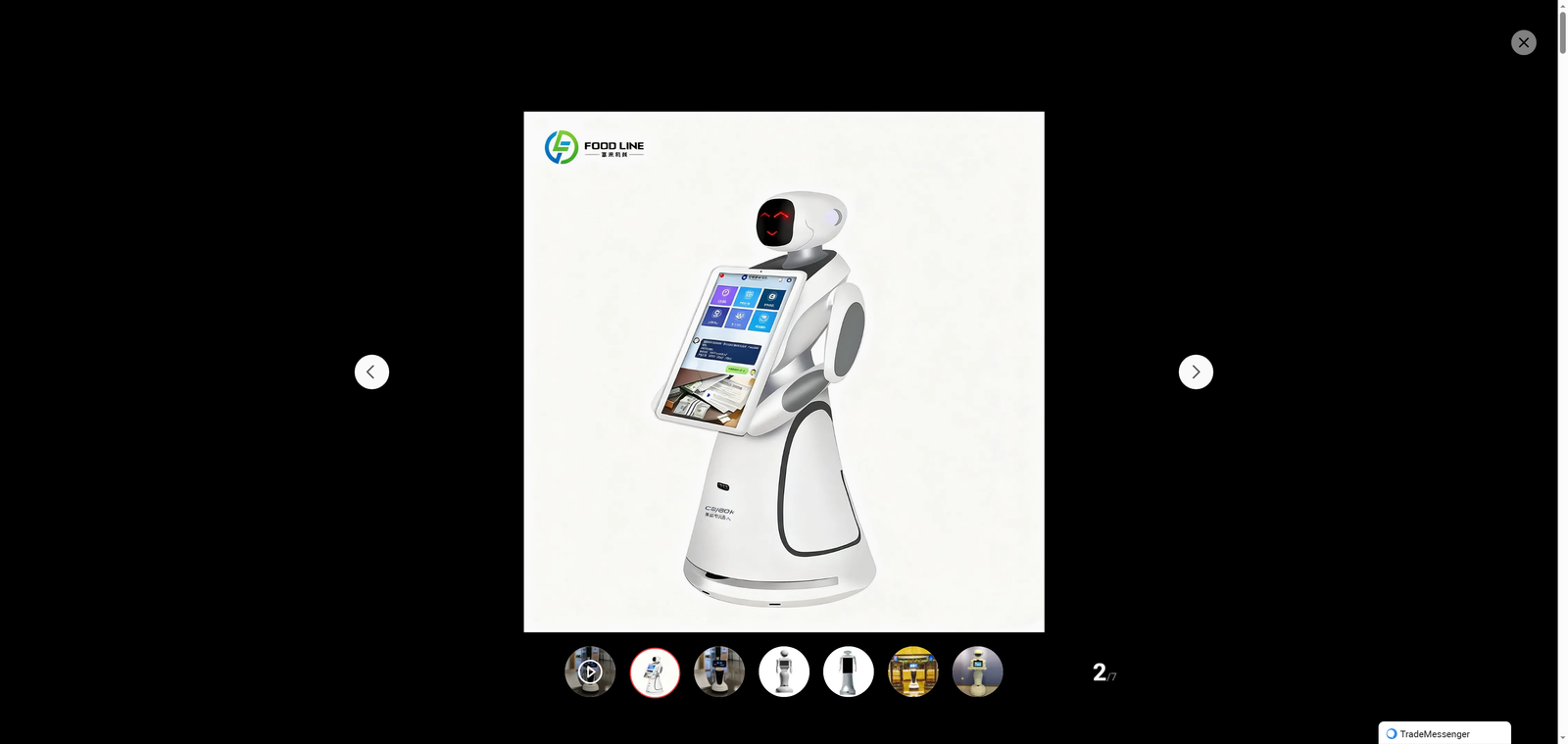
With the rapid development of smart cities and the booming of the catering and logistics industries, the demand for efficient, contactless and intelligent delivery services is growing exponentially. Among the emerging smart devices, the Precision Positioning Reliable Multi-Floor Food Delivery Robot has gradually become a key player in breaking through the bottlenecks of traditional delivery services. It integrates advanced positioning technology, stable multi-floor navigation capabilities and humanized service design, redefining the efficiency and experience of indoor and multi-building food delivery, and injecting strong momentum into the digital transformation of the catering and property industries.
The core competitiveness of multi-floor food delivery robots lies in precision positioning—a technology that is crucial to ensuring the accuracy and timeliness of delivery. Unlike outdoor delivery robots that can rely on GPS signals, indoor and multi-floor environments are faced with complex obstacles such as walls, elevators, and crowded crowds, as well as signal interference problems, which put forward extremely high requirements for positioning accuracy. The current mainstream precision positioning solutions adopted by food delivery robots mainly include multi-sensor fusion technology, UWB (Ultra Wide Band) positioning technology, and SLAM (Simultaneous Localization and Mapping) technology.
Multi-sensor fusion technology integrates data from lidar, visual cameras, infrared sensors, and inertial measurement units (IMUs), which can make up for the defects of a single sensor in complex environments. For example, lidar can accurately detect the distance of obstacles and construct a three-dimensional map of the environment; visual cameras can identify signs, elevator buttons, and human movements to realize scene recognition; IMUs can record the robot's posture and movement trajectory in real time, ensuring that it will not lose its position even when passing through signal-blind areas such as elevators. UWB positioning technology, with its characteristics of high precision, strong anti-interference ability, and low power consumption, can achieve centimeter-level positioning in indoor environments, enabling the robot to accurately identify its own position in large spaces such as shopping malls and office buildings. SLAM technology allows the robot to autonomously build a map of the unknown environment while moving and update its position in real time, which is especially suitable for multi-floor environments with changing layouts, realizing "map construction while walking" and "positioning without dead ends".
On the basis of precision positioning, reliable multi-floor operation is another key advantage of food delivery robots, which directly determines whether they can be widely applied in multi-story buildings such as shopping malls, office buildings, and residential areas. The biggest challenge of multi-floor operation is the seamless connection of elevator rides and the accurate navigation of different floors. To solve this problem, food delivery robots have achieved full-process autonomous operation through in-depth integration with building intelligent systems and optimized algorithm design.
In terms of elevator connection, the robot can realize two-way communication with the elevator control system through protocols such as RS485 or TCP/IP, and autonomously call the elevator, select the target floor, and enter and exit the elevator. During the elevator ride, the robot can use IMU sensors and visual recognition technology to detect the elevator's running state and its own position in the elevator, ensuring that it can stand stably in the elevator and accurately exit when the elevator arrives at the target floor. At the same time, the robot is also equipped with anti-collision sensors. When it detects that there are people or obstacles in the elevator, it will actively wait to avoid conflicts, ensuring the safety and order of elevator use.
In terms of multi-floor navigation, the robot will pre-store the map data of each floor, and after arriving at the target floor, it will quickly switch the map and start precise positioning and navigation based on the current floor environment. For environments with similar layouts on different floors, the robot can rely on unique markers (such as floor numbers, special decorations, etc.) to distinguish, avoiding navigation errors. In addition, the robot's navigation algorithm has strong adaptive capacity. It can dynamically adjust the route according to real-time changes in the environment, such as avoiding crowded areas, construction areas, or temporary obstacles, ensuring that the delivery task is completed smoothly and on time.
The application of Precision Positioning Reliable Multi-Floor Food Delivery Robots has brought profound changes to multiple industries. In the catering industry, especially in large shopping malls and office buildings with dense people, the robot can take over the tedious food delivery work from waiters, reducing the labor cost of catering merchants and improving delivery efficiency. Taking a large shopping mall as an example, a food delivery robot can complete 30-50 delivery tasks per day, with an average delivery time of 3-5 minutes per order, which is far higher than the manual delivery efficiency, and can avoid delivery errors caused by manual memory confusion. At the same time, contactless delivery can also reduce the risk of cross-infection of bacteria and viruses, which is in line with the public's demand for healthy and safe services.
In the property management industry, multi-floor food delivery robots can also be integrated with smart property services to provide residents with convenient services such as takeaway delivery, express delivery, and daily necessities delivery. For high-rise residential areas, the robot can autonomously complete the whole process from the community gate to the resident's door, solving the problem of "last 100 meters" delivery difficulty, and improving the residents' sense of happiness and satisfaction. In addition, the robot can also collect environmental data of each floor during the delivery process, such as temperature, humidity, and crowd density, providing data support for the intelligent management of the property.
With the continuous progress of technology, the Precision Positioning Reliable Multi-Floor Food Delivery Robot is also moving towards a more intelligent and humanized direction. In the future, with the popularization of 5G technology, the robot's data transmission speed and response speed will be further improved, and it can realize more complex collaborative operations, such as multi-robot joint delivery and cross-building delivery. At the same time, the integration of artificial intelligence technology will enable the robot to have stronger language interaction capabilities and scene judgment capabilities, which can better meet the personalized needs of users. For example, it can accurately identify the user's voice commands, adjust the delivery time according to the user's needs, and even automatically take the elevator to the designated floor after recognizing the user's face.
However, there are still some challenges to be solved in the popularization and application of multi-floor food delivery robots. For example, the compatibility of elevator protocols in different buildings, the high cost of precision positioning equipment, and the relevant legal and regulatory issues in the process of robot operation. These problems need to be solved through the joint efforts of enterprises, governments, and research institutions. With the continuous improvement of the industrial chain and the gradual improvement of relevant policies, the application scenarios of multi-floor food delivery robots will be more extensive, and they will become an important part of the smart city ecosystem.
In conclusion, the Precision Positioning Reliable Multi-Floor Food Delivery Robot, with its core advantages of precision positioning and reliable multi-floor operation, has broken through the limitations of traditional delivery services and brought new development opportunities to the catering, property and other industries. It is not only a product of technological progress, but also a concrete manifestation of the transformation of people's lifestyle towards intelligence. In the future, with the continuous innovation of technology and the continuous expansion of application scenarios, multi-floor food delivery robots will play a more important role in promoting the digital transformation of society and building a smarter life.