The Era of Intelligent Robots: Empowering Diverse Scenarios with Technology
With the rapid advancement of artificial intelligence and robotics technology, intelligent robots have gradually stepped out of laboratories and penetrated into every corner of social life and work. From daily consumption scenarios such as offices, hotels, restaurants and KTVs to official work scenarios of government departments, two types of robots—Food Delivery Robots and Document Transfer Robots—are quietly changing the way we live, work and serve, injecting strong impetus into the era of intelligence.
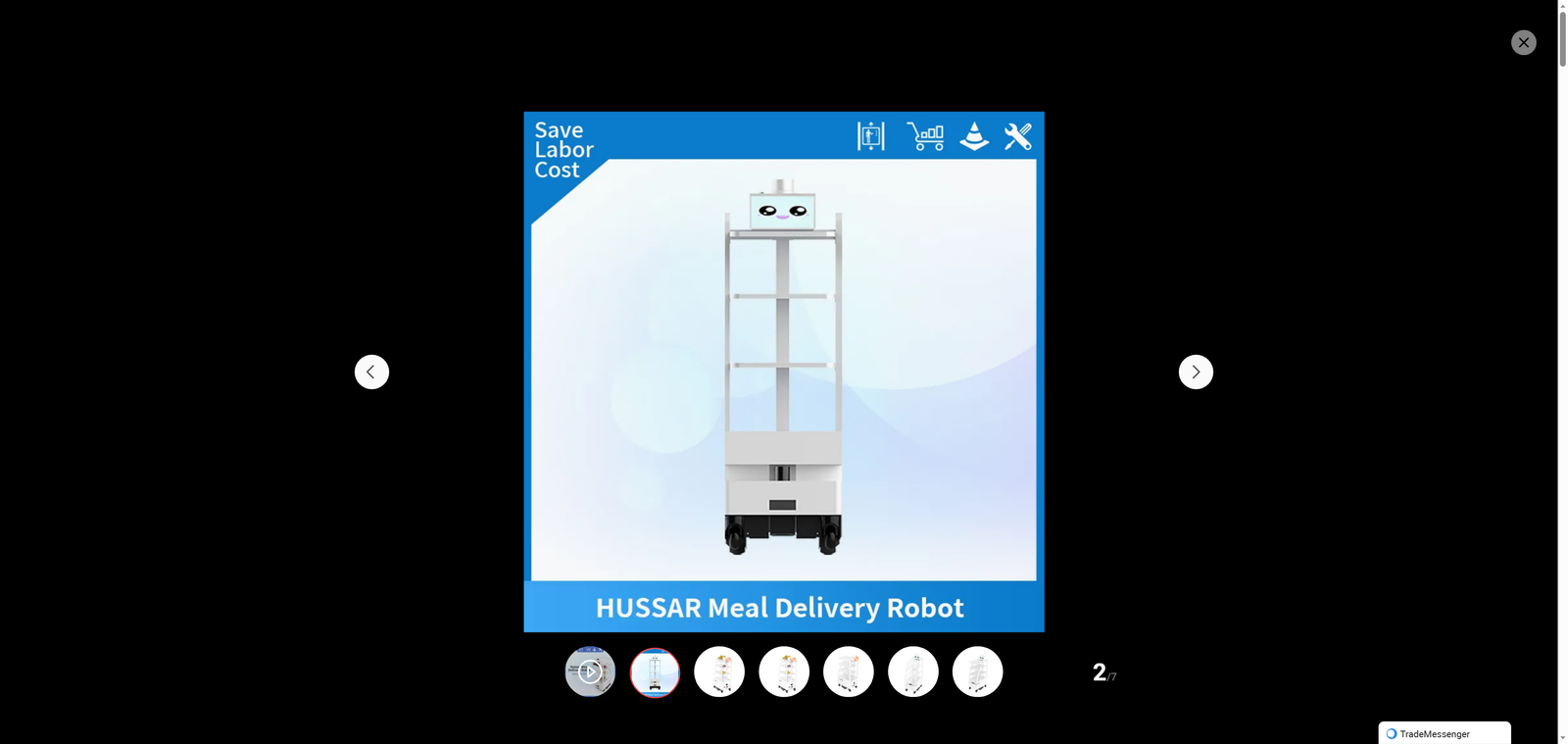
In the service industry, which is closely related to people's lives, Food Delivery Robots have become a "new force" that optimizes service efficiency and enhances user experience. In restaurants, the traditional food delivery mode relies heavily on manual work, which is not only prone to errors such as wrong delivery and delayed delivery during peak hours, but also increases the labor burden of waiters. The emergence of Food Delivery Robots has perfectly solved these pain points. Equipped with advanced navigation and obstacle avoidance systems, they can accurately identify the layout of the restaurant, smoothly shuttle between tables, and accurately deliver meals to the designated location. Whether it is a small private restaurant or a large catering chain, Food Delivery Robots can adapt to different space environments, reduce the labor cost of catering enterprises, and also let waiters focus more on providing intimate services such as ordering and consulting for customers, improving the overall service quality of the restaurant.
The application of Food Delivery Robots is not limited to restaurants. In hotels, they can act as "intelligent butlers" to deliver room service items such as mineral water, towels and takeout to guests' rooms 24 hours a day, avoiding the embarrassment of guests waiting for a long time and ensuring the privacy of guests. In KTVs, where the environment is relatively complex with many people and noisy sounds, Food Delivery Robots can still accurately locate the private rooms through intelligent sensing technology, deliver snacks, drinks and other consumer goods in a timely manner, allowing consumers to enjoy the entertainment process without interruption. These application scenarios fully demonstrate that Food Delivery Robots are no longer a "gimmick", but a practical tool that truly meets the needs of the service industry and promotes the upgrading of the service industry.
Compared with Food Delivery Robots which are closely related to people's daily life, Document Transfer Robots play a more important role in official work scenarios such as government departments and offices, becoming a "reliable assistant" to improve office efficiency and ensure the safety of document circulation. In government departments, document circulation is frequent and involves a wide range of fields, including confidential documents, approval materials and public affairs documents. The traditional document transfer mode mainly relies on manual delivery, which is not only time-consuming and labor-intensive, but also has potential risks such as document loss, leakage and delay. Document Transfer Robots have solved these problems with their efficient and safe characteristics.
In government office buildings, Document Transfer Robots can realize automatic navigation and accurate delivery through the connection with the office system. They can take documents from the designated office, go through the intelligent access control system, and accurately send the documents to the hands of the relevant recipients, and record the whole process of document transfer in real time. This not only greatly shortens the time of document circulation, improves the efficiency of government affairs handling, but also avoids the risk of human error in document transfer, ensuring the confidentiality and safety of documents. In ordinary offices, Document Transfer Robots can also undertake the work of transferring files, materials, office supplies and other items between departments, reducing the time cost of employees in document transfer, so that employees can focus more on core work, and promoting the transformation of the office mode to intelligence and efficiency.
Whether it is Food Delivery Robots in service scenarios or Document Transfer Robots in office scenarios, their popularization and application are inseparable from the support of technological progress. The continuous upgrading of navigation technology, sensing technology, artificial intelligence algorithm and other technologies has made robots more intelligent, flexible and reliable, and can adapt to more complex application environments. At the same time, the increasing demand for efficiency improvement and service upgrading in all walks of life has also provided a broad market space for the development of robots.
Looking to the future, with the continuous breakthrough of technology, the functions of Food Delivery Robots and Document Transfer Robots will be more perfect, and their application scenarios will be more extensive. They may not only be limited to offices, hotels, restaurants, KTVs and government departments, but also penetrate into more fields such as hospitals, schools and shopping malls, bringing more convenience to people's life and work. Intelligent robots are changing the world with an unprecedented speed and strength, and the era of "robot " has come. In this era, we should actively embrace technological changes, give full play to the role of robots, and let technology better serve people's life and social development.