
Obstacle Avoidance Guidance: Redefining the Excellence of Welcoming and Reception Service Robots
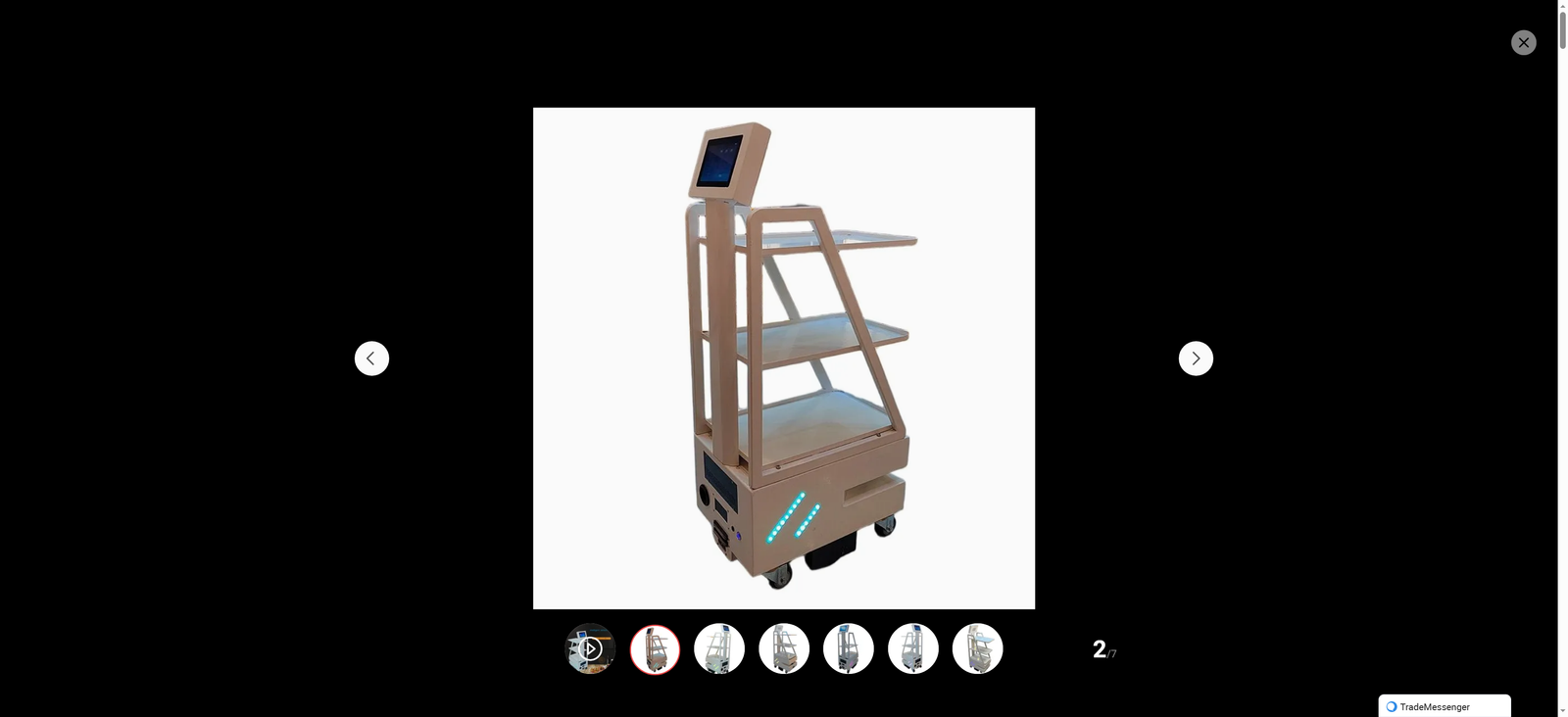
In the era of intelligent service upgrading, welcoming and reception service robots have become a core part of modern business spaces, reshaping the way enterprises interact with customers. Among the numerous technical capabilities that determine the performance of these robots, obstacle avoidance guidance stands out as a key competitive advantage—its stability and precision directly affect the user experience, operational efficiency, and safety of the robots. This article will delve into the importance of obstacle avoidance guidance technology for welcoming and reception service robots, its technical implementation, and application value in various scenarios.
Why Obstacle Avoidance Guidance Is Indispensable for Welcoming & Reception Robots
Welcoming and reception robots operate in complex and dynamic environments such as hotel lobbies, office buildings, shopping malls, and exhibition centers. These spaces are often crowded with people, mobile obstacles (such as luggage carts, cleaning tools), and fixed structures (such as front desks, potted plants). Without reliable obstacle avoidance guidance, robots may collide with objects or people, causing safety hazards, damaging equipment, or disrupting the order of the site—all of which undermine the professional image of the enterprise and the purpose of intelligent services.
For users, a robot with excellent obstacle avoidance guidance can provide a smooth and reassuring service experience. It can accurately navigate through crowded areas, guide guests to their destinations without hesitation, and avoid awkward pauses or detours caused by obstacle handling. For enterprises, this technology reduces the need for manual supervision, lowers the maintenance cost of robots due to collisions, and maximizes the operational efficiency of the robot team—making intelligent reception truly realize cost reduction and efficiency improvement.
Technical Implementation of Obstacle Avoidance Guidance for Welcoming & Reception Robots
The obstacle avoidance guidance function of welcoming and reception robots relies on the integration of multiple technologies, forming a "perception-judgment-execution" closed-loop system to ensure accurate response in complex environments.
Multi-sensor Perception System: The "Eyes" of the Robot
To comprehensively perceive the surrounding environment, high-performance welcoming robots are usually equipped with a multi-sensor fusion system, including:
- LiDAR (Light Detection and Ranging): It emits laser beams to measure the distance and position of objects in real time, with high precision and long detection range. It can quickly map the surrounding environment and identify small obstacles, making it suitable for large-space navigation such as exhibition halls and shopping malls.
- Visual Cameras: Through 2D/3D cameras, the robot can recognize objects, pedestrians, and traffic signs, and even distinguish human gestures and expressions to achieve more intelligent interaction while avoiding obstacles.
- Ultrasonic Sensors: Suitable for short-distance obstacle detection, it complements LiDAR and cameras, especially in detecting transparent objects (such as glass doors) that are difficult for other sensors to identify.
- Inertial Measurement Units (IMU): Real-time monitoring of the robot's movement state (speed, direction, posture) ensures stable navigation and avoids deviations caused by sudden obstacles.
2. Intelligent Algorithm: The "Brain" of Obstacle Avoidance Guidance
Sensor data alone is not enough; advanced algorithms are needed to process and analyze information to make correct decisions. The core algorithms include:
- SLAM (Simultaneous Localization and Mapping): The robot builds a map of the environment in real time while positioning itself, enabling autonomous navigation in unfamiliar spaces without pre-set routes.
- Dynamic Obstacle Prediction Algorithm: For moving objects such as pedestrians, the algorithm predicts their movement trajectory and adjusts the robot's route in advance, avoiding sudden stops or collisions.
- Path Planning Algorithm: Based on the perceived environment, the algorithm plans the optimal path in real time, balancing efficiency and safety. When encountering obstacles, it can quickly generate alternative routes without affecting the service process.
3. Responsive Execution System: The "Limbs" of the Robot
The execution system, including motors, steering gears, and wheels, responds to the instructions of the algorithm in real time. With precise speed control and steering adjustment, the robot can achieve smooth obstacle avoidance—such as slowing down when approaching pedestrians, bypassing obstacles with a small radius, or stopping temporarily to let people pass, ensuring the comfort of both guests and the robot's operation.
Application Scenarios: Obstacle Avoidance Guidance Shines in Diverse Spaces
With reliable obstacle avoidance guidance, welcoming and reception service robots can adapt to a variety of commercial scenarios, creating value for enterprises in different industries.
Hotel & Catering Industry
In hotel lobbies, robots with obstacle avoidance guidance can welcome guests at the door, guide them to the front desk, elevator, or room, and even deliver room cards and luggage. They can flexibly avoid tourists with luggage, cleaning staff, and moving luggage carts, ensuring efficient and safe service. In catering venues such as restaurants and hotels, they can also assist in guiding guests to their seats, avoiding collisions with diners and waiters.
2. Office Buildings & Commercial Complexes
In large office buildings and shopping malls, these robots serve as "intelligent guides," helping visitors find offices, shops, or public facilities (such as restrooms and elevators). The complex flow of people and mobile obstacles (such as strollers and shopping carts) do not affect their navigation—they can accurately bypass obstacles and maintain the planned route, improving the efficiency of visitor reception and reducing the workload of manual receptionists.
3. Exhibition & Event Venues
During exhibitions, conferences, and other large-scale events, the venue is often crowded with visitors, booths, and display items. Welcoming robots with excellent obstacle avoidance guidance can welcome guests, distribute materials, guide them to specific booths, and even provide real-time event information. They can adapt to the dynamic changes of the venue, avoid temporary obstacles (such as stacked materials and temporary booths), and ensure the smooth progress of the event.
4. Medical & Educational Institutions
In hospitals and schools, where the environment requires high safety and order, welcoming robots can guide patients to consultation rooms, inspection rooms, or pharmacies, and guide parents and students in schools. The obstacle avoidance guidance function ensures that they do not collide with patients, medical equipment, or students, maintaining the order of the site and reducing potential safety risks.
Future Trends: Obstacle Avoidance Guidance Drives Intelligent Upgrade
With the continuous development of artificial intelligence, sensor technology, and big data, the obstacle avoidance guidance capability of welcoming and reception service robots will be further upgraded. In the future, robots will have more intelligent perception capabilities—such as recognizing human intentions through facial expressions and body language to make more humanized obstacle avoidance decisions. At the same time, the integration of 5G and cloud technology will enable multi-robot collaborative navigation, allowing multiple welcoming robots to avoid obstacles and coordinate work in the same space, further improving service efficiency.
For enterprises, choosing a welcoming and reception service robot with excellent obstacle avoidance guidance is not only an investment in intelligent equipment but also a way to enhance brand image and user experience. In the increasingly fierce market competition, robots with reliable obstacle avoidance guidance will become a key tool for enterprises to gain a competitive advantage, helping businesses achieve more efficient, safe, and intelligent reception services.
In conclusion, obstacle avoidance guidance is the core technology that determines the application value of welcoming and reception service robots. It breaks through the limitations of complex environments, makes intelligent reception more reliable and efficient, and injects new vitality into the development of various industries. With the continuous innovation of technology, we can expect these intelligent robots to bring more surprises to the service industry in the future.