
In the era of rapid technological advancement, the integration of intelligence into the service industry has become an irreversible trend. Among the latest innovations, the new arrival hotel restaurant food delivery robot, intelligent robot, and self-service robot have emerged as game-changers, redefining the customer experience and operational efficiency for hotels and restaurants. These intelligent machines are no longer just futuristic concepts but tangible assets that are revolutionizing daily operations, bringing convenience, precision, and a touch of innovation to both businesses and consumers.
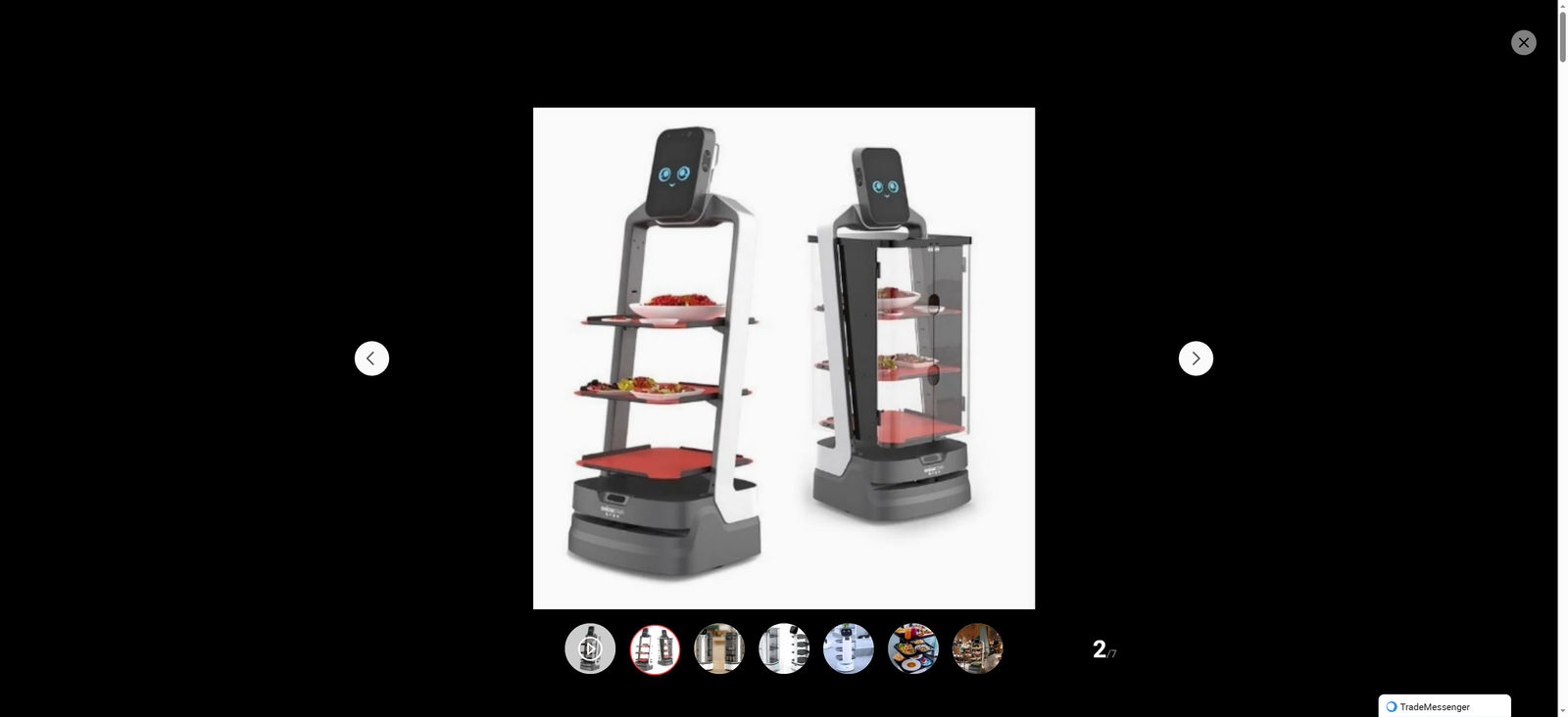
The new arrival food delivery robot is undoubtedly a standout in restaurant and hotel dining services. Unlike traditional manual food delivery, this intelligent robot is equipped with advanced navigation systems, enabling it to smoothly navigate through crowded dining halls, narrow corridors, and even avoid sudden obstacles such as moving guests or cleaning equipment. Whether it is delivering exquisite dishes from the kitchen to the guest tables in a high-end restaurant or sending room service meals to guests’ doors in a hotel, the food delivery robot completes the task with remarkable stability and timeliness. It eliminates the need for guests to wait anxiously for their food and reduces the workload of service staff, allowing them to focus more on providing personalized services such as explaining dishes or addressing special requests. Moreover, the food delivery robot is designed with a closed food compartment, which effectively maintains the temperature and hygiene of the food, ensuring that guests can enjoy delicious meals in the best condition.
Beyond food delivery, the new arrival intelligent robot and self-service robot have also been widely applied in various scenarios of hotels and restaurants, further optimizing the service process. In hotel lobbies, self-service robots can handle check-in and check-out procedures for guests independently. Guests only need to scan their ID cards, enter relevant information, and complete payment through the robot’s touch screen, and they can quickly get their room cards. This not only saves guests the time of queuing at the front desk but also reduces the pressure on front desk staff, especially during peak travel seasons. In addition, intelligent robots can act as “virtual butlers” in hotels. They can answer guests’ inquiries about hotel facilities, surrounding attractions, and transportation information in real time through voice interaction. Some advanced models can even guide guests to their rooms, carry small luggage for them, and provide services such as turning on the lights and adjusting the air conditioning temperature in the room, bringing guests a more intelligent and humanized living experience.
For restaurant operations, self-service robots also play an important role in improving efficiency. In many fast-food restaurants and casual dining restaurants, self-service ordering robots have become a common sight. Guests can browse the menu, select dishes, and pay through the robot, without the need for waiters to take orders manually. This not only speeds up the ordering process but also reduces the possibility of order errors caused by communication misunderstandings. After ordering, the system will automatically send the order to the kitchen, and the food delivery robot will then take over the task of delivering the food, forming a seamless service chain from ordering to food delivery. This intelligent operation mode not only reduces the labor cost of restaurants but also improves the overall service efficiency and customer satisfaction.
The emergence of these new arrival hotel restaurant food delivery robots, intelligent robots, and self-service robots is not to replace human services, but to complement and enhance them. While intelligent robots take on tedious and repetitive tasks, human staff can focus more on providing emotional and personalized services that robots cannot replicate, such as communicating with guests, understanding their needs, and creating a warm dining and living atmosphere. This combination of intelligence and humanity is the future direction of the hotel and catering service industry.
In conclusion, the new arrival intelligent robots have brought profound changes to the hotel and catering industry. They have optimized the service process, improved operational efficiency, reduced labor costs, and enhanced the overall customer experience. With the continuous progress of technology, these intelligent robots will be equipped with more advanced functions, and their application scenarios will be more extensive. It is believed that in the near future, intelligent robots will become an indispensable part of the hotel and catering service industry, leading the industry to a more intelligent, efficient, and high-quality development stage.