
Multifunctional Reception Robots for Efficient Luggage Handling in Hotels
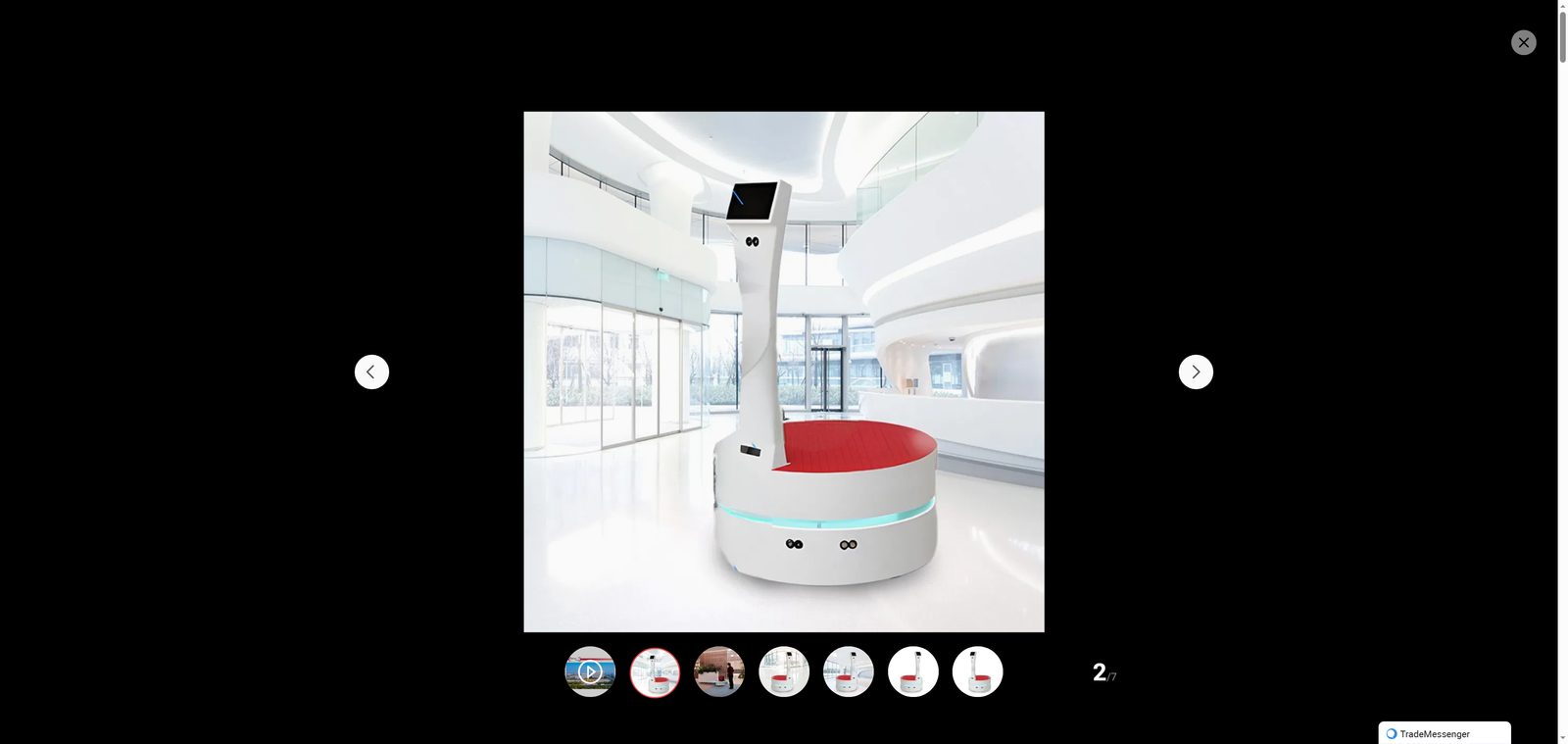
In the era of smart tourism and digital transformation, the hotel industry is undergoing a profound revolution driven by technological innovation. Among various smart devices, multifunctional reception robots have emerged as a key force in optimizing service processes, especially in luggage handling—a link that directly affects guests’ initial experience and overall satisfaction. Traditional hotel luggage handling relies heavily on human resources, which is often constrained by factors such as labor shortages, uneven service quality, and limited working hours. Multifunctional reception robots, equipped with advanced navigation, load-bearing, and interaction technologies, are breaking through these bottlenecks, reshaping the efficiency and quality of hotel luggage services, and injecting new vitality into the smart upgrade of the hotel industry.
The core value of multifunctional reception robots in luggage handling lies in their ability to realize full-process automation and intelligence, from guest check-in to room delivery and check-out luggage collection. Unlike single-function robots, these multifunctional devices integrate reception, guidance, and luggage transportation capabilities, forming a closed-loop service system that connects the hotel lobby, elevators, guest rooms, and other key areas. When guests arrive at the hotel, the robot can quickly identify guest information through face recognition or QR code scanning, automatically take over luggage after confirming the room number, and plan the optimal route through the built-in SLAM (Simultaneous Localization and Mapping) navigation system. It can flexibly avoid obstacles such as pedestrians and furniture, take elevators independently through elevator interconnection technology, and accurately deliver luggage to the designated guest room door. During the check-out process, guests only need to send a luggage collection request through the hotel APP or the in-room control panel, and the robot will arrive at the guest room on time to pick up the luggage and transport it to the lobby, greatly reducing the waiting time of guests and the workload of bellboys.
The efficient operation of multifunctional reception robots in luggage handling is supported by a series of advanced technologies. In terms of load-bearing performance, the robots are designed with high-strength lightweight materials, which can carry multiple pieces of luggage with a total weight of 50-100 kilograms, meeting the needs of most individual and family guests. The anti-slip and shock-absorbing luggage compartment ensures that the luggage remains stable during transportation, avoiding damage caused by jolting. In terms of intelligent interaction, the robots are equipped with natural language processing modules, which can communicate with guests in multiple languages, answer questions about luggage transportation, hotel facilities, and surrounding attractions, and provide humanized service experience. In addition, the robot is connected to the hotel’s central management system in real time, enabling the management to monitor the robot’s operating status, location, and task completion in real time. It can also automatically return to the charging station for charging when the power is low, ensuring 24-hour continuous operation without manual intervention.
The application of multifunctional reception robots in hotel luggage handling not only improves service efficiency but also brings multiple benefits to hotels and guests. For guests, it solves the pain points of carrying heavy luggage, waiting for a long time, and being unable to get luggage service at odd hours. The whole process of contactless luggage handling also reduces the risk of cross-infection, which is in line with the health and safety needs of guests in the post-epidemic era. For hotels, it effectively alleviates the pressure of labor shortage. With the increasing difficulty in recruiting and retaining bellboys in the hotel industry, robots can replace human resources to complete repetitive and heavy luggage transportation work, allowing employees to focus on more high-value services such as guest care and experience improvement. At the same time, the application of robots can enhance the hotel’s smart image, form a unique competitive advantage, and attract more young and tech-savvy guests. According to relevant data, hotels that have introduced multifunctional reception robots have seen a 30% reduction in luggage service complaints, a 40% improvement in luggage transportation efficiency, and a significant increase in guest satisfaction scores.
Of course, the popularization and application of multifunctional reception robots in hotel luggage handling still face some challenges. On the one hand, the initial investment cost of robots is relatively high, which may bring certain financial pressure to small and medium-sized hotels. On the other hand, in complex scenarios such as crowded lobbies or special-shaped luggage transportation, the robot’s adaptability needs to be further improved. In addition, some elderly guests may have a sense of distance from intelligent devices and need human guidance to use the robot service. In response to these problems, hotels need to adopt a phased promotion strategy, gradually increase the number of robots according to their own operating conditions, and optimize the robot’s functional design based on actual service scenarios. At the same time, hotels should retain a certain number of human service personnel to provide auxiliary services for guests who are not familiar with robot operations, forming a complementary pattern of "robot human" service.
Looking to the future, with the continuous advancement of artificial intelligence, Internet of Things, and other technologies, multifunctional reception robots for hotel luggage handling will show a more intelligent and humanized development trend. Future robots may be equipped with more advanced sensor technologies to realize more accurate luggage recognition and classification; they may also integrate functions such as luggage storage, express delivery, and dry cleaning, further expanding the scope of service. With the maturity of technology and the reduction of costs, multifunctional reception robots will no longer be a "high-end configuration" for star hotels but will be widely applied in various types of hotels, promoting the comprehensive upgrade of the hotel industry’s service level.
In conclusion, multifunctional reception robots have become an important tool for hotels to improve luggage handling efficiency and enhance guest experience. By integrating advanced technologies and humanized service concepts, they are breaking through the limitations of traditional luggage service models and bringing new development opportunities to the hotel industry. In the wave of smart transformation, hotels that actively embrace this technological change will be able to gain a competitive edge in the market and create a more high-quality, efficient, and intelligent service experience for guests. The era of smart luggage service led by multifunctional reception robots has arrived, and it will continue to write a new chapter in the development of the hotel industry.