
Beyond 100kg: The New Era of Intelligent Driving Distribution Robots Empowering Multi-Scene Services
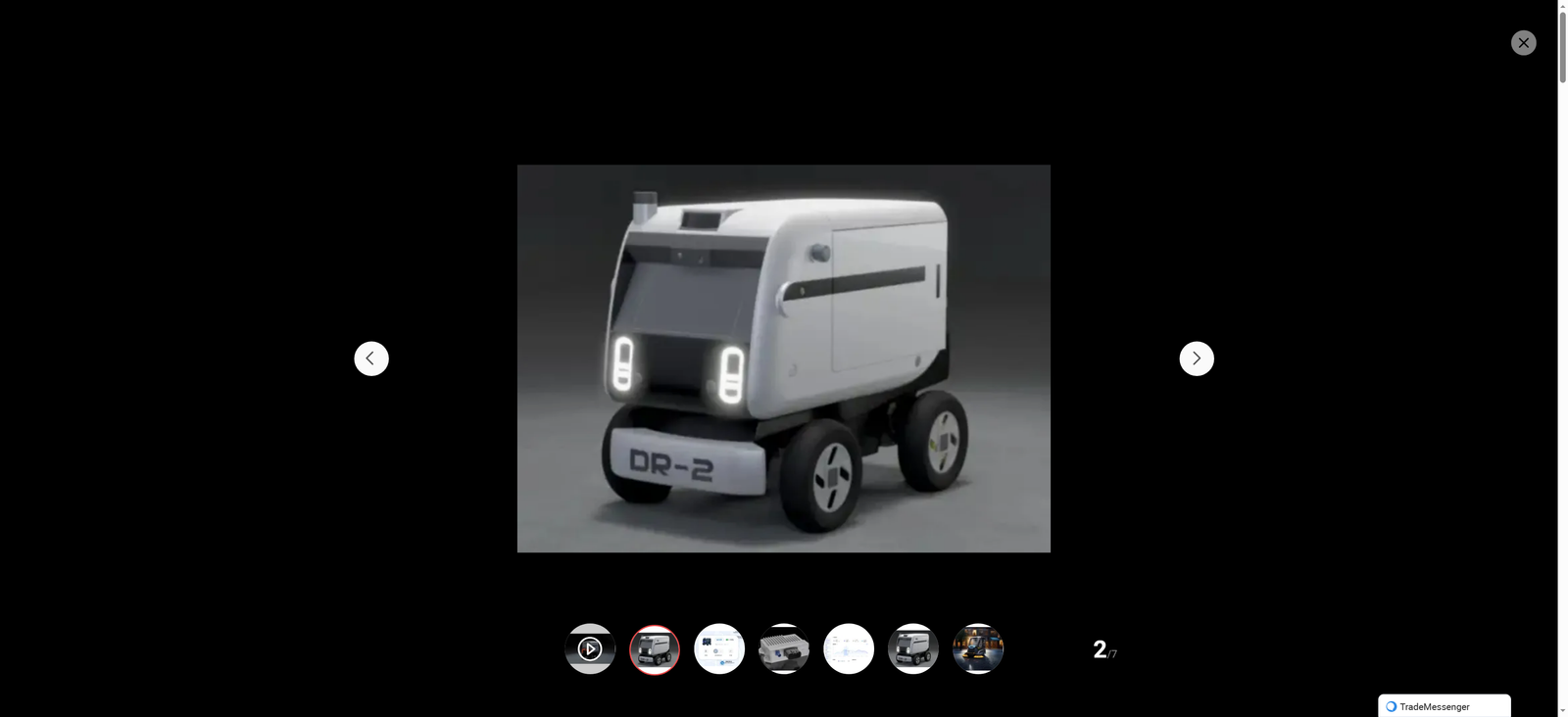
With the rapid advancement of intelligent driving technology and the deep integration of the service industry with digitalization, intelligent distribution robots have gradually evolved from light-weight, small-load equipment to heavy-duty, multi-functional models that can carry more than 100kg. These "heavy-duty but flexible" intelligent robots are breaking through the limitations of traditional manual distribution in airports, hotels, homes, large supermarkets, and schools, building an efficient, safe, and intelligent distribution network, and reshaping the service ecology of various scenarios.
The 100kg intelligent driving distribution robot is not a simple upgrade of load capacity, but a comprehensive iteration of core technologies such as autonomous navigation, motion control, and load-bearing structure. Equipped with advanced laser radar, high-definition cameras, and multi-sensor fusion systems, they can accurately perceive the surrounding environment, identify obstacles, plan optimal paths in real time, and realize fully autonomous driving without manual intervention. At the same time, the optimized load-bearing structure and stable power system ensure that they can carry heavy goods—such as luggage, daily necessities, goods, and teaching materials—smoothly, solving the pain point of "difficulty in carrying heavy loads" in traditional distribution.
Airports, as hubs with huge passenger flow and logistics volume, are one of the key application scenarios for heavy-duty intelligent distribution robots. Every day, a large number of passengers carry luggage, and airports need to transport catering, supplies, and luggage between terminals, boarding gates, and storage areas. The 100kg intelligent robot can easily carry multiple pieces of large luggage or batches of supplies, shuttling between crowded waiting halls and logistics channels. It can not only reduce the labor intensity of ground service personnel but also improve the efficiency of luggage and material transportation, avoiding delays caused by manual handling. Especially during peak passenger flow periods, the robot's continuous work capability and stable operation performance can effectively alleviate the pressure of airport distribution, bringing a more efficient and comfortable experience to passengers and staff.
In hotels, the demand for distribution of luggage, room supplies, and catering is also frequent. For high-end hotels with multiple floors and large areas, manual distribution not only consumes a lot of manpower but also has the problem of uneven service efficiency. The 100kg intelligent driving robot can seamlessly connect with the hotel's intelligent management system, receive distribution orders in real time—such as delivering luggage to guests' rooms, sending clean bed sheets and quilts to the housekeeping department, or delivering meals to private rooms. It can automatically take the elevator, avoid obstacles in the corridor, and accurately reach the designated location. The robot's large load capacity allows it to complete multiple distribution tasks at one time, reducing the number of trips and improving service efficiency. At the same time, the robot's friendly interactive interface and quiet operation will not disturb guests, maintaining the hotel's high-quality service experience.
In residential communities, the 100kg intelligent distribution robot is becoming a "new housekeeper" for residents' daily life. With the popularity of online shopping, residents often receive large and heavy goods—such as rice, flour, oil, household appliances, and express packages. For the elderly, pregnant women, and other groups, carrying heavy goods upstairs is a difficult problem. Heavy-duty intelligent robots can take over the "last 100 meters" of heavy goods distribution: they can carry goods weighing more than 100kg from the community gate or express cabinet to the resident's door, automatically identify the unit door and elevator, and complete the delivery without manual assistance. In addition, the robot can also undertake the distribution of community public supplies—such as greening tools, cleaning materials, and medical supplies for community health stations—reducing the workload of property staff and improving the quality of community services.
Large supermarkets, with a wide variety of goods and large daily circulation, have a strong demand for intra-store replenishment and cargo transfer. In the past, supermarket staff needed to push heavy cargo carts to transport goods from the warehouse to the shelves, which was not only labor-intensive but also easy to cause congestion in the store. The 100kg intelligent driving robot can carry batches of goods—such as cases of drinks, boxes of snacks, and household items—autonomously shuttling between the warehouse and the sales area. It can accurately stop at the designated shelf area according to the pre-set route and store management system, and the staff only need to unload the goods, greatly improving the efficiency of shelf replenishment. At the same time, the robot can work during non-peak hours (such as early morning or late at night), avoiding interference with customers' shopping experience and ensuring the orderly operation of the supermarket.
Schools, especially large universities and middle schools with large campuses and a large number of students, also have a strong demand for heavy-duty distribution services. From the transportation of teaching materials, experimental equipment, and office supplies between teaching buildings, libraries, and laboratories to the distribution of meals, drinking water, and sports equipment, the workload is huge. The 100kg intelligent driving robot can become a "logistics assistant" for the school: it can carry a large number of teaching materials to each classroom on time, transport heavy experimental equipment to the laboratory safely, and even deliver meals to the playground or dormitory area during sports meetings or events. The robot's autonomous driving capability ensures that it can safely travel on the campus road, avoiding collisions with students and teachers, and the large load capacity can meet the centralized distribution needs of the school, reducing the workload of logistics teachers and improving the efficiency of campus management.
The popularization and application of 100kg intelligent driving distribution robots are not only changing the way of distribution in various scenarios but also promoting the transformation and upgrading of the service industry towards intelligence and informatization. Compared with manual distribution, these robots have the advantages of 24-hour continuous work, stable efficiency, low error rate, and no fatigue, which can significantly reduce labor costs and improve service quality. At the same time, relying on the big data collected in the working process, the robot can help the operation and management of airports, hotels, supermarkets, and other institutions to optimize the distribution route, adjust the supply plan, and realize refined management.
Of course, the development of heavy-duty intelligent distribution robots still faces some challenges, such as the improvement of navigation accuracy in complex environments, the optimization of battery life, and the improvement of compatibility with different scenario management systems. However, with the continuous progress of artificial intelligence, battery technology, and sensor technology, these problems will be gradually solved.
In the future, the 100kg intelligent driving distribution robot will be more integrated into people's production and life, and its application scenarios will be further expanded—from the current airports, hotels, homes, supermarkets, and schools to industrial parks, hospitals, and other fields. They will become an important part of the intelligent service system, creating a more efficient, convenient, and intelligent life for people and injecting strong power into the development of the digital economy.