
Low-Maintenance & Easy Part Replacement: Redefining the Efficiency of Food Delivery Robots
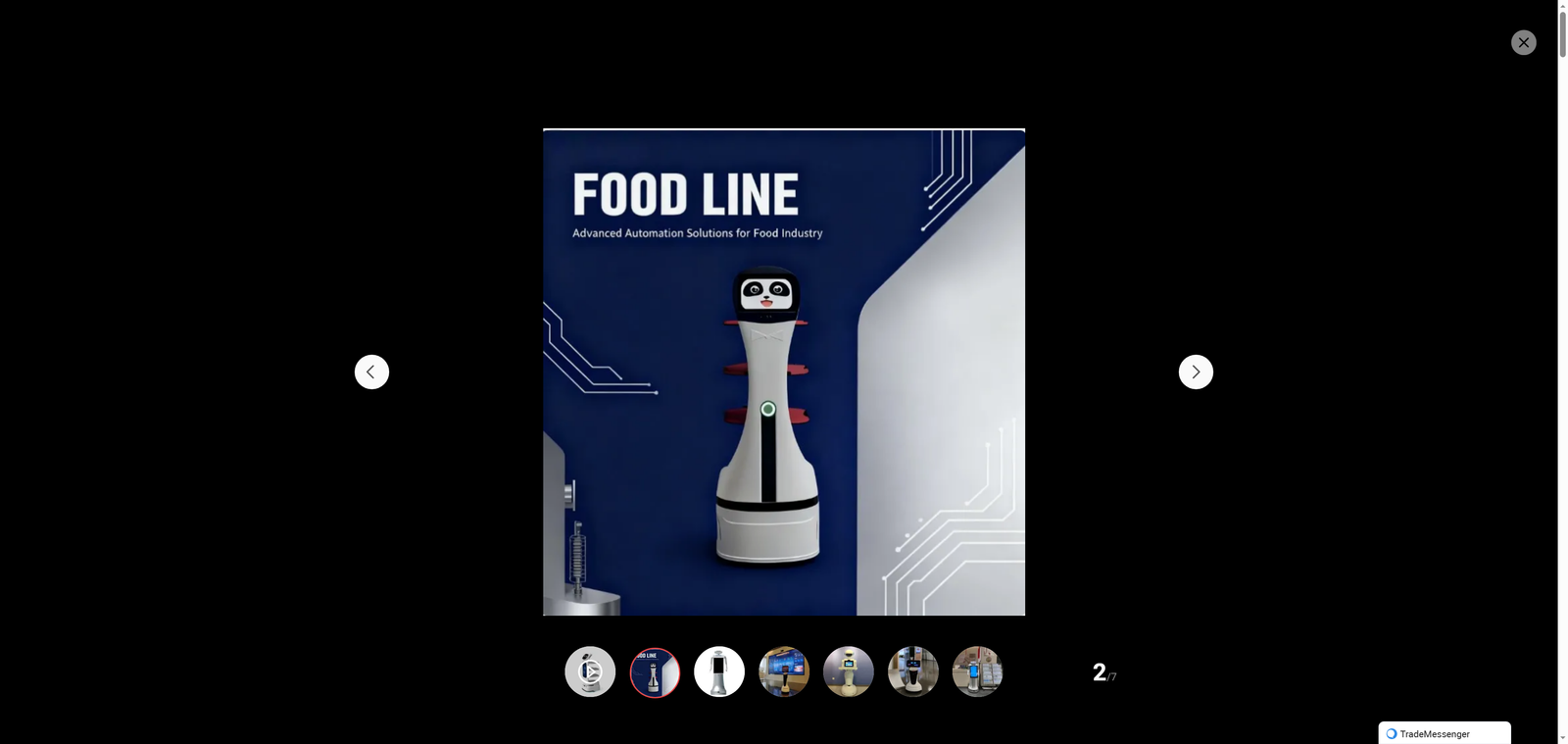
With the rapid development of the catering and logistics industries, food delivery robots have gradually become a core force in optimizing service efficiency, reducing labor costs, and improving user experience. From restaurants and office buildings to campuses and communities, these intelligent robots are shuttling through every corner of life, undertaking the heavy task of food delivery. However, for operators, the maintenance cost and part replacement convenience of robots have always been key factors restricting their large-scale promotion and long-term operation. Against this background, food delivery robots with the advantages of low maintenance and easy part replacement have emerged, breaking through industry pain points and injecting new vitality into the intelligent delivery track.
Low maintenance is the core guarantee for reducing the operation cost of food delivery robots. Unlike traditional manual delivery, which only requires simple physical labor, intelligent robots are composed of multiple electronic components, mechanical structures, and software systems. Once a failure occurs, it often requires professional technical personnel and expensive maintenance costs to solve, which brings a heavy burden to small and medium-sized catering enterprises and property management departments. The low-maintenance food delivery robot fundamentally solves this problem through optimized structural design and high-quality component selection. Firstly, in the structural design, the robot abandons the complex and redundant mechanical structure, adopts a simplified and integrated design, reduces the number of wearing parts and connection points, and thus reduces the probability of failure. Secondly, in the selection of components, the robot uses high-durability, corrosion-resistant, and wear-resistant materials, which can adapt to the complex and changeable use environment, such as oil fume in restaurants, uneven ground in communities, and frequent starting and stopping, and greatly extend the service life of components. In addition, the robot is equipped with an intelligent fault diagnosis system, which can real-time monitor the operating status of each component, automatically alarm when a potential fault is found, and provide a clear fault location and solution, avoiding the problem of "blind maintenance" and further reducing maintenance time and cost.
Easy part replacement is another important advantage of this type of food delivery robot, which further improves the operability and continuity of robot operation. For most operators, professional maintenance knowledge is often lacking. When the robot has a component failure, if it takes a long time to wait for professional personnel to replace it, it will inevitably affect the normal food delivery work and reduce service efficiency. The easy part replacement design of the food delivery robot allows operators to complete part replacement quickly and easily without professional training. Firstly, the robot adopts a modular design concept, dividing the whole machine into multiple independent functional modules, such as the walking module, navigation module, loading module, and power module. Each module is connected through a standardized interface, which can be disassembled and assembled with simple tools, realizing "plug and play" of components. Secondly, the key wearing parts of the robot, such as wheels, batteries, and sensors, are designed with a quick-release structure. Operators only need to follow the simple operation guide to complete the replacement of parts in a few minutes, without disassembling the whole machine or adjusting complex parameters. In addition, the manufacturer provides a complete set of replacement parts and detailed operation manuals, and even provides online technical guidance services, which further reduces the difficulty of part replacement. This easy part replacement design not only shortens the downtime of the robot but also reduces the dependence on professional maintenance personnel, allowing operators to manage the robot more independently and flexibly.
The combination of low maintenance and easy part replacement not only brings direct economic benefits to operators but also promotes the large-scale popularization of food delivery robots and the upgrading of the intelligent delivery industry. For catering enterprises, the use of such robots can not only reduce labor costs but also save a lot of maintenance costs, improve the profit space of the enterprise; for property management departments, it can improve the efficiency of food delivery in the park, reduce the pressure of manual management, and enhance the quality of park services; for consumers, it can ensure the timeliness and stability of food delivery, and improve the dining experience. In addition, with the continuous progress of technology, the low-maintenance and easy part replacement technology of food delivery robots will be further optimized. For example, the use of more intelligent self-maintenance technology, the development of more universal and standardized replacement parts, and the realization of "zero maintenance" and "one-click replacement" in the true sense. At the same time, the popularization of such robots will also drive the development of related industries, such as the research and development and production of high-durability components, the provision of professional maintenance services, and the formation of a complete industrial chain.
Of course, the development of food delivery robots still faces some challenges, such as the improvement of navigation accuracy in complex environments, the optimization of battery life, and the improvement of cost performance. However, the advantages of low maintenance and easy part replacement have laid a solid foundation for solving these challenges. For example, the simplified structural design is conducive to the integration of more advanced navigation technology; the high-durability components can better match the high-performance battery and extend the battery life; the reduction of maintenance and replacement costs can further reduce the overall cost of the robot and improve cost performance.
In conclusion, low-maintenance and easy part replacement are important core advantages of modern food delivery robots, which solve the key pain points of operators in the process of using robots and promote the intelligent transformation of the food delivery industry. With the continuous innovation and development of technology, such food delivery robots will be more widely used in various scenarios, bringing more convenience to people's life and promoting the high-quality development of the catering and logistics industries. In the future, the food delivery robot industry will focus more on the needs of operators and users, continuously optimize the performance and service, and create a more efficient, convenient, and intelligent delivery ecosystem.