
In the era of digital transformation, the demand for efficient, contactless, and seamless service experiences is growing rapidly in public service scenarios such as hotels and hospitals. As a core product of intelligent service technology, the intelligent service smart delivery robot has emerged as a game-changer, breaking through the limitations of traditional manual delivery and building a new ecology of package delivery that is "fast, accurate, safe, and seamless". This article will deeply explore the application value, functional advantages, and development prospects of intelligent delivery robots in hotels and hospitals, revealing how they reshape the service model with technology.
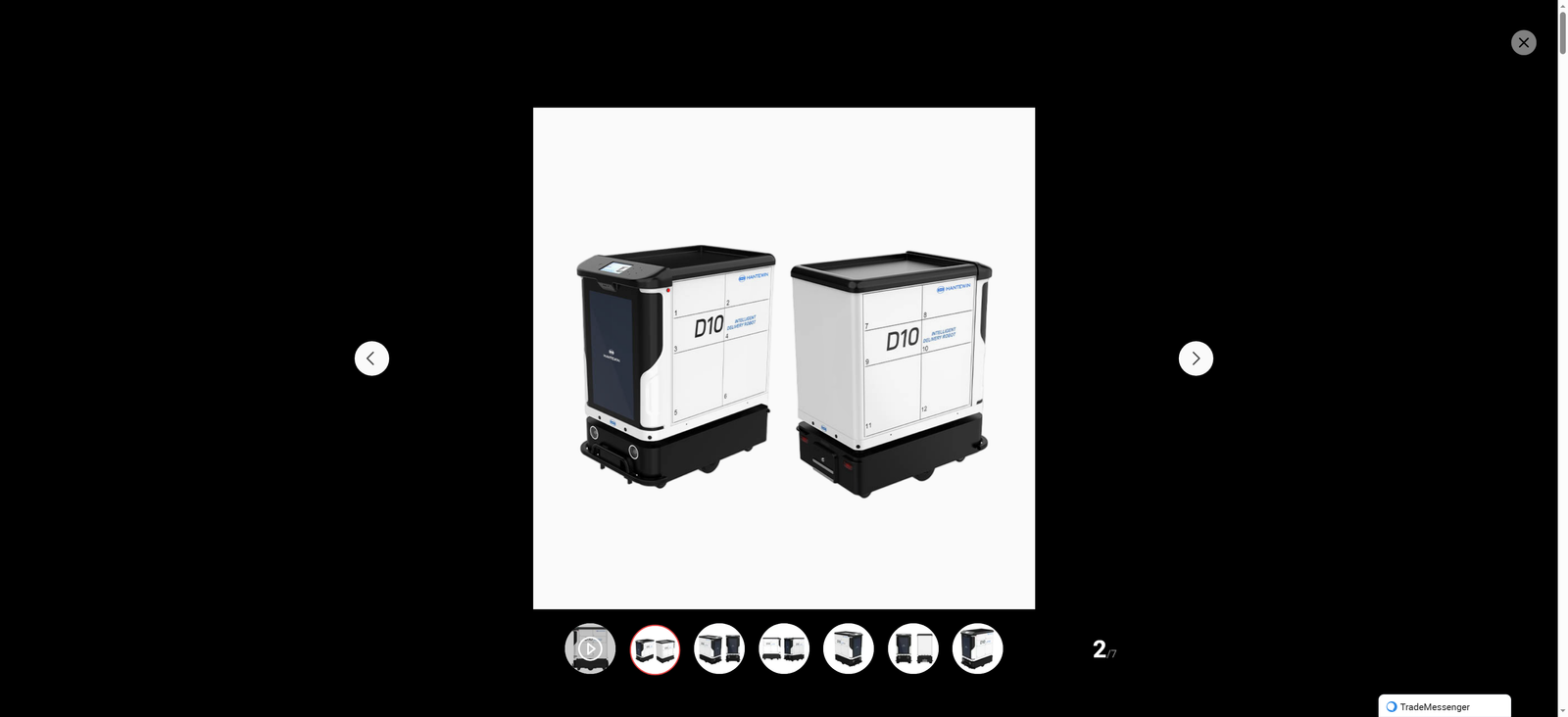
Hotels and hospitals are typical scenarios with high-frequency package delivery needs and strict service requirements. In hotels, guests often receive express packages, takeaway meals, laundry, and other items during their stay; the timeliness and privacy of delivery directly affect the guest experience. In hospitals, the delivery of medical supplies (such as drugs, test reports, and medical devices), as well as daily necessities for patients and their families, is related to the efficiency of medical treatment and the comfort of rehabilitation. However, traditional manual delivery faces many pain points: limited human resources lead to delayed delivery during peak hours; manual errors may result in wrong delivery or loss of items; in hospitals, manual contact also increases the risk of cross-infection; the lack of real-time tracking makes it difficult for users to grasp the delivery progress. Against this background, intelligent service smart delivery robots have become an ideal solution to solve these pain points and realize seamless package delivery.
Intelligent service smart delivery robots are equipped with advanced core technologies such as multi-sensor fusion, path planning, automatic obstacle avoidance, and intelligent identification, which lay a solid foundation for seamless delivery. In terms of path planning, the robot can quickly map the indoor environment of hotels and hospitals through laser radar, visual sensors, and other equipment, and dynamically adjust the optimal delivery route according to real-time conditions such as pedestrian flow and elevator operation, ensuring that it can reach the target location efficiently even in complex and crowded environments. The automatic obstacle avoidance function enables the robot to accurately identify obstacles such as pedestrians, medical equipment, and hotel furniture, and take avoidance measures such as deceleration, detour, or stop in time, ensuring the safety of the robot itself, the packages, and the surrounding personnel.
In addition to basic navigation and obstacle avoidance, the intelligent interaction and information management capabilities of the robot further enhance the seamless delivery experience. For hotels, guests can place delivery requests through the hotel's official app, WeChat mini-program, or in-room phone; after receiving the request, the robot will automatically pick up the package from the front desk or logistics station, and send a reminder message to the guest. When arriving at the door of the guest room, the robot can realize automatic door opening through Bluetooth or RFID technology, or remind the guest to pick up the package through voice broadcast. For hospitals, the robot can be connected to the hospital's HIS, LIS, and other information systems to automatically receive delivery tasks such as drug distribution and report delivery. It can accurately deliver medical supplies to the designated ward, nurse station, or operating room, and automatically update the delivery status in the system, realizing full-process traceability of medical supplies. This full-process intelligent interaction and information synchronization not only reduces the communication cost between users and service providers but also ensures that the delivery process is transparent and controllable, truly achieving "seamless connection" between the package and the user.
The application of intelligent service smart delivery robots in hotels and hospitals also brings multiple practical values to the operating entities. For hotels, it can significantly reduce the labor cost of front desk and housekeeping departments, liberate human resources from tedious delivery work, and let them focus on improving core services such as guest reception and room service. At the same time, the intelligent robot can work 24 hours a day without interruption, solving the problem of insufficient delivery capacity during off-peak hours and night shifts, and improving the overall service efficiency and guest satisfaction. For hospitals, the robot can effectively reduce the workload of nurses and logistics personnel, allowing medical staff to devote more energy to clinical treatment and patient care, which is of great significance for alleviating the shortage of medical resources. More importantly, the contactless delivery mode of the robot can minimize the direct contact between personnel, especially in the context of public health events, which can effectively reduce the risk of cross-infection and ensure the safety of medical staff and patients.
With the continuous progress of artificial intelligence, Internet of Things, and other technologies, intelligent service smart delivery robots are also constantly upgrading and iterating, showing a more broad development prospect. In the future, the robot will have more intelligent functions: it can realize more accurate user identification through face recognition technology, and automatically deliver packages to specific individuals; it can carry out multi-task collaborative delivery, and complete the delivery of multiple packages in one trip to further improve efficiency; it can also interact with other intelligent equipment in hotels and hospitals (such as intelligent elevators, intelligent door locks) to form a more integrated intelligent service system. In addition, the robot's load capacity, battery life, and adaptability to complex environments will also be continuously improved, making it applicable to more scenarios in hotels and hospitals, such as the delivery of large items and the delivery in high-rise buildings.
Of course, the popularization and application of intelligent service smart delivery robots also need to face some challenges, such as the high initial investment cost, the need for regular maintenance and technical updates, and the acceptance of individual users. However, with the continuous reduction of technological research and development costs and the gradual improvement of the intelligent service system, these challenges will be gradually solved. More and more hotels and hospitals have realized the value of intelligent delivery robots and have begun to introduce and apply them on a large scale.
In conclusion, the intelligent service smart delivery robot, with its advanced technology, efficient service, and safe and reliable characteristics, has become an important force in promoting the intelligent transformation of hotels and hospitals. It not only solves the pain points of traditional manual delivery but also realizes the seamless connection of package delivery, bringing a better service experience to guests and patients, and providing strong support for the high-quality development of hotels and hospitals. In the future, with the deep integration of technology and service, intelligent delivery robots will play a more important role in the field of intelligent services, creating a more convenient, efficient, and intelligent living and medical environment for people.