
Intelligent Service Robot for Restaurant Voice: Transforming Dining Experience with Technology
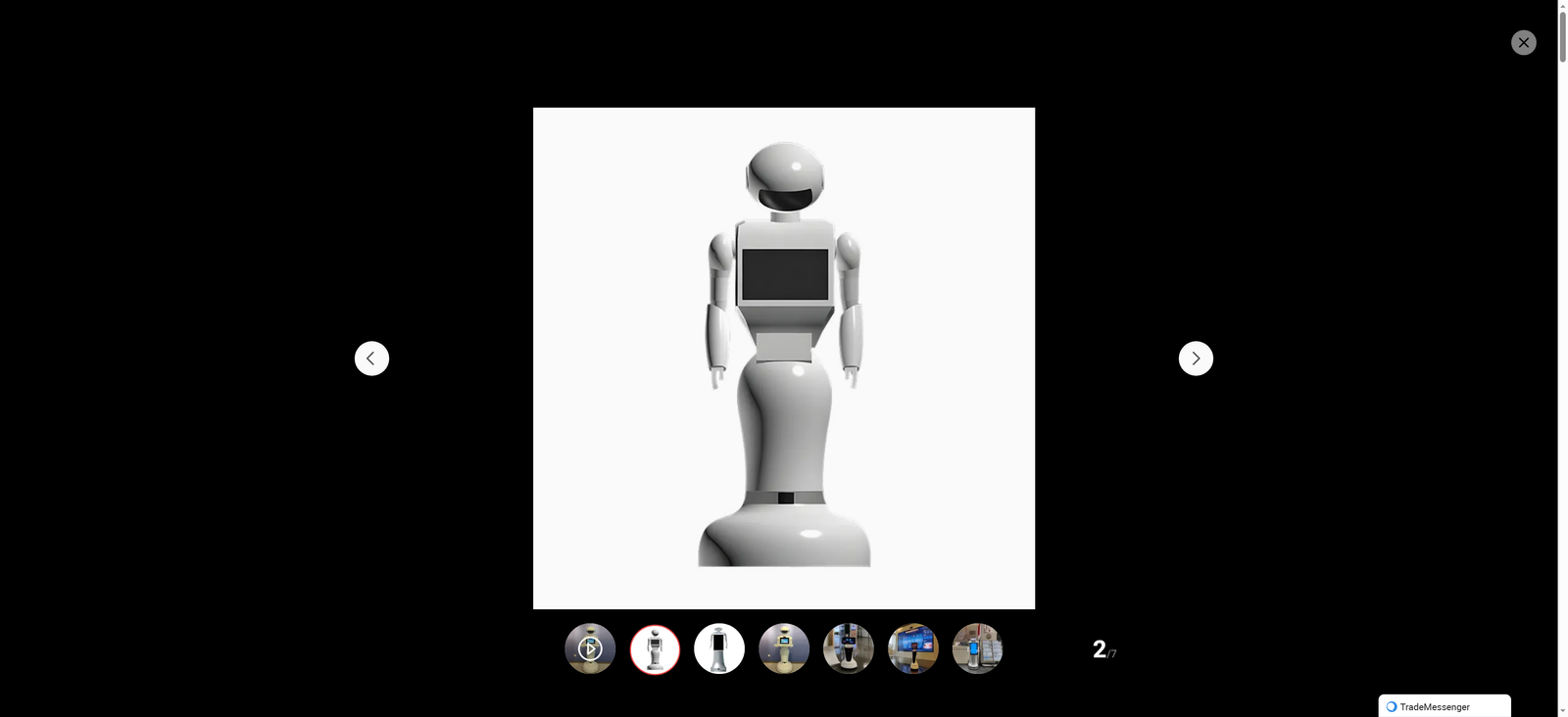
In the digital era, the catering industry is undergoing a profound transformation driven by technological innovation. Among various emerging technologies, intelligent service robots equipped with voice recognition capabilities have gradually become a new benchmark for upgrading restaurant services. An intelligent service robot for restaurant voice is not just a novel equipment, but a comprehensive solution that integrates voice interaction, artificial intelligence (AI), Internet of Things (IoT) and other technologies, which is reshaping the operation mode of restaurants and the dining experience of customers.
The core competitiveness of a restaurant voice intelligent service robot lies in its accurate and efficient voice interaction capability, which breaks the barrier between humans and machines in the catering scene. Unlike traditional service robots that rely on manual control or simple button operation, this type of robot is equipped with advanced voice recognition and natural language processing (NLP) algorithms, enabling it to understand human language in a real, natural and contextual manner. Whether it is a customer’s order request, a inquiry about dishes, or a demand for tableware replacement, the robot can quickly respond to voice commands without the need for customers to master complex operation methods. For example, when a customer says “I want a spicy hot pot and a glass of iced beer”, the robot can immediately recognize the order content, confirm the details with the customer intelligently (such as “Do you need mild or extra spicy for the hot pot?”), and then send the order directly to the kitchen system, which greatly shortens the order time and reduces the error rate caused by manual order taking.
In addition to voice ordering, the restaurant voice intelligent service robot also undertakes a variety of service links, realizing the diversification and intelligence of restaurant services. In the seating link, customers can call the robot through voice, and the robot will guide them to the designated table according to the restaurant’s seating situation, and even introduce the surrounding environment and featured dishes during the guidance process. In the meal service link, the robot can deliver dishes and drinks to the table accurately according to the order information, and remind customers to take their meals through voice. After the meal, customers can also ask the robot for the bill through voice, and even complete simple payment operations with the support of integrated payment modules. These functions not only reduce the workload of restaurant waiters, but also make the entire dining process more smooth and efficient, allowing customers to enjoy more attentive and convenient services.
For restaurants, the application of voice intelligent service robots brings practical operational benefits and competitive advantages. On the one hand, it helps restaurants reduce labor costs significantly. In the catering industry with high labor intensity and high turnover rate, waiters need to be on call for a long time, and the labor cost accounts for a large proportion of the restaurant’s operating costs. The introduction of voice intelligent service robots can replace waiters to complete most of the repetitive work such as ordering, delivering dishes and inquiring, thereby reducing the number of waiters, saving labor wages and training costs. On the other hand, the robot can improve the service efficiency and service quality of the restaurant. It can work 24 hours a day without fatigue, avoid service omissions or mistakes caused by human factors, and at the same time bring a novel and interesting dining experience to customers, enhance customer satisfaction and loyalty, and help restaurants attract more customers and establish a differentiated brand image.
With the continuous advancement of technology, the functions of restaurant voice intelligent service robots are also constantly upgrading and improving. Today’s voice intelligent service robots have stronger contextual understanding capabilities, which can accurately identify dialects, slangs and ambiguous expressions in daily communication, and even adjust the communication tone according to the customer’s voice emotion, making the interaction more humanized. At the same time, the robot can also collect and analyze customer order data, dining preferences and other information through voice interaction and IoT technology, and provide data support for restaurant operators to adjust dishes, optimize menus and formulate marketing strategies. For example, if the robot finds that many customers ask about “light dishes”, the restaurant can appropriately increase the types of light dishes to meet customer needs.
Of course, the popularization and application of restaurant voice intelligent service robots also face some challenges. For example, the initial investment cost of the robot is relatively high, which may bring certain economic pressure to small and medium-sized restaurants; in some complex dining scenes, such as noisy environments, the voice recognition accuracy of the robot may be affected; in addition, some customers still prefer human services, and the robot may be difficult to fully replace the emotional communication and human care brought by waiters. However, with the continuous reduction of intelligent hardware costs and the continuous optimization of AI technology, these problems will be gradually solved.
In the future, with the in-depth integration of AI, big data, IoT and other technologies, restaurant voice intelligent service robots will become an indispensable part of the catering industry. They will not only realize more complex service functions, but also cooperate with human waiters to form a complementary service mode, creating a more efficient, convenient, humanized and interesting dining experience for customers. For restaurant operators, seizing the opportunity of voice intelligent service robots to upgrade service quality and optimize operational efficiency will be the key to winning in the fierce market competition. The transformation of the catering industry driven by voice intelligent robots has just begun, and a more intelligent and high-quality dining era is coming.