
Intelligent Robot for Hotels & Restaurants: Empowering Multi-Scenario Services with Dual Functions
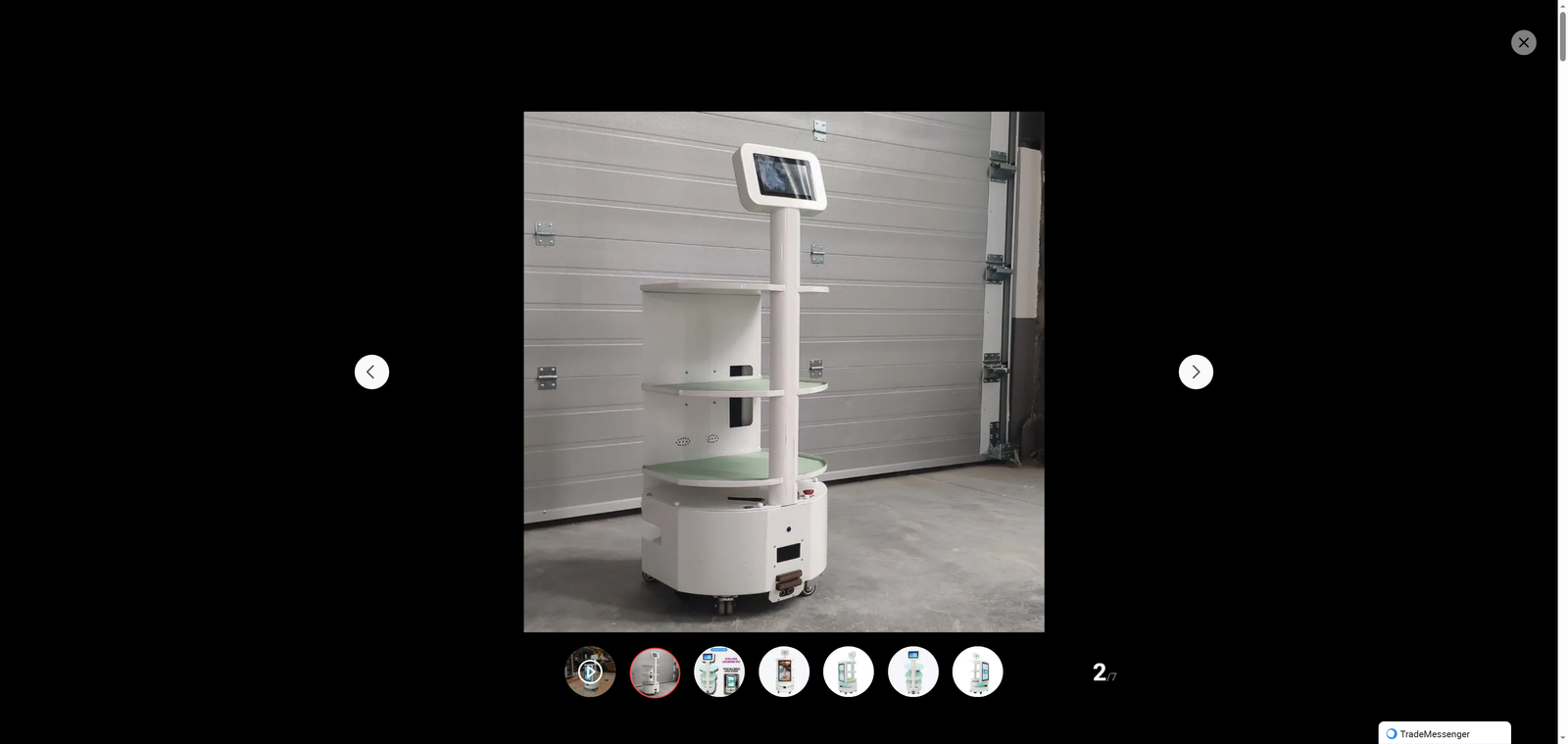
With the acceleration of the digital transformation in the service industry, intelligent robots have gradually become a new force in optimizing service efficiency and enhancing customer experience. Especially in hotels and restaurants, where service quality and operational efficiency are crucial, intelligent robots integrating dual functions of food delivery and item conveyance have emerged as a game-changer. Beyond the traditional catering and accommodation scenarios, these robots also show strong adaptability in banquets, shopping malls, award ceremonies, exhibitions and other complex environments, injecting new vitality into the modern service industry.
The dual functions of food delivery and item conveyance are the core advantages of this type of intelligent robot, which precisely meets the diverse service needs of hotels and restaurants. In the catering area, the robot can replace manual labor to complete the whole process of food delivery from the kitchen to the dining table. Equipped with advanced navigation and obstacle avoidance systems, it can flexibly shuttle through dense dining tables, narrow corridors and crowded crowds, ensuring that the food is delivered to the designated position accurately and quickly. Compared with manual delivery, the robot not only avoids the problems of slow delivery speed, easy error and food spillage caused by human factors, but also reduces the labor intensity of service staff, allowing them to focus more on providing high-quality personalized services such as customer consultation and order recommendation.
In addition to food delivery, the item conveyance function further expands the application scope of the robot in hotel and restaurant scenarios. In hotels, it can be used to deliver room service items such as mineral water, towels, toiletries and laundry to guests' rooms, realizing 24-hour uninterrupted service without manual on duty. This not only improves the efficiency of room service, but also protects the privacy of guests to a certain extent, creating a more comfortable and convenient living experience for them. In restaurants, the robot can also be used to convey tableware, napkins, condiments and other daily supplies between the back kitchen and the front desk, reducing the frequency of manual handling and improving the overall operational efficiency of the restaurant.
What is more worthy of attention is that this intelligent robot is not limited to the single scenario of hotels and restaurants, but can be flexibly adapted to a variety of complex scenarios such as banquets, shopping malls, award ceremonies and exhibitions, showing strong scenario compatibility. In banquet scenarios such as weddings, corporate dinners and family gatherings, the number of guests is large, the service demand is concentrated, and the workload of manual service is huge. At this time, the robot can undertake the tasks of delivering drinks, desserts, gifts and other items, effectively alleviating the pressure of manual service, ensuring the orderliness and efficiency of the banquet service, and leaving a deep impression on the guests.
In shopping malls, the robot can be used as a mobile service terminal to convey promotional leaflets, small gifts, commodity samples and other items to consumers, while also providing navigation and consultation services, helping merchants to improve the efficiency of promotion and enhance the consumer experience. In award ceremony scenarios, the robot can undertake the important task of conveying trophies, certificates and awards, with standardized movements and stable operation, which not only ensures the solemnity and orderliness of the award process, but also adds a sense of technology to the ceremony. In exhibition scenarios, the robot can convey exhibition materials, brochures and samples between exhibition booths and visitors, helping exhibitors to better display their products and services, and facilitating visitors to obtain information quickly.
The wide application of intelligent robots in multi-scenarios is inseparable from their advanced technical support. On the one hand, the high-precision positioning and navigation system enables the robot to quickly adapt to the layout of different venues, accurately identify the target position and plan the optimal movement path. On the other hand, the intelligent control system and flexible mechanical structure make the robot can adjust its working mode according to the characteristics of different scenarios and the needs of different tasks, realizing the free switching between food delivery and item conveyance. At the same time, the robot is also equipped with a human-computer interaction interface, which can realize simple dialogue and information exchange with humans, further improving the flexibility and usability of the service.
The popularization and application of intelligent robots for hotels and restaurants with dual functions not only brings tangible benefits to the service industry, but also represents the development trend of the intelligent transformation of the service industry. For merchants, it can reduce labor costs, improve service efficiency and operational benefits, and enhance the core competitiveness of the brand; for consumers, it can enjoy more efficient, convenient, standardized and personalized services, and experience the convenience brought by technological progress; for the service industry, it promotes the upgrading of service modes, promotes the transformation of the industry from labor-intensive to technology-intensive, and promotes the high-quality development of the service industry.
Looking to the future, with the continuous progress of artificial intelligence, Internet of Things, big data and other technologies, intelligent robots for hotels and restaurants will be more intelligent, humanized and diversified. They will not only further optimize the dual functions of food delivery and item conveyance, but also add more new functions such as intelligent consultation, health detection and entertainment interaction, and adapt to more emerging service scenarios. It is believed that in the near future, intelligent robots will become an indispensable part of the service industry, creating a more high-quality, efficient and intelligent service ecosystem for people.