
Intelligent Perception Adaptive Catering and Hotel Customized Commercial Service Delivery Robot: Empowering the New Ecology of Service Industry
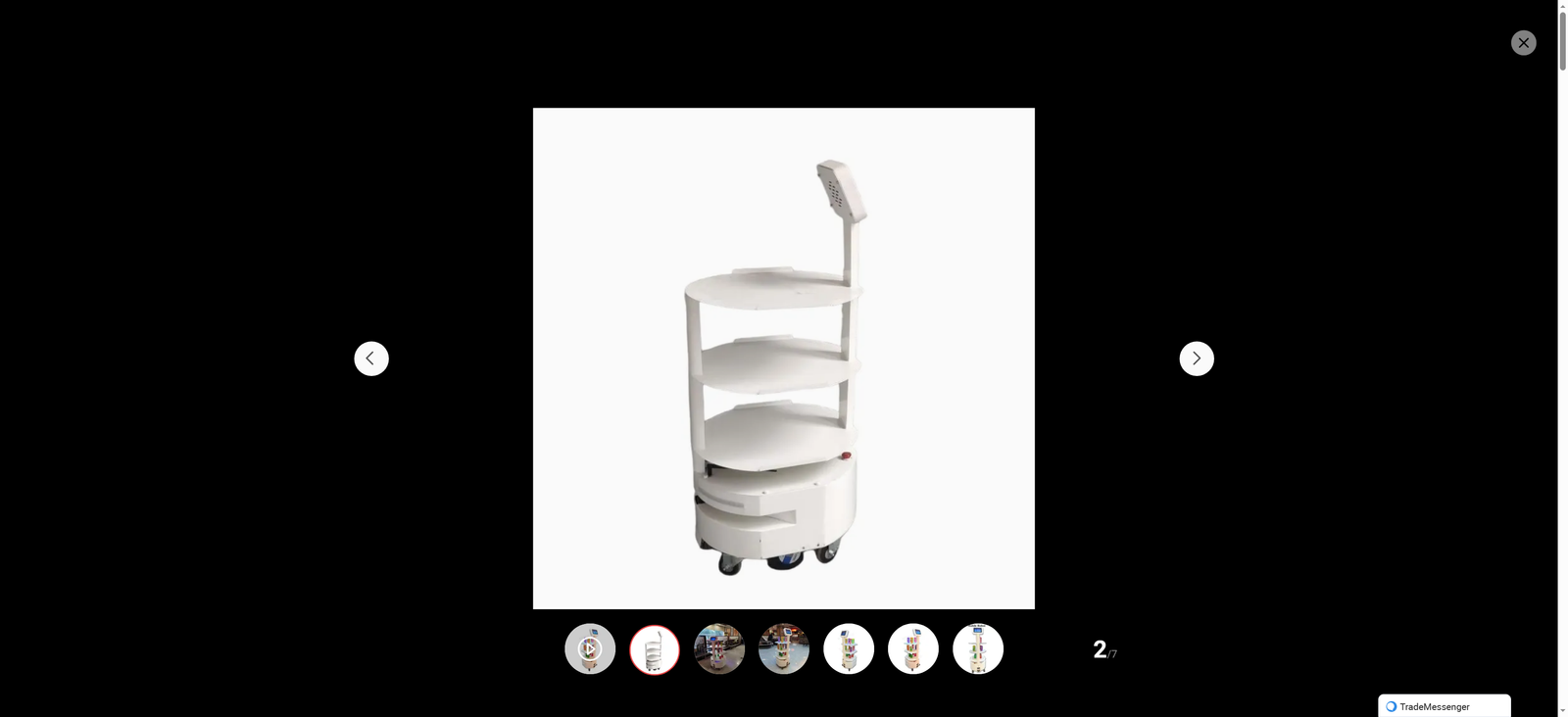
With the rapid development of artificial intelligence, Internet of Things and intelligent manufacturing technologies, the service industry is undergoing a profound digital transformation. Among them, the emergence of Intelligent Perception Adaptive Catering and Hotel Customized Commercial Service Delivery Robot (hereinafter referred to as "intelligent adaptive delivery robot") has become a key breakthrough in solving the pain points of labor shortage, uneven service quality and high operation cost in the catering and hotel industries. By integrating intelligent perception, adaptive adjustment and customized service capabilities, this kind of robot is no longer a simple "delivery tool", but has evolved into a core part of the intelligent service system, reshaping the service process and user experience of the catering and hotel industries.
The core competitive advantage of intelligent adaptive delivery robot lies in its "intelligent perception" capability, which is the foundation of realizing all intelligent services. Different from traditional robots that only follow fixed routes, intelligent adaptive delivery robots are equipped with multi-sensor fusion systems, including laser radar, visual cameras, infrared sensors and ultrasonic sensors. These sensors work together to realize 360-degree all-round environmental perception: laser radar can accurately map the indoor space, with centimeter-level positioning accuracy, ensuring that the robot does not deviate from the route even in complex environments such as crowded restaurants and multi-floor hotels; visual cameras can identify pedestrians, obstacles, elevator doors, tables and beds in real time, and realize dynamic avoidance through algorithm analysis, avoiding collisions with people or objects; infrared sensors and ultrasonic sensors can perceive small obstacles in short distances, such as tableware placed on the ground and children playing, so as to make emergency adjustments in time. In addition, the robot can also perceive user needs through voice recognition and touch interaction, such as responding to the user's call of "deliver a bottle of water to room 302" and automatically completing the delivery task, which truly realizes the "perception of people, things and environment".
"Adaptive adjustment" is another key feature of intelligent adaptive delivery robot, which enables it to cope with the diverse and variable service scenarios of catering and hotels. The catering and hotel industries have the characteristics of strong scene randomness and diverse user needs: in restaurants, there may be temporary table additions, moving chairs, and customers blocking the channel; in hotels, there are different floor structures, elevator waiting queues, and different door opening modes of guest rooms. Facing these complex situations, the intelligent adaptive delivery robot can adjust its operation strategy in real time through the pre-trained AI algorithm. For example, when encountering a crowded area in a restaurant, the robot can automatically plan an alternative route through the background system, and adjust the moving speed to slow down and remind customers through voice; when taking an elevator, it can identify the elevator running state, automatically call the elevator, and adjust its position in the elevator to avoid blocking the door; when the guest room door is not opened, it can send a reminder message to the user's mobile phone or the hotel front desk, and wait in place or return according to the feedback. At the same time, the robot can also adapt to different service needs. For example, in a catering scene, it can carry hot dishes, cold drinks, tableware and other items, and adjust the temperature of the storage compartment according to the type of items to ensure the food quality; in a hotel scene, it can deliver towels, mineral water, express packages and other items, and realize contactless delivery by opening the storage compartment through face recognition or mobile phone scanning code, which is in line with the health needs of users in the new era.
The "customized commercial service" capability makes the intelligent adaptive delivery robot deeply integrate with the business needs of catering and hotel enterprises, and realize the transformation from "general-purpose equipment" to "customized solutions". Different catering and hotel brands have different business models, service standards and brand positioning, and the demand for delivery robots is also personalized. For example, high-end hotels pay more attention to the elegance of the robot's appearance, the quietness of operation and the privacy of service; fast-food restaurants pay more attention to the delivery efficiency, load capacity and cost control of the robot; themed restaurants may need the robot to have a specific appearance design and interactive language to match the brand image. In response to these personalized needs, intelligent adaptive delivery robot manufacturers can provide customized services in multiple dimensions: in terms of appearance, they can customize the color, shape and logo according to the brand image of the enterprise; in terms of function, they can add customized modules, such as adding a wine cooling function for high-end restaurants, adding a meal ordering and payment function for fast-food restaurants, and adding a multi-language voice interaction function for foreign-related hotels; in terms of service process, they can customize the delivery route, interaction mode and work time according to the business process of the enterprise, such as setting the robot to focus on delivering breakfast to guest rooms during the morning peak period of the hotel, and focusing on delivering dishes in the dining area during the lunch and dinner peak periods of the restaurant. This customized service mode not only improves the applicability of the robot, but also helps enterprises build a unique service brand and enhance their core competitiveness.
The application of intelligent adaptive delivery robot has brought profound changes to the catering and hotel industries, bringing win-win results for enterprises, users and the industry. For enterprises, on the one hand, it can effectively reduce labor costs. At present, the labor shortage in the catering and hotel industries is prominent, and the cost of recruiting and training employees is increasing. The use of intelligent delivery robots can replace the repetitive labor of waiters and bellboys, such as food delivery, item delivery and room service, reducing the number of front-line employees by 30%-50%, and significantly reducing the labor cost of enterprises. On the other hand, it can improve service efficiency and quality. The robot can work 24 hours a day without rest, fatigue or emotional fluctuations, ensuring that the service is timely, standardized and stable. For example, in a restaurant with a large passenger flow, the robot can complete the food delivery task in 2-3 minutes, which is much faster than manual delivery; in a hotel, the robot can deliver items to the guest room in the shortest time after receiving the order, avoiding the delay caused by manual busy work. For users, the intelligent adaptive delivery robot brings a more convenient, efficient and novel service experience. Contactless delivery reduces the risk of cross-infection, which is more in line with the user's health and safety needs; the 24-hour uninterrupted service enables users to get timely response at any time, such as delivering hot water in the middle of the night; the intelligent interaction of the robot also adds fun to the service experience, such as children can interact with the robot to order food, and foreign guests can communicate with the robot in their mother tongue. For the industry, the popularization of intelligent adaptive delivery robots promotes the digital and intelligent transformation of the catering and hotel industries, promotes the upgrading of the industrial structure, and drives the development of related industries such as artificial intelligence, sensor manufacturing and intelligent hardware, forming a new industrial ecology with complementary advantages and joint development.
Of course, the development of intelligent adaptive delivery robot is still facing some challenges. For example, the high initial investment cost makes some small and medium-sized catering and hotel enterprises flinch; the complex indoor environment (such as narrow corridors, uneven ground) may affect the movement of the robot; the maintenance and after-sales service system is not perfect enough, which may affect the normal use of the robot; in addition, some users still have a sense of distance from the robot service, and need a certain adaptation period. However, with the continuous progress of technology and the continuous expansion of the market, these challenges will be gradually solved. For example, the maturity of chip technology and sensor technology will reduce the production cost of robots; the optimization of AI algorithms will improve the adaptability of robots to complex environments; the improvement of after-sales service system will provide guarantee for the use of enterprises; the popularization of robot services will gradually change the user's cognition and acceptance.
Looking to the future, with the in-depth integration of artificial intelligence, big data and 5G technologies, intelligent adaptive delivery robots will have more powerful functions and broader application scenarios. They will not only realize more accurate intelligent perception, more flexible adaptive adjustment and more personalized customized services, but also connect with the intelligent management system of enterprises to realize data sharing and collaborative work. For example, the robot can upload the delivery data, user feedback and other information to the enterprise management platform in real time, helping enterprises analyze the service bottleneck and optimize the business process; it can also cooperate with intelligent devices such as intelligent ordering machines and intelligent door locks to form a full-link intelligent service chain. At the same time, the application scope of the robot will also expand from catering and hotels to other service fields, such as hospitals, office buildings and communities, becoming an important part of the intelligent service society.
In conclusion, the Intelligent Perception Adaptive Catering and Hotel Customized Commercial Service Delivery Robot, with its core capabilities of intelligent perception, adaptive adjustment and customized service, is injecting strong momentum into the digital transformation of the catering and hotel industries. It not only solves the practical pain points of enterprises, improves the user experience, but also promotes the upgrading and development of the entire service industry. With the continuous advancement of technology and the continuous expansion of the market, this kind of intelligent robot will surely play a more important role in building a new ecology of the service industry and creating a better life for people.