
Intelligent Obstacle Avoidance Express Item Delivery Robot for Office Buildings & Hotels: Redefining Efficient and Smart Logistics Services
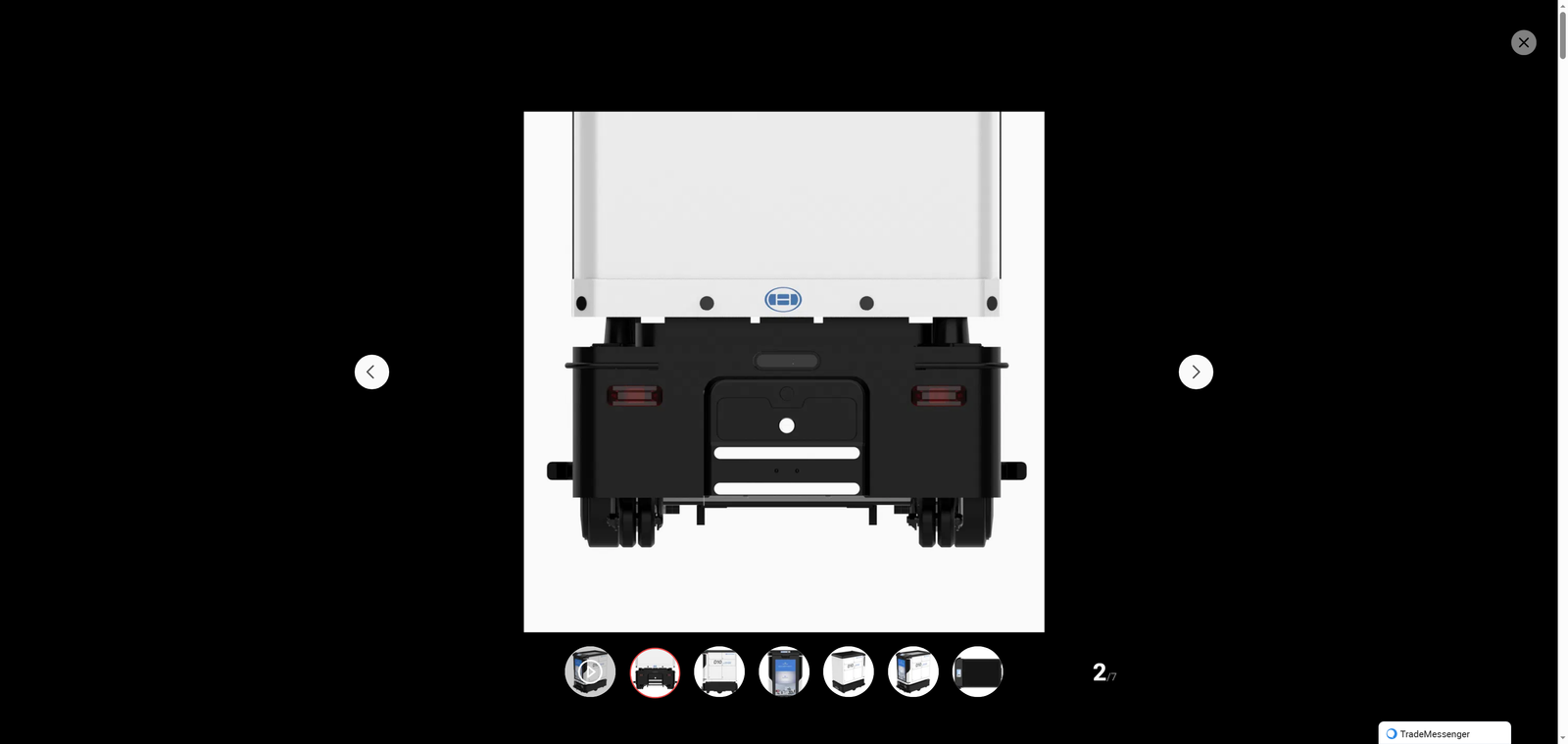
With the rapid development of smart cities and the continuous upgrading of service industries, office buildings and hotels, as important carriers of urban business and hospitality, are facing increasing demands for efficient, accurate and contactless logistics services. Office workers need to receive documents, parcels and daily supplies in a timely manner without leaving their posts, while hotel guests expect convenient delivery of luggage, meals, toiletries and other items during their stay. Against this background, the intelligent obstacle avoidance express item delivery robot has emerged as the times require, integrating advanced technologies such as artificial intelligence, sensor perception and automatic control to break through the bottlenecks of traditional manual delivery and inject new vitality into the smart operation of office buildings and hotels.
The intelligent obstacle avoidance express item delivery robot is a customized smart device designed for the closed and complex indoor environments of office buildings and hotels. Unlike ordinary outdoor delivery robots, it needs to adapt to narrow corridors, frequent personnel flow, elevator taking, door opening and other specific scenarios, and the core requirement of "intelligent obstacle avoidance" has become the key to its stable operation. Compared with traditional manual delivery, this kind of robot has obvious advantages: it can work 24 hours a day without fatigue, avoid human errors such as wrong delivery and missing delivery, reduce the contact between people in special periods, and at the same time save the labor cost of property management and hotel services. It has gradually become an indispensable part of the smart service system of office buildings and hotels.
The realization of intelligent obstacle avoidance function relies on the synergy of multiple advanced technologies, which constitutes the "brain" and "eyes" of the delivery robot. First of all, in terms of environmental perception, the robot is equipped with a variety of sensors, including lidar, visual cameras, ultrasonic sensors and infrared sensors. Lidar can quickly scan the surrounding environment to build a three-dimensional map with high precision, realizing real-time positioning and mapping (SLAM); visual cameras can identify pedestrians, elevators, doors and other objects, and judge the movement trend of moving obstacles; ultrasonic sensors and infrared sensors can make up for the defects of lidar in short-distance detection, ensuring that the robot can detect small obstacles such as flowerpots and trash cans in narrow spaces. Through the fusion of multi-sensor data, the robot can form a comprehensive and accurate understanding of the surrounding environment, laying a foundation for obstacle avoidance decision-making.
Secondly, in terms of intelligent decision-making and control, the robot relies on an advanced AI algorithm model to analyze the environmental data collected by sensors in real time. When encountering obstacles, it can quickly judge the type, size and movement state of the obstacles, and then choose the optimal avoidance strategy: for static obstacles such as walls and furniture, it can bypass them along the pre-planned path; for moving obstacles such as pedestrians and cleaning carts, it can adjust the speed in time, stop and wait, or change the route dynamically to avoid collision. At the same time, the robot is also equipped with an elevator linkage system and a door control system. It can automatically call elevators, recognize elevator doors and room doors, and complete the whole process of delivery without manual assistance. For example, in an office building, the robot can receive the delivery task through the background system, take the elevator to the specified floor, navigate to the door of the target office, and send a reminder to the recipient through WeChat or SMS. After the recipient takes the item, it can automatically return to the charging station, realizing a full-process closed-loop operation.
In practical application scenarios, the intelligent obstacle avoidance express item delivery robot has shown significant value in improving service efficiency and optimizing user experience. In high-rise office buildings, where there are a large number of employees and a huge number of express items every day, manual delivery often requires spending a lot of time taking elevators and walking between floors, and the delivery efficiency is low. The delivery robot can make full use of the idle time of elevators, plan the optimal delivery route according to the number of tasks and the distribution of floors, and complete the delivery of multiple items in one trip. According to statistics, a single delivery robot can complete the delivery task equivalent to 3-5 manual workers, and the delivery accuracy rate is as high as 99.9%, which greatly reduces the work pressure of property management personnel and improves the work efficiency of office workers.
In hotels, the delivery robot has become a "smart butler" loved by guests. When guests need to send luggage to the room, order meals, or ask for toiletries, they only need to make a request through the hotel APP or the landline in the room. The robot will quickly receive the task and deliver the items to the door of the room accurately. The whole process is contactless, which not only meets the guests' demand for privacy and health, but also adds a sense of technology to the hotel stay experience. In addition, the robot can also be connected with the hotel's management system to automatically record the delivery information, which is convenient for the hotel to carry out service statistics and quality control. For example, some high-end hotels have introduced intelligent delivery robots, which have become a new highlight of hotel services and won wide praise from guests.
Of course, the intelligent obstacle avoidance express item delivery robot still faces some challenges in the process of popularization and application. On the one hand, the cost of hardware and software is relatively high. The lidar, high-precision sensor and advanced AI algorithm used by the robot need a lot of R&D and production costs, which makes the price of the robot relatively high and increases the investment pressure of office buildings and hotels. On the other hand, the adaptability to complex environments needs to be further improved. For example, in the case of strong light, dark light or crowded personnel, the sensor may have detection errors, and the robot may face difficulties in obstacle avoidance and navigation. In addition, the acceptance of some elderly users and the standardization of robot operation also need to be solved.
With the continuous progress of technology and the gradual maturity of the industry, the future development of intelligent obstacle avoidance express item delivery robots will have broader prospects. In terms of technology, the cost of sensors and chips will gradually decrease, and the AI algorithm will be more intelligent, enabling the robot to have stronger environmental adaptability and decision-making ability. At the same time, the robot will also realize more functional expansions, such as automatic charging, intelligent sorting, and voice interaction, further improving the comprehensiveness of services. In terms of application, the robot will not only be limited to express delivery and item delivery, but also be integrated into more scenarios such as cleaning, patrol and guidance, forming a multi-functional smart service robot system.
In addition, with the promotion of national policies on smart cities and smart service industries, more office buildings and hotels will accelerate the pace of intelligent transformation, and the demand for intelligent delivery robots will continue to grow. It is expected that in the next 3-5 years, intelligent obstacle avoidance express item delivery robots will become a common facility in office buildings and hotels, and will gradually replace traditional manual delivery in more scenarios, promoting the transformation and upgrading of the logistics service industry in the service field.
In conclusion, the intelligent obstacle avoidance express item delivery robot, as a product of the integration of artificial intelligence and logistics services, has brought revolutionary changes to the smart operation of office buildings and hotels. It not only improves the efficiency of logistics delivery and reduces operating costs, but also optimizes the user experience and enhances the sense of technology and intelligence of the scene. Although there are still some challenges in the process of popularization, with the continuous innovation of technology and the continuous expansion of application scenarios, this kind of robot will surely play a more important role in the future smart service system, contributing more power to the construction of smart cities and the upgrading of service industries.