
Intelligent Magnetic Strip Navigation AGV Robot: Leading the New Era of Unmanned Handling with Multi-Station Rotational Stop
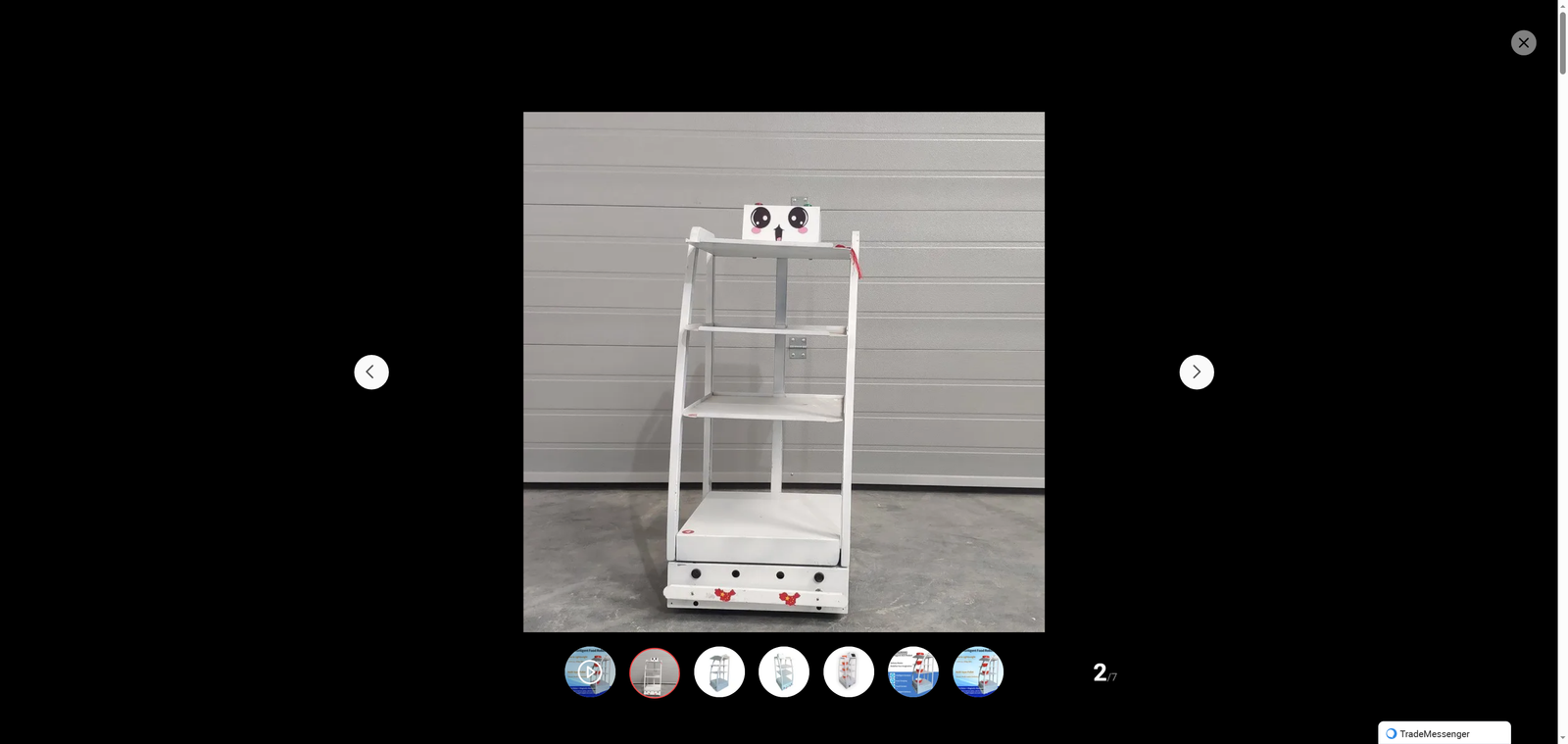
In the wave of intelligent manufacturing and industrial automation, Automated Guided Vehicle (AGV) robots have become an indispensable core equipment in modern logistics and production lines, undertaking the important task of material transfer and handling. Among them, the Intelligent Magnetic Strip Navigation AGV Robot, with its unique magnetic strip navigation technology, multi-station rotational stop function and multi-functional unmanned handling capabilities, is gradually breaking through the limitations of traditional handling modes, injecting strong momentum into the transformation and upgrading of various industries.
Magnetic strip navigation, as the core technical support of this type of AGV robot, has laid a solid foundation for its stable and efficient operation. Different from laser navigation, visual navigation and other technologies, magnetic strip navigation relies on the magnetic field signal generated by the pre-laid magnetic strip on the ground to realize the precise positioning and path planning of the robot. The magnetic strip has the advantages of strong anti-interference, low laying cost, simple maintenance and high positioning accuracy. Whether in the complex environment of the workshop with many obstacles, the harsh environment with dust and oil fume, or the large-span warehouse, it can ensure that the AGV robot runs stably along the preset path, and the positioning error can be controlled within a few millimeters, which provides a reliable guarantee for the multi-station rotational stop function.
The multi-station rotational stop function is the key highlight of the Intelligent Magnetic Strip Navigation AGV Robot, which fundamentally solves the pain point of traditional handling equipment that can only complete single-point handling. By presetting multiple stop stations on the magnetic strip navigation path, the robot can automatically identify the station signals during operation, and complete actions such as deceleration, stopping, loading and unloading, and restarting according to the preset program. This kind of rotational stop is not a simple mechanical stop, but a highly intelligent collaborative operation. For example, in the auto parts assembly workshop, the AGV robot can start from the parts warehouse, first stop at the first station to load the engine cylinder block, then go to the second station to load the transmission assembly, then transport to the third station to unload the materials to the assembly line, and finally return to the warehouse to wait for the next task. In the whole process, there is no need for manual intervention. The robot can automatically judge the station type, adjust the running speed and handling posture, and realize the seamless connection of multi-station material transfer.
In addition to the multi-station rotational stop function, the Intelligent Magnetic Strip Navigation AGV Robot also has a variety of multi-functional unmanned handling capabilities, which can be customized and expanded according to different industry needs. In terms of loading and unloading, it can be equipped with different end effectors such as manipulators, lifting platforms, and clamping devices to adapt to the handling needs of different types of materials, such as pallets, cartons, large components, and fragile goods. For example, in the electronic product workshop, the robot equipped with a lifting platform can stably lift and transport the precision electronic components to avoid collision and damage; in the logistics warehouse, the robot equipped with a pallet fork can automatically complete the stacking and handling of pallets, improving the warehouse storage efficiency. In terms of task scheduling, multiple AGV robots can form a collaborative operation team through the central control system. The system can dynamically allocate tasks according to the real-time material demand of each station, the running status of the robot, and the path congestion, so as to realize the optimal allocation of resources and avoid the waste of equipment capacity. At the same time, the robot is also equipped with a variety of safety protection devices, such as laser ranging sensors, emergency stop buttons, and sound and light alarms. When encountering obstacles during operation, it can automatically decelerate or stop to avoid collisions; in case of emergency, it can quickly respond to ensure the safety of personnel and equipment in the workshop.
The application of Intelligent Magnetic Strip Navigation AGV Robot with multi-station rotational stop and multi-functional unmanned handling capabilities has covered a variety of industries such as automobile manufacturing, electronic manufacturing, logistics and warehousing, food and beverage, and pharmaceutical production, and has achieved remarkable application effects. In the automobile manufacturing industry, it shortens the material transfer cycle between stations, improves the assembly efficiency of the production line, and reduces the manual handling cost by more than 60%; in the logistics warehouse, it realizes the unmanned operation of warehousing, handling and loading and unloading, improves the warehouse space utilization rate and material turnover efficiency, and reduces the error rate of manual handling; in the pharmaceutical production industry, it meets the requirements of clean production, avoids manual contact with pharmaceutical materials, and ensures the quality and safety of pharmaceuticals.
With the continuous development of industrial 4.0 and intelligent manufacturing, the market's demand for AGV robots is becoming more and more diversified and high-end. The Intelligent Magnetic Strip Navigation AGV Robot will also continue to iterate and upgrade in technology. In the future, it will be combined with technologies such as the Internet of Things, big data, and artificial intelligence to realize more intelligent path planning, more flexible multi-station collaboration, and more comprehensive functional expansion. For example, through the analysis of big data, the robot can predict the material demand of each station in advance and adjust the handling plan actively; through the combination of artificial intelligence and machine vision, it can realize the automatic identification and classification of materials, further improving the intelligence level of handling. At the same time, the integration of magnetic strip navigation with other navigation technologies will also become a development trend, making up for the limitations of a single navigation technology and adapting to more complex application scenarios.
In conclusion, the Intelligent Magnetic Strip Navigation AGV Robot, with its stable magnetic strip navigation technology, efficient multi-station rotational stop function and flexible multi-functional unmanned handling capabilities, has become an important part of the intelligent transformation of the industry. It not only improves the production efficiency and handling quality of enterprises, reduces the operation cost, but also promotes the transformation of the production mode from manual to intelligent. In the future, with the continuous progress of technology and the expansion of application scenarios, this kind of AGV robot will play a more important role in the field of intelligent manufacturing and logistics, leading the new era of unmanned handling.