
Intelligent Food Delivery Robot with Real-Time Navigation Technology: Reshaping the Catering Service Landscape
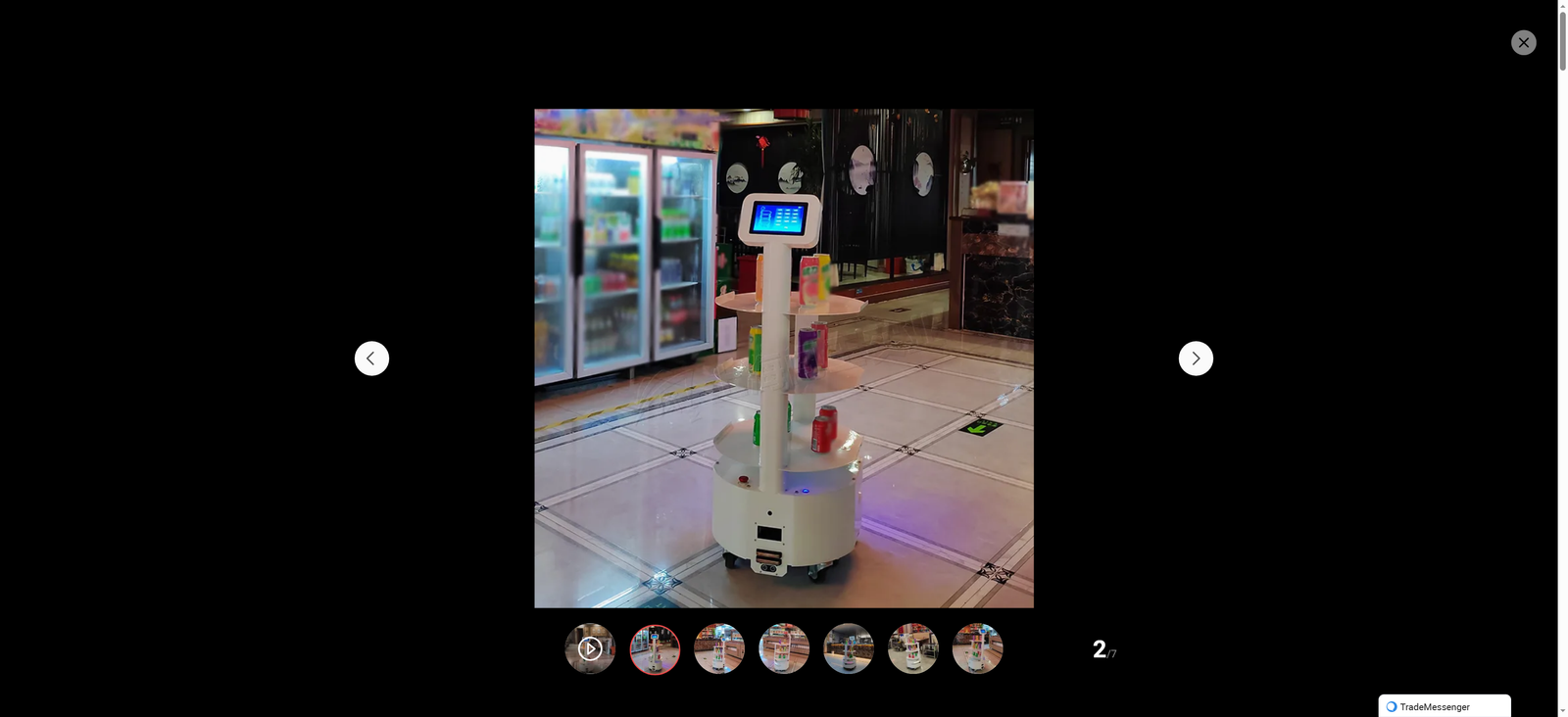
In the catering industry, which has long been plagued by the "three highs and one low" dilemma—high rent, high labor costs, high food costs, and low profit margins—intelligent food delivery robots equipped with real-time navigation technology have emerged as a transformative force. No longer mere novelty gadgets, these robots have evolved into indispensable operational tools, redefining efficiency standards and service experiences through precise positioning, dynamic path planning, and intelligent collaboration. At the heart of their seamless operation lies advanced real-time navigation technology, a synergy of multi-sensor fusion, algorithms, and hardware integration that overcomes the complexities of dynamic indoor environments.
The Core of Real-Time Navigation: Multi-Sensor Fusion SLAM Technology
Real-time navigation technology serves as the "brain and eyes" of intelligent food delivery robots, addressing three fundamental questions: Where am I? Where am I going? How do I get there safely? The cornerstone of this capability is Simultaneous Localization and Mapping (SLAM) technology, enhanced by multi-sensor fusion to tackle the challenges of complex catering environments—such as glass partitions, reflective floors, narrow corridors, and dense human traffic—that often confound single-sensor solutions.
Modern delivery robots integrate laser radar, RGB-D depth cameras, Inertial Measurement Units (IMU), and odometers to achieve centimeter-level positioning accuracy. Laser radar takes the lead in constructing high-precision environmental contour maps, while depth cameras excel at identifying low-lying obstacles (such as children or pets) and overhanging structures (like table corners). IMU compensates for sensor blind spots by providing dead reckoning, ensuring stable operation even when visual or laser signals are interrupted. Ultrasonic sensors further supplement this system by detecting transparent objects like glass, preventing collisions that single-sensor setups might miss. This multi-dimensional perception network enables robots to navigate reliably in crowded restaurants, avoiding disorientation or collisions while停靠 precisely at dining tables.
Beyond Basic Navigation: Dynamic Planning and Predictive Obstacle Avoidance
Restaurant environments are inherently unstructured and dynamic, with waitstaff rushing between tables and customers moving unpredictably. Advanced real-time navigation systems transcend passive obstacle avoidance—where robots stop when encountering barriers—to adopt predictive algorithms that anticipate and adapt to environmental changes. Through spatiotemporal joint planning, robots analyze pedestrians' movement trajectories to predict their positions in the next few seconds, allowing them to adjust routes or slow down 0.5 seconds in advance. This proactive strategy not only minimizes collision risks but also maintains smooth traffic flow, preventing bottlenecks caused by frequent abrupt stops.
In scenarios with multiple robots, decentralized distributed scheduling systems enable autonomous coordination of right-of-way. Dozens of robots communicate via protocols to negotiate passage at intersections, ensuring efficient collaboration without human intervention—a critical feature for large catering establishments. For instance, in Chongqing hotpot restaurants renovated from air-raid shelters with limited main corridors, optimized scheduling algorithms allow over a dozen robots to operate simultaneously without congestion, responding flexibly to dining table demands.
Application Expansion: From Dining Halls to Diversified Scenarios
The integration of real-time navigation technology has expanded the application scope of food delivery robots beyond traditional restaurants, penetrating airports, hotels, and shopping malls. At Shenzhen Bao'an International Airport, Meituan's "Little Yellow Bee" robots leverage indoor-outdoor integrated real-time navigation to deliver meals and beverages directly to passengers at designated boarding gates. Equipped with multi-modal perception and scene understanding capabilities, these robots navigate through crowded terminal areas, enabling travelers to order food via mobile apps and receive deliveries without leaving their waiting spots—an innovation that has been well-received for its convenience and efficiency. Brands like Starbucks, KFC, and Heytea have joined this service ecosystem, catering to diverse passenger needs.
In commercial catering settings, leading brands have further enhanced robot value through hardware-software integration. Orion Star's Fortune Leopard series adopts a five-dimensional fusion navigation system, reducing reliance on ceiling markers during deployment and achieving low positioning loss rates even in glass-reflective environments. Its car-grade torsion bar damping chassis minimizes vibrations when traversing speed bumps or carpets, preventing soup spills—a critical improvement for maintaining service quality. Keenon Intelligent's T-series robots, widely used by Haidilao and other chain brands, prioritize stability and durability, with mature laser SLAM navigation adapting to narrow passages and high-traffic conditions.
Current Challenges and Future Trends
Despite significant advancements, intelligent food delivery robots still face hurdles. Extreme congestion, frequently rearranged furniture, and temporary obstacles (such as strollers) test their real-time environmental adaptation. High initial procurement costs and the need for professional maintenance also limit widespread adoption among small and medium-sized catering businesses. Additionally, current robots primarily handle point-to-point delivery, lacking the flexibility to perform tasks requiring emotional interaction, such as table setting or complex customer complaint handling.
The future of real-time navigation for food delivery robots lies in deeper technological integration and functional diversification. The combination of large language models (LLMs) and embodied intelligence will enable robots to understand complex natural language instructions—such as "Deliver this steak to the lady in red by the window"—and enhance scene reasoning capabilities. Cost reductions in solid-state laser radar and high-performance vision solutions will lower robot prices, making them more accessible. Cross-floor delivery, enabled by elevator IoT integration, will expand their operational range from flat surfaces to three-dimensional spaces. Furthermore, data-driven services will allow robots to provide operational insights—such as peak-hour path heatmaps and delivery duration analytics—empowering catering managers to optimize workflows.
Conclusion
Intelligent food delivery robots with real-time navigation technology are not merely replacing manual labor but reshaping the catering industry's operational model. By combining multi-sensor fusion SLAM, dynamic path planning, and predictive algorithms, these robots overcome the complexities of dynamic environments, achieving efficient, safe, and precise delivery. As technology advances—with lower costs, enhanced intelligence, and expanded functionality—they will move beyond being "delivery tools" to become integrated service partners, fostering a "human-robot symbiosis" model where humans focus on personalized services while robots handle repetitive tasks. In this evolution, real-time navigation technology will remain the core driver, propelling the catering industry toward greater digitization, efficiency, and innovation.