
Intelligent Electric Autonomous Package Warehouse Delivery Vehicle Robot with Cabins: Redefining Hotel Logistics Efficiency
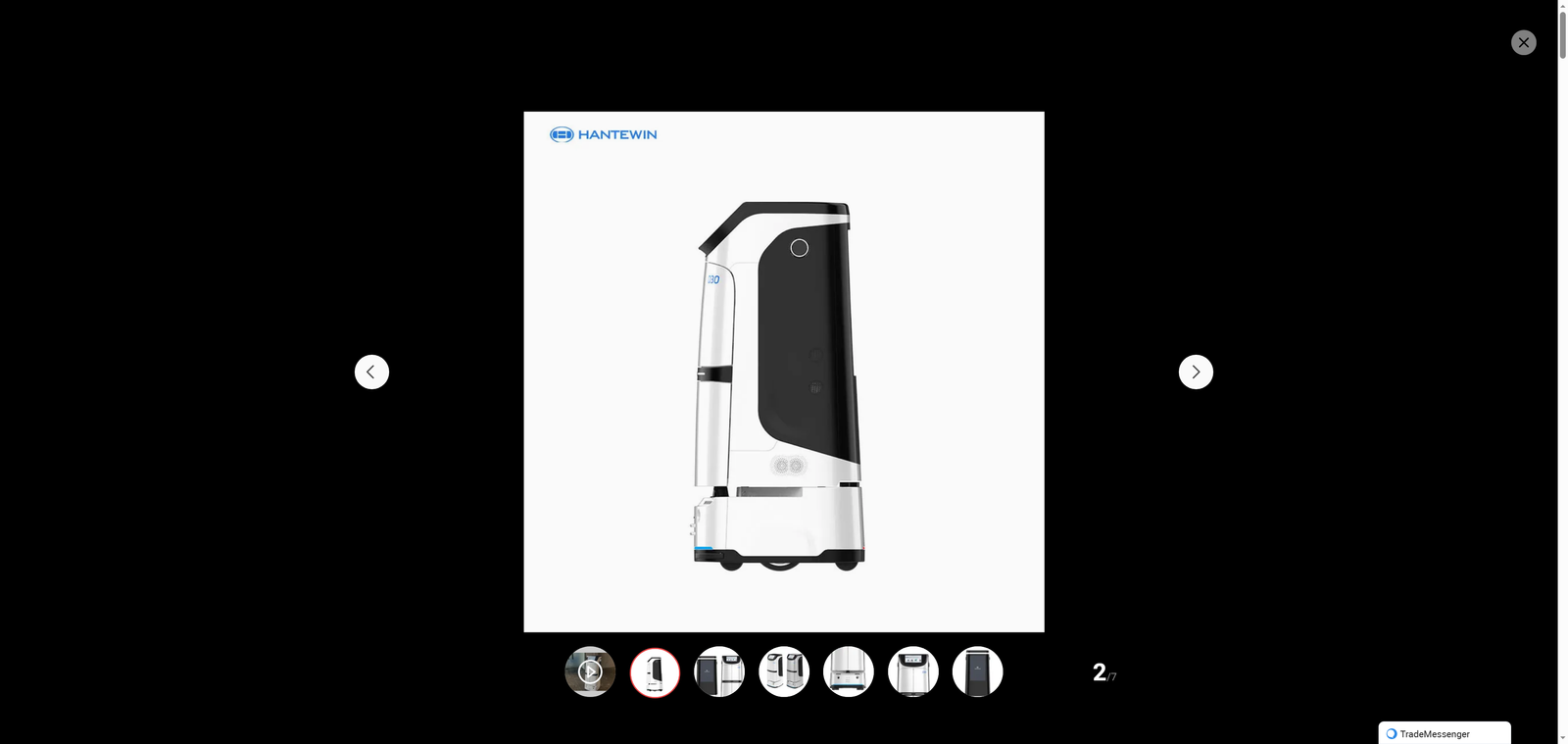
In the era of smart tourism and digital hospitality, hotels are constantly exploring innovative solutions to optimize service quality, improve operational efficiency, and enhance guest experience. Among them, the application of intelligent equipment has become a key breakthrough in transforming traditional hotel logistics. The Intelligent Electric Autonomous Package Warehouse Delivery Vehicle Robot with Cabins (hereinafter referred to as "hotel package delivery robot") is a typical representative of this trend. Integrating intelligent perception, autonomous navigation, electric drive and cabin storage technologies, this robot is committed to solving the pain points of package management, storage and delivery in hotels, creating a more efficient, accurate and humanized logistics service system for the hospitality industry.
With the rapid development of e-commerce and the popularization of contactless services, the number of packages received by hotels on behalf of guests has increased significantly. Traditional package management relies on manual registration, storage and delivery: front desk staff need to spend a lot of time checking package information, sorting and storing them in the warehouse, and then notify guests to pick them up or send them to the guest rooms manually. This mode not only consumes a lot of human resources, but also is prone to problems such as package loss, wrong delivery, delayed notification and low delivery efficiency. Especially during peak hours such as check-in and check-out, the contradiction between manual workload and service demand becomes more prominent, which affects the operational efficiency of the hotel and the guest experience to a certain extent. The emergence of the hotel package delivery robot perfectly solves these pain points, realizing the full-process intelligent upgrading of package warehouse management and delivery.
The hotel package delivery robot is equipped with a number of independent cabins with different specifications, which can meet the storage needs of different types of packages, such as express parcels, takeout food, hotel supplies and other items. Each cabin has an independent locking device and information recognition module, which can realize one-to-one correspondence between packages and guests, ensuring the safety and privacy of items. Compared with the traditional centralized storage mode, the cabin design not only avoids the confusion of packages, but also reduces the risk of cross-contamination of items, which is particularly important for ensuring food safety and epidemic prevention and control.
As the core advantage of the robot, intelligent electric autonomous technology provides a strong guarantee for its stable operation. The robot is equipped with advanced sensors such as lidar, visual camera and ultrasonic radar, which can realize real-time perception of the hotel environment, accurately identify obstacles, elevators, doors and other facilities, and complete autonomous path planning and obstacle avoidance. Relying on the self-developed autonomous navigation algorithm, the robot can flexibly travel in the hotel's public areas such as lobbies, corridors and elevators, without manual control, and accurately reach the designated guest room door, front desk or warehouse location. At the same time, the electric drive mode makes the robot operate quietly and environmentally friendly, without producing noise pollution and exhaust gas emissions, which is in line with the development concept of green hotels. Compared with traditional fuel-powered logistics equipment, electric drive not only reduces the hotel's operation and maintenance costs, but also responds to the national call for energy conservation and emission reduction.
In terms of functional design, the hotel package delivery robot has a complete intelligent management system, which can realize seamless connection with the hotel's PMS (Property Management System) and guest information system. When a package arrives at the hotel, the staff only need to scan the package information and bind it to the guest's room number through the system. The robot will automatically receive the task, go to the warehouse to take the package and store it in the corresponding cabin, and then send a message notification to the guest through the hotel APP, WeChat or SMS. Guests can choose to pick up the package at the designated location by themselves or let the robot deliver it to the guest room. When delivering to the guest room, the robot can automatically call the elevator, reach the floor where the guest room is located, and send a reminder to the guest through voice broadcast. After the guest confirms, the corresponding cabin will automatically open, and the guest can take the package easily. After the delivery is completed, the robot will automatically return to the charging station for charging, waiting for the next task. This full-process intelligent operation mode greatly reduces the manual workload, improves the efficiency of package delivery, and also avoids the trouble of guests waiting for package pick-up, enhancing the guest's sense of experience and satisfaction.
In addition to package delivery, the hotel package delivery robot can also be flexibly used in a variety of scenarios, expanding the service boundaries of hotel logistics. For example, during the stay, guests can apply for the delivery of hotel supplies such as mineral water, towels and toiletries through the guest room phone or APP, and the robot can quickly deliver the items to the guest room; in the conference scene, the robot can be used to deliver documents, water cups and other items to the conference room, improving the efficiency of conference services; in the early morning or late night, when the manual service is reduced, the robot can still provide 24-hour package delivery service, ensuring the continuity and timeliness of the hotel service. The multi-scenario application ability makes the robot a multi-functional intelligent logistics assistant in the hotel, further improving the comprehensive operational efficiency of the hotel.
With the continuous progress of artificial intelligence, Internet of Things and other technologies, the hotel package delivery robot is also constantly upgrading and iterating. In the future, with the popularization of 5G technology, the robot will have faster data transmission speed and more stable connection performance, which can realize real-time communication and collaborative work between multiple robots, further improving the efficiency of logistics scheduling; through the accumulation and analysis of big data, the robot can accurately predict the peak period of package arrival and guest demand, and carry out pre-job scheduling and resource allocation, realizing more intelligent operation management; at the same time, the design of the robot will be more humanized, such as adding multi-language voice interaction, touch screen operation and other functions, to meet the needs of different guests.
The application of Intelligent Electric Autonomous Package Warehouse Delivery Vehicle Robot with Cabins is not only a technological innovation in the hotel industry, but also a concrete practice of the transformation and upgrading of the hospitality industry towards intelligence and refinement. It not only solves the pain points of traditional hotel logistics management, reduces operational costs, but also optimizes the guest experience, enhances the core competitiveness of the hotel. In the future, with the continuous maturity of intelligent technology and the continuous expansion of application scenarios, the hotel package delivery robot will become a standard configuration in the hotel industry, promoting the hotel industry to enter a new era of more efficient, intelligent and high-quality services.