
The New Era of Commercial Services: Intelligent AI WiFi Guided Humanoid Robots Shine in Multiple Scenarios
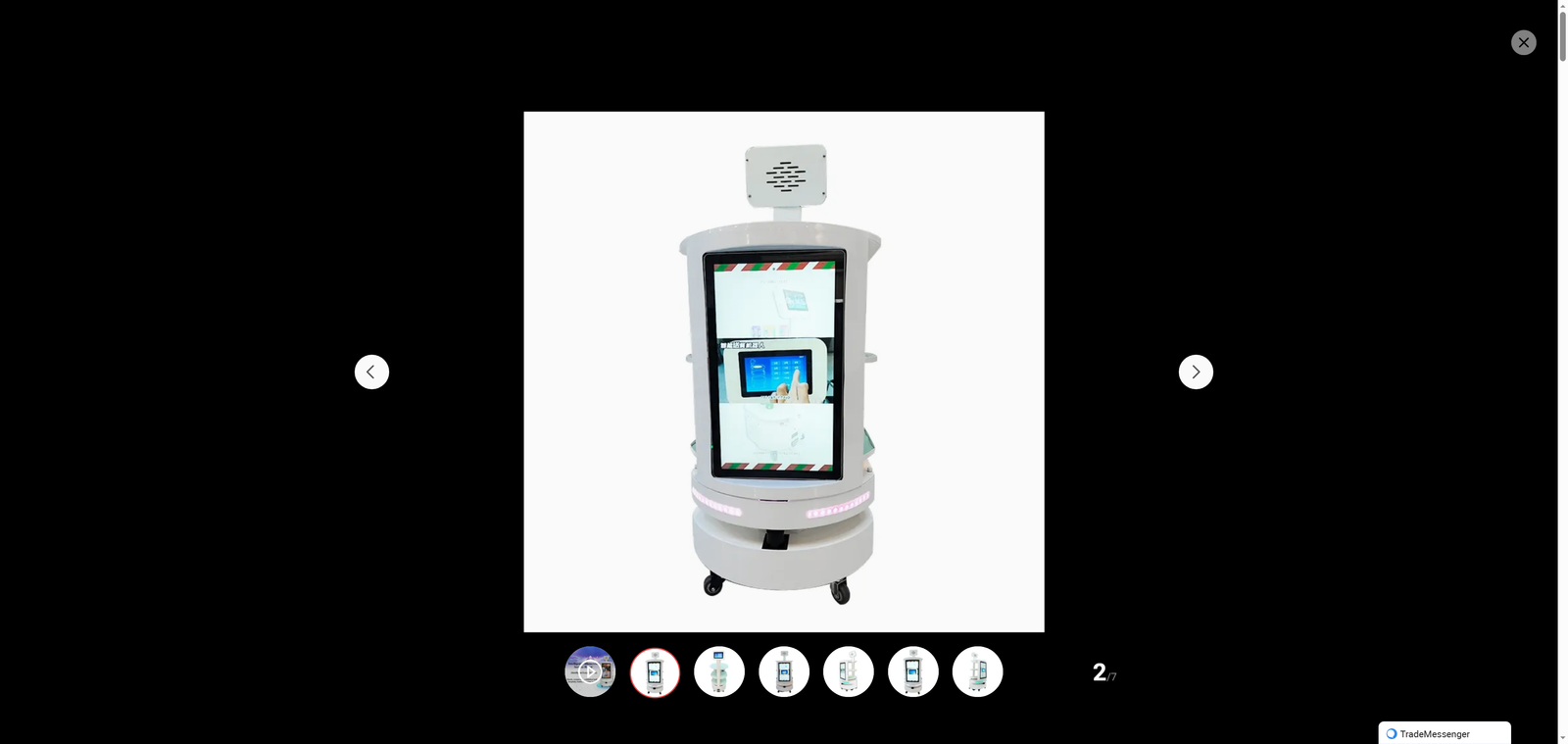
With the rapid development of artificial intelligence, Internet of Things and WiFi communication technology, intelligent humanoid robots have gradually stepped out of the laboratory and become a new force in the commercial field. Among them, the Intelligent AI WiFi Guided Humanoid Advertising Display Robots, which integrate guidance, advertising, reception and other functions, have been widely applied in restaurants, hotels, shopping malls and other places, and even extended to smart home and commercial reception scenarios, bringing a revolutionary change to the way of commercial operation and service experience.
As a new type of intelligent commercial equipment, the core advantage of Intelligent AI WiFi Guided Humanoid Advertising Display Robots lies in the deep integration of multiple cutting-edge technologies. Driven by AI algorithms, the robot has the capabilities of intelligent identification, voice interaction and autonomous navigation; relying on stable WiFi connection, it can realize real-time data transmission, remote control and information update; coupled with the humanoid design and high-definition advertising display screen, it can not only complete functional services, but also become a vivid "brand spokesperson" in commercial spaces. This integration of technology and function makes it break through the limitations of traditional commercial equipment and meet the diversified needs of modern commerce.
In shopping malls, the most crowded commercial scene, these humanoid robots play the role of "intelligent guides and mobile billboards". Equipped with high-precision navigation systems and WiFi positioning functions, they can accurately identify the customer's location and destination, and guide customers to the designated stores, rest areas or parking lots through voice prompts and screen guidance. At the same time, the advertising display screen on the robot can push targeted advertisements and promotions according to the customer's age, gender and consumption preferences analyzed by AI, which is more accurate and efficient than traditional static billboards. When customers have questions, they can also interact with the robot through voice, and get answers about store information, preferential activities and product introductions in real time, greatly improving the shopping experience and operational efficiency of the mall.
Restaurants and hotels, as service-oriented industries, have also ushered in a new upgrade with the help of intelligent humanoid robots. In restaurants, robots can undertake reception work such as greeting guests, leading seats and explaining menus. They can accurately send orders to the kitchen through WiFi connection, and even complete the work of serving dishes and collecting tableware, reducing the labor pressure of the restaurant and improving the service speed. In hotels, the robots can act as front desk assistants, helping guests with check-in and check-out procedures, delivering room supplies and providing travel consulting services. The humanoid design makes the service more intimate and humanized, and the stable WiFi connection ensures the real-time and accuracy of information transmission, which effectively enhances the brand image and customer satisfaction of hotels and restaurants.
Beyond the traditional commercial scenes, Intelligent AI WiFi Guided Humanoid Robots are also gradually penetrating into smart home and commercial reception fields, showing a broad application prospect. In smart home scenarios, the robot can be connected to other smart devices in the home through WiFi, realizing intelligent control of lighting, air conditioning, curtains and other equipment. At the same time, it can also undertake the functions of family reception, such as greeting visitors, answering basic questions and transmitting messages to family members, becoming an important part of the smart home ecosystem. In commercial reception occasions such as corporate lobbies and exhibition halls, the robot can act as a receptionist, completing the work of receiving visitors, registering information, leading visits and introducing corporate culture. The high-definition display screen can play corporate promotional videos and exhibition information, and the AI interaction function can answer the professional questions of visitors, which not only improves the efficiency of reception work, but also shows the corporate strength in intelligent technology.
The popularity of Intelligent AI WiFi Guided Humanoid Advertising Display Robots is not only a manifestation of technological progress, but also a inevitable trend of commercial upgrading. In the era of increasingly fierce commercial competition, enterprises are paying more and more attention to improving service quality and operational efficiency, and reducing operational costs. These intelligent robots just meet these needs. They can work 24 hours a day without fatigue, have high work accuracy and stability, and can reduce the enterprise's labor cost in the long run. At the same time, the data collected by the robot through WiFi and AI can help enterprises analyze customer behavior and market demand, provide data support for business decision-making, and promote the transformation of enterprises to intelligent operation.
Of course, the development of intelligent humanoid robots in the commercial field is still in a stage of continuous exploration and improvement. There are still some problems to be solved, such as the improvement of complex scene adaptation ability, the optimization of human-computer interaction experience and the reduction of production cost. However, with the continuous breakthrough of AI and WiFi technology, these problems will be gradually solved, and the functions and application scenarios of intelligent humanoid robots will be more abundant.
Looking forward to the future, Intelligent AI WiFi Guided Humanoid Advertising Display Robots will become an indispensable part of the commercial field. They will be more intelligent, humanized and personalized, and play a more important role in restaurants, hotels, shopping malls, smart homes and commercial reception and other scenarios. They will not only change the way of commercial operation and service, but also promote the overall upgrading of the commercial industry, leading us into a new era of intelligent commercial services full of technology and convenience.