
The New Era of Smart Service: Otel Service Robots and Food Delivery Robots Reshape the Industry Landscape
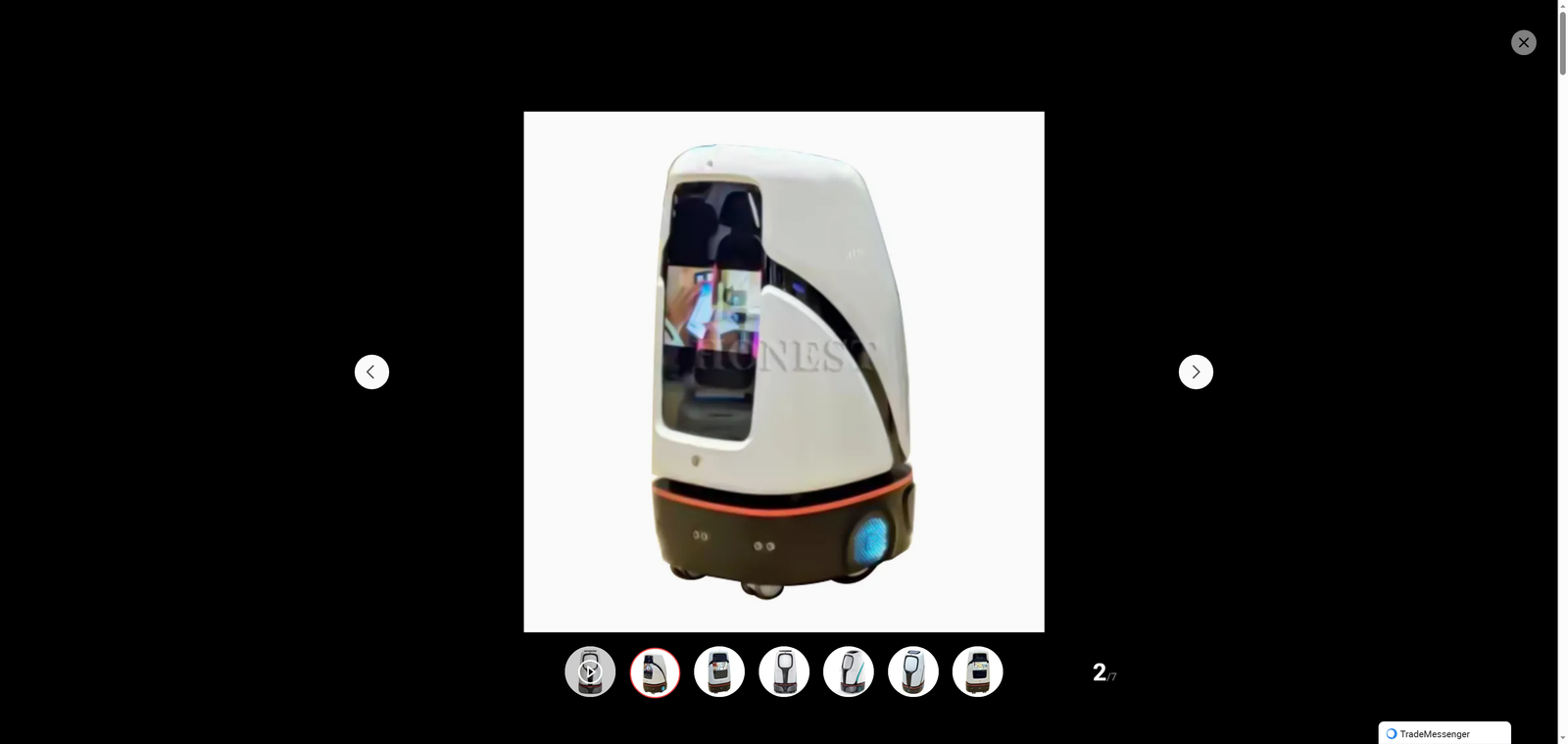
With the rapid advancement of artificial intelligence, Internet of Things and autonomous navigation technologies, service robots have gradually stepped out of the laboratory and become an indispensable part of various industries. Among them, otel service robots and food delivery robots have emerged as bright stars, breaking the limitations of traditional service models, optimizing resource allocation, and injecting strong vitality into the service industry with their efficient, intelligent and humanized characteristics. From hotels to restaurants, from commercial complexes to residential areas, these robots are quietly changing the way people live and consume, opening a new chapter of smart services.
Otel service robots, as a core part of smart hotels, have comprehensively upgraded the hotel service experience by undertaking a series of tedious and repetitive work. In the past, hotel guests often needed to wait for a long time for services such as room service, luggage delivery and item delivery. Now, with otel service robots, these needs can be met in a timely manner. Equipped with advanced laser navigation and obstacle avoidance systems, otel service robots can accurately identify the hotel layout, take the optimal route, and freely shuttle between elevators, corridors and rooms without manual guidance. Whether it is delivering mineral water, towels and other daily necessities to guests, or sending laundry and express delivery, the robot can complete the task efficiently and accurately, and send a reminder message to the guest's mobile phone after arriving at the destination. This not only reduces the work pressure of hotel attendants, allowing them to focus more on providing high-quality personalized services, but also shortens the service response time, improves guest satisfaction and loyalty.
In addition to basic delivery services, otel service robots are also evolving towards multi-functionalization. Many high-end hotels have introduced intelligent otel robots with voice interaction, information inquiry and other functions. Guests can consult the robot about hotel facilities, surrounding scenic spots, catering recommendations and other information through voice commands, and the robot can give accurate and vivid answers in real time. Some robots are also equipped with facial recognition technology, which can quickly verify guest information and realize contactless check-in and check-out, which not only improves the efficiency of hotel operations, but also adds a sense of technology and fashion to the hotel, becoming a unique "business card" of smart hotels.
Compared with otel service robots, food delivery robots focus more on solving the pain points of food delivery in scenarios such as restaurants, canteens and communities, and have become a powerful assistant in the catering industry. In peak dining hours, restaurants often face problems such as insufficient waiters, long food delivery time, and easy order mixing. Food delivery robots can effectively solve these problems with their stable work efficiency and accurate order management capabilities. When a guest places an order, the order information is automatically synchronized to the food delivery robot system. After the chef completes the meal preparation, the robot will accurately take the meal according to the order number, and then send it to the corresponding table through the pre-set route. During the delivery process, the robot can automatically avoid diners, tables and chairs and other obstacles, and even take the elevator independently in multi-storey restaurants, ensuring that the food is delivered to the guest's table in a timely and safe manner.
Food delivery robots not only improve the efficiency of food delivery, but also help catering merchants reduce operating costs. For catering enterprises, the cost of labor has always been a heavy burden. The use of food delivery robots can replace part of the waiter's work, reducing the number of employees and labor costs. At the same time, the robot has the advantages of 24-hour continuous work, no fatigue, no mistakes, which can ensure the stability of service quality and avoid service errors caused by human factors. In addition, food delivery robots are clean and hygienic, and the food delivery box is detachable and washable, which can effectively reduce the risk of food pollution and meet the increasingly high food safety requirements of consumers. Especially after the epidemic, contactless service has become a new demand of the catering industry. Food delivery robots have become an important tool for catering merchants to realize contactless food delivery, which has won the trust of consumers and promoted the recovery and development of the catering industry.
The rapid development of otel service robots and food delivery robots is inseparable from the continuous innovation of core technologies. Autonomous navigation technology is the key to the normal operation of robots. At present, most service robots adopt laser SLAM, visual SLAM and other technologies, which can realize real-time mapping, accurate positioning and autonomous path planning, and adapt to complex and changing indoor environments. The improvement of sensor technology has also enhanced the robot's environmental perception ability. Through infrared sensors, ultrasonic sensors and other equipment, the robot can accurately detect obstacles around it and make rapid avoidance responses. In addition, the continuous progress of artificial intelligence and big data technology has enabled robots to continuously learn and optimize their work methods. By analyzing user behavior data and service feedback, robots can adjust their service strategies to provide more personalized and humanized services.
Of course, otel service robots and food delivery robots still face some challenges in their popularization and application. On the one hand, the cost of robots is relatively high. For small and medium-sized enterprises, the one-time investment in purchasing robots is relatively large, which restricts the promotion and use of robots. On the other hand, the adaptability of robots in complex scenarios still needs to be improved. For example, in crowded public areas or environments with frequent layout changes, the navigation and obstacle avoidance capabilities of robots may be affected. In addition, some users still have a sense of distance from service robots, and they are more willing to accept human services, which also needs to be changed through long-term market education and experience optimization.
Looking to the future, with the continuous reduction of robot production costs and the continuous improvement of technical level, otel service robots and food delivery robots will have a wider range of application scenarios. In hotels, robots may realize full-process services from guest check-in to check-out, including room cleaning, bed making and other work; in the catering industry, robots may cooperate with intelligent kitchens to realize full-process automation from food preparation to delivery; in communities, robots may become "community butlers", providing residents with food delivery, express delivery, elderly care and other services. At the same time, the integration of robots with 5G, cloud computing and other technologies will make robots more intelligent and networked, and realize information sharing and collaborative work between multiple robots, forming a more efficient smart service system.
Otel service robots and food delivery robots are not only the product of technological progress, but also the symbol of the transformation and upgrading of the service industry. They are changing the traditional service model with their unique advantages, improving service efficiency and quality, and bringing more convenience and surprises to people's life. With the continuous advancement of science and technology, we have reason to believe that service robots will play a more important role in the future, and build a smarter, more efficient and more humanized service ecosystem for us.