
The New Backbone of Hotel Intelligent Services: Exploring the Multiple Roles of Service Robots
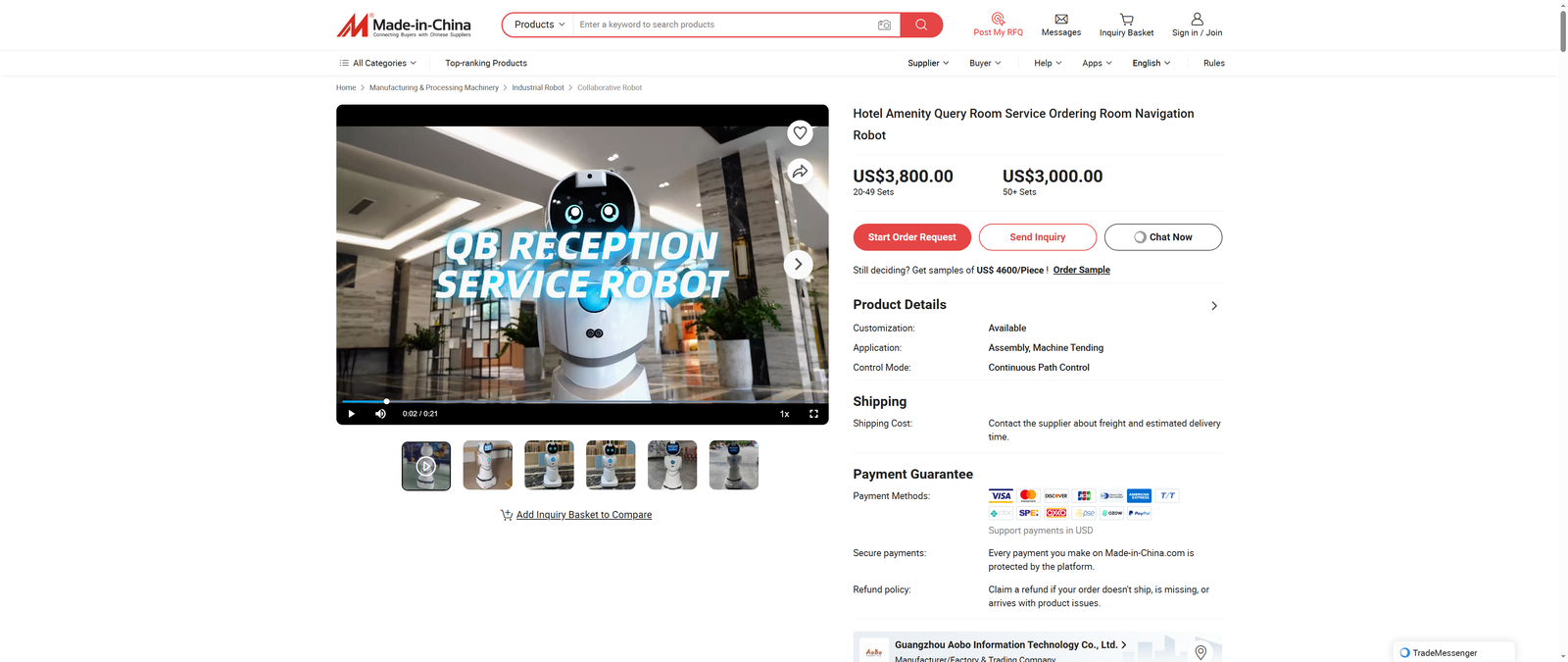
With the rapid development of artificial intelligence and smart technology, the hotel industry is undergoing a profound transformation from traditional service mode to intelligent experience. Among them, the hotel service robot integrating Hotel Amenity Query, Room Service Ordering and Room Navigation functions has become a new benchmark for upgrading hotel services. It not only breaks the limitations of manual service in efficiency and time, but also injects a new sense of technology and humanization into the guest experience, redefining the new connotation of high-quality hotel services.
Hotel amenity query is the most basic and frequent demand of guests after checking in. In the past, guests often needed to make a phone call to the front desk or check the printed manual in the room to know the details of the amenities provided by the hotel, such as whether there are extra toiletries, the opening hours of the gym and swimming pool, and the location of the restaurant. This process is not only time-consuming but also may lead to information asymmetry due to the busy work of the front desk staff. The emergence of service robots has perfectly solved this problem. Guests only need to ask the robot about the relevant information of hotel amenities through voice interaction, and the robot can quickly give accurate and detailed answers. Whether it is the opening time of public facilities, the types of free amenities in the room, or the precautions for using electrical appliances, the robot can respond one by one. Moreover, the robot can also actively push relevant amenity information according to the guest's check-in time and preferences, such as recommending the hotel's characteristic breakfast to guests in the morning and reminding the closing time of the gym in the afternoon, so that guests can grasp all the service information of the hotel without leaving the room, greatly improving the convenience of the stay.
Room service ordering is another core function that service robots are good at, which has completely changed the traditional way of ordering room service. In the past, guests needed to call the room service center or fill in the order form and hang it outside the door, and then wait for the waiter to deliver the goods. The whole process is not only cumbersome but also difficult to accurately grasp the delivery time. With the service robot, guests can complete the ordering of room service with a simple operation. They can either interact with the robot through voice to order coffee, snacks, extra bed sheets and other items, or select the required services through the touch screen on the robot. After the order is confirmed, the robot will automatically send the order information to the background service center, and the staff can prepare the goods according to the order. After the preparation is completed, the robot will take over the delivery task, accurately navigate to the guest's room door, and remind the guest to pick up the goods through voice. This whole process is efficient, transparent and fast. Guests can check the progress of the order in real time through the robot, and the robot can also avoid the embarrassment of face-to-face communication between guests and waiters to a certain extent, protecting the privacy of guests. At the same time, the robot can also record the guest's ordering preferences, and provide more personalized recommendation services for guests when they order next time, making the room service more humanized.
Room navigation is a key function that service robots help guests solve the problem of "getting lost" in the hotel. For large-scale hotels with complex structures, such as hotels with multiple buildings, multiple floors and numerous rooms, it is very common for guests to get lost when looking for their own rooms, meeting rooms or public areas. In the past, hotels usually solved this problem by setting up signposts and arranging staff to guide, but the effect was not ideal. The service robot is equipped with advanced navigation and positioning system, which can accurately grasp the layout of the hotel and the real-time location information. Guests only need to tell the robot the target location, such as "take me to room 1508" or "take me to the conference room on the third floor", and the robot can immediately plan the optimal route and lead the way for the guests. During the navigation process, the robot will remind the guests of the precautions in real time, such as "please take the elevator on the left", "turn right at the next corner", and avoid obstacles flexibly. For elderly guests or guests who are not familiar with the hotel environment, this function is particularly practical. It not only saves the time for guests to find the way but also avoids the anxiety caused by getting lost, making the stay experience more comfortable and pleasant.
In addition to the three core functions of hotel amenity query, room service ordering and room navigation, service robots can also undertake many other service tasks, such as welcoming guests at the hotel lobby, delivering express delivery and letters, and answering common questions of guests. They work 24 hours a day without rest, which greatly reduces the work pressure of hotel staff and allows human resources to be more focused on providing high-value personalized services, such as guest demand follow-up and emergency handling. At the same time, the service robot with a cute appearance and friendly interaction has also become a unique "landmark" of the hotel, attracting many guests to take photos and share, which has played a good role in promoting the hotel's brand image.
Of course, the popularization and application of hotel service robots does not mean replacing manual services, but complementing and improving each other with manual services. In the process of providing services, robots can handle standardized and repetitive work efficiently, while manual services can focus on solving more complex and personalized guest needs. The combination of the two can maximize the service quality and efficiency of the hotel. With the continuous progress of technology, the functions of service robots will be more and more powerful. In the future, they may also realize more intelligent interactions, such as recognizing the guest's emotions and providing targeted care services, or connecting with the smart devices in the room to realize one-stop control of the room environment.
In conclusion, the hotel service robot integrating Hotel Amenity Query, Room Service Ordering and Room Navigation functions has become an important part of the intelligent transformation of the hotel industry. It not only brings more convenient, efficient and personalized stay experience to guests but also promotes the upgrading of hotel service mode and the improvement of operational efficiency. In the era of intelligent development, service robots will surely play a more important role, leading the hotel industry to move towards a more intelligent, humanized and high-quality future.