
The Rise of Little Delivery Robots: Transforming Indoor Logistics with AI and Driverless Technology
In the era of intelligent automation, a new generation of delivery solutions has emerged to reshape indoor logistics and daily service scenarios—from bustling hospitals to crowded restaurants, from commercial buildings to office campuses. Hospital Delivery Robots, Indoor Delivery Robots, AI Delivery Robots, Driverless Food Delivery systems, and the charming Little Delivery Robots are no longer futuristic concepts; they have become integral parts of modern life, leveraging cutting-edge technology to solve inefficiencies, reduce costs, and enhance service quality.
At the core of this transformation lies the AI Delivery Robot, the "brain" that empowers all types of delivery robots to operate autonomously and intelligently. Unlike traditional automated machines limited to fixed routes, AI-driven delivery robots are equipped with advanced technologies such as multi-sensor fusion SLAM navigation, predictive obstacle avoidance, and large language model (LLM) interaction, enabling them to perceive, decide, and interact like humans. These robots can build real-time environmental maps, adjust routes dynamically according to pedestrian flow and obstacles, and even engage in natural conversations with users—answering questions about delivery status, guiding people, or even promoting products in catering scenarios. The integration of AI not only makes delivery more efficient but also turns these little robots into interactive service partners rather than just "moving trays".
Among the most vital applications of these intelligent robots is the Hospital Delivery Robot, a game-changer in healthcare logistics. Hospitals are high-pressure environments where timely delivery of medications, lab samples, medical supplies, and even meals can directly affect patient care and workflow efficiency. Traditional manual delivery is prone to delays, human error, and even cross-infection risks, especially in busy medical settings. Hospital Delivery Robots address these pain points perfectly: they can operate 24/7, navigate through crowded corridors and between departments autonomously, call elevators and open doors without human intervention, and even perform self-disinfection with built-in UV lights to ensure the safety of medical supplies. Equipped with video recording and authentication modules, these robots also provide traceable delivery records, avoiding disputes and ensuring the accuracy of sensitive items like medications. By taking over repetitive non-clinical delivery tasks, they free up nurses and pharmacists to focus more on patient care, significantly improving hospital operational efficiency and service quality.
Beyond healthcare, Indoor Delivery Robots are revolutionizing logistics in various enclosed spaces, including commercial buildings, office parks, hotels, and shopping malls. These versatile little robots are designed to adapt to complex indoor environments—narrow corridors, glass partitions, and dynamic crowds—with high precision and stability. For example, in office buildings, they can deliver documents, snacks, and packages between floors, saving employees time and reducing the workload of administrative staff. In hotels, they discreetly deliver guest amenities, room-service meals, and packages, enhancing the guest experience while freeing up hotel staff to focus on more personalized services. Supported by centralized scheduling systems, multiple Indoor Delivery Robots can collaborate seamlessly, avoiding congestion and maximizing delivery efficiency—even in large-scale venues with dozens of robots operating simultaneously.
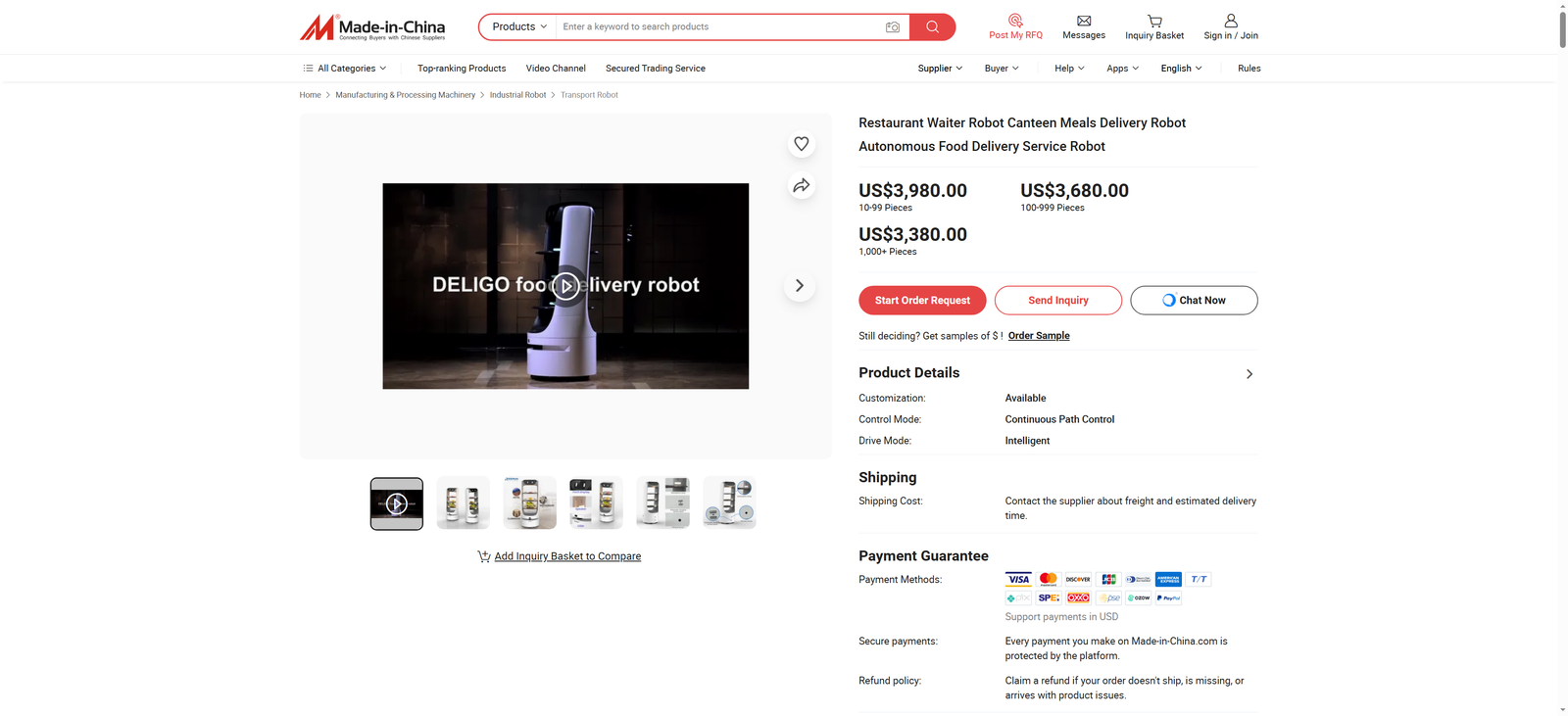
A particularly popular and widely adopted segment is Driverless Food Delivery, where small, agile delivery robots bring convenience to dining scenarios. Restaurants, especially those facing the "three highs and one low" dilemma (high rent, high labor costs, high ingredient costs, and low profit margins), have turned to driverless food delivery robots as a cost-effective solution. These Little Delivery Robots—compact, cute, and highly efficient—can navigate from the kitchen to dining tables or takeaway pickup points autonomously, avoiding customers and waiters with predictive obstacle avoidance technology. Unlike human waiters who can deliver about 200 plates per day, mature driverless food delivery robots can complete 400 to 600 deliveries daily, significantly improving delivery speed and reducing labor costs. Equipped with stable chassis systems borrowed from the automotive industry, they ensure that soups and drinks remain intact during delivery, reducing food waste and improving customer satisfaction. Moreover, with the integration of LLM, some advanced models can even answer customer questions about dishes, promotions, and ingredients, acting as both delivery staff and "shopping guides".
The global market for these delivery robots is growing exponentially, driven by technological advancements, labor shortages, and increasing demand for contactless services post-pandemic. The restaurant delivery robot market alone was valued at USD 13.9 billion in 2023 and is expected to reach USD 95.0 billion by 2032, with a compound annual growth rate of 23.84%. Key technological upgrades—such as more accurate SLAM navigation, longer battery life, better load capacity, and more natural AI interaction—continue to expand the capabilities of these robots, making them suitable for more complex scenarios and harsh environments. For instance, some Hospital Delivery Robots can handle multi-point deliveries to multiple wards in one trip, while advanced Indoor Delivery Robots can switch seamlessly between indoor and outdoor environments, connecting with outdoor unmanned vehicles to form an integrated delivery network.
Looking ahead, the future of Hospital Delivery Robots, Indoor Delivery Robots, AI Delivery Robots, Driverless Food Delivery systems, and Little Delivery Robots is even more promising. As AI and robotics technology continue to evolve, these robots will become more intelligent, versatile, and affordable. They will integrate more seamlessly with smart buildings, smart hospitals, and smart cities, forming a comprehensive indoor logistics network that connects people, goods, and spaces. From reducing labor costs and improving efficiency to enhancing safety and convenience, these little delivery robots are not just changing how we receive goods and services—they are building a more intelligent, efficient, and convenient future for everyone.