
Highly Efficient Industrial Delivery Robots for Material Handling Solutions
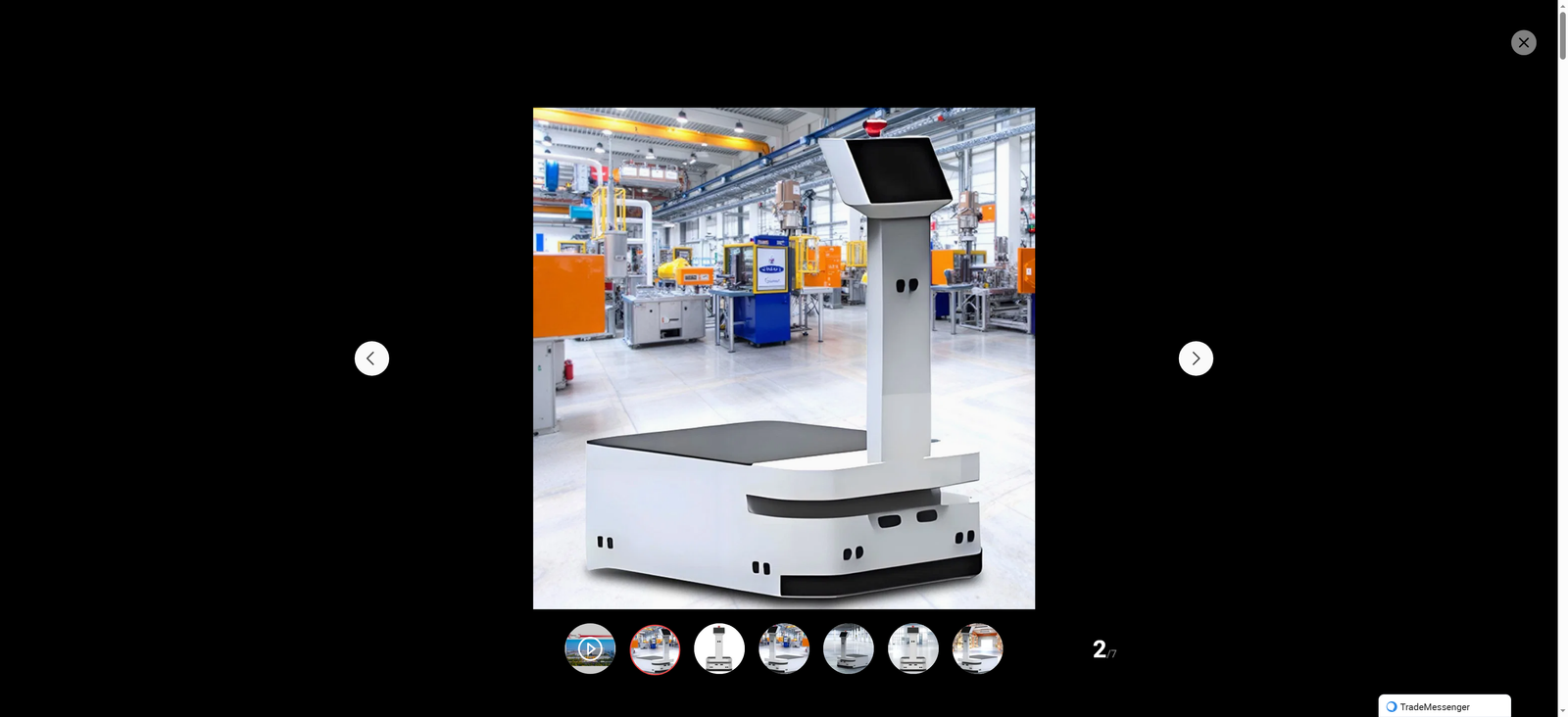
In the era of smart manufacturing and industrial automation, material handling stands as a critical link in optimizing production efficiency, reducing operational costs, and enhancing supply chain resilience. Traditional material handling methods, relying heavily on manual labor and conventional transport equipment, are increasingly struggling to meet the demands of high-volume, high-precision, and 24/7 continuous operations. Against this backdrop, highly efficient industrial delivery robots have emerged as transformative solutions, reshaping the landscape of material handling across diverse industries and unlocking new levels of productivity and reliability.
Industrial delivery robots, specifically designed for material transport in industrial environments, integrate advanced technologies such as multi-sensor fusion navigation, artificial intelligence (AI) dynamic path planning, and modular hardware design to deliver unparalleled efficiency. Unlike traditional automated guided vehicles (AGVs) that depend on preset tracks or markers, modern industrial delivery robots leverage visual simultaneous localization and mapping (VSLAM) combined with laser radar navigation, enabling them to adapt flexibly to dynamic factory floors and warehouse layouts without costly environmental modifications. This flexibility not only reduces deployment time—with some models achieving stable operation within just one hour—but also enhances adaptability to layout adjustments, a key advantage in fast-changing production environments.
The core strength of these robots lies in their ability to streamline material flow throughout the entire production and storage lifecycle. From raw material transportation from warehouses to production lines, to in-process component delivery between workstations, and finally to finished product transfer to storage or shipping areas, industrial delivery robots ensure continuous, error-free movement. Equipped with high-precision positioning systems, their dynamic path planning accuracy exceeds 92%, minimizing delivery delays and eliminating human errors such as misdelivery or damage caused by manual handling. For instance, in 3C electronics and automotive manufacturing—industries that account for 28% and 22% of industrial delivery robot applications respectively—these robots have significantly reduced production bottlenecks by ensuring timely material supply to assembly lines.
Efficiency is further amplified by the robots’ 24/7 operational capability and intelligent collaboration features. Unlike human workers who require rest breaks, industrial delivery robots can operate continuously with minimal maintenance, supported by flexible charging solutions such as automatic charging and quick battery replacement. Models like the PUDU T300, with a 300kg load capacity, and the PUDU T150, designed for light-load scenarios, form a complete product matrix that caters to diverse load requirements from 150kg to 600kg. Moreover, multi-robot swarm scheduling technology allows dozens of robots to work collaboratively, optimizing task allocation in real time and avoiding congestion, which is particularly valuable in large-scale warehouses covering up to 200,000 square meters.
Beyond efficiency, industrial delivery robots also drive significant cost savings and safety improvements for enterprises. Labor costs, a major expense in material handling, are reduced as robots take over repetitive, physically demanding tasks—freeing up human workers to focus on more skilled, value-added roles such as equipment maintenance, quality inspection, and process optimization. In the Korean Red printing factory, for example, the deployment of delivery robots not only improved production efficiency but also enhanced worker satisfaction by eliminating tedious material搬运 tasks. Additionally, these robots adhere to strict industrial safety standards such as ISO 3691-4, equipped with 360-degree environmental perception sensors and emergency stop mechanisms to minimize the risk of collisions with workers or equipment, thereby reducing workplace injuries.
The application scope of highly efficient industrial delivery robots continues to expand across industries, driven by technological advancements and evolving market needs. In the medical field, they are used to deliver surgical instruments with an error rate of less than 0.1%, ensuring sterile and timely supply in operating rooms. In cold chain logistics, the market for specialized delivery robots is growing at 42% annually, addressing the challenge of transporting temperature-sensitive goods. Even in semiconductor cleanrooms and cross-border e-commerce warehouses—where precision and speed are paramount—these robots are becoming indispensable, with cross-border warehouse robot investments projected to grow by 50% in 2025.
The rapid development of the industrial delivery robot market is supported by favorable industry policies, technological innovation, and a maturing ecosystem. Global market size is expected to exceed 8 billion US dollars in 2025, with a compound annual growth rate of over 25%, led by the Asia-Pacific region which contributes 45% of the global market share. China, in particular, is a key growth driver, with domestic robot shipments increasing by over 30% between 2024 and 2025, supported by rising core component localization rates (reaching 65% in 2024) and government subsidies for smart manufacturing. Meanwhile,商业模式 innovations such as performance-based payment and equipment leasing are lowering the entry barrier for small and medium-sized enterprises, accelerating the adoption of this technology.
Looking ahead, the evolution of industrial delivery robots will be shaped by continuous technological breakthroughs. Advances in AI and machine learning will further improve their adaptive capabilities, enabling them to handle more complex tasks such as dynamic obstacle avoidance in high-traffic environments and autonomous problem-solving. The integration of 5G technology will reduce response latency to less than 50 milliseconds, enhancing real-time communication between robots and central control systems. Additionally, the development of modular and customizable designs will allow robots to be quickly reconfigured for new tasks, adapting to the shortening product life cycles in modern manufacturing.
In conclusion, highly efficient industrial delivery robots are no longer just auxiliary equipment but core enablers of smart material handling solutions. They address the key pain points of traditional material handling—low efficiency, high costs, and safety risks—while driving innovation in production processes. As industries worldwide accelerate their transition to automation and intelligence, these robots will play an increasingly critical role in optimizing supply chains, improving operational resilience, and helping enterprises gain a competitive edge in the global market. For businesses seeking to thrive in the era of smart manufacturing, investing in highly efficient industrial delivery robots is not just a choice but a strategic necessity.