
High Tech and Intelligent Food Delivery Robots: Redefining Multi-Scenario Service Efficiency
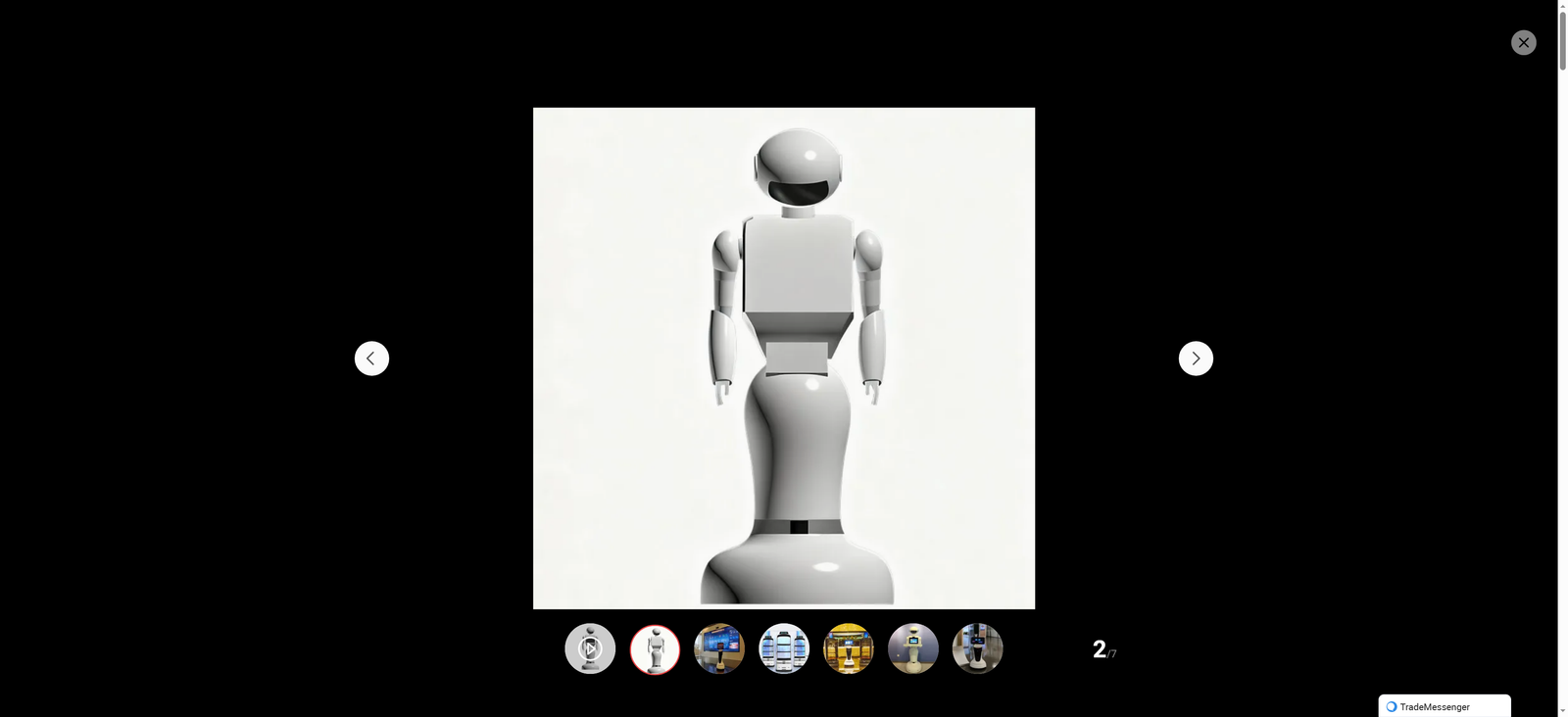
In the era of digital transformation, the integration of advanced technology into service industries has become an irreversible trend. Food delivery robots, as a typical representative of intelligent service equipment, are breaking the limitations of traditional manual services with their high-tech configurations, intelligent core capabilities, and multi-scenario adaptability. They are not only tools for reducing costs and increasing efficiency but also important drivers for upgrading the service experience in catering, medical, hotel, and other fields.
Cutting-Edge Technology Empowers Stable and Efficient Operation
The core competitiveness of high-tech food delivery robots lies in the integration of multiple advanced technologies, which lays a solid foundation for their stable operation in complex environments. The most notable technological breakthrough is the adoption of multi-sensor fusion SLAM (Simultaneous Localization and Mapping) solutions, such as the PUDU SLAM technology developed by leading enterprises. This technology combines lidar, depth camera (RGBD), inertial measurement unit (IMU), and encoder, enabling robots to achieve centimeter-level positioning accuracy even in spaces with glass partitions, reflective floors, or dense crowds . Equipped with anti-sunlight lidar and 3D visual sensors, the robots can upgrade from 2D plane perception to full-body 3D environmental detection, greatly reducing the risk of colliding with suspended objects or blind-spot obstacles .
In terms of mechanical structure, high-end food delivery robots adopt aviation-grade aluminum alloy frames and car-level chassis suspension systems. The shock absorption design can easily cope with various road bumps, ensuring that soups and drinks on the tray do not spill during transportation . The metal trays with large capacity (up to 43*50cm) and modular food covers realize contactless delivery, which is in line with the health and safety needs of modern services . In addition, the automatic charging function allows the robot to independently move to the nearest charging pile when the remaining power is less than 10%, ensuring 10 hours of continuous operation after 4 hours of charging, fully meeting the long-time service needs of commercial scenarios .
Intelligent Core: From Passive Execution to Active Decision-Making
Intelligence is the key to distinguishing modern food delivery robots from traditional mobile devices. With the integration of large language models (LLM) and intelligent scheduling systems, robots have evolved from simple "delivery tools" to "intelligent service partners". The decentralized PUDU SCHEDULER system allows each robot to communicate directly with any other robot in the same network, realizing real-time path planning and decision-making, which is equivalent to upgrading from subway-level scheduling to highway-level scheduling . This enables efficient collaboration among multiple robots in large venues, avoiding congestion and improving overall delivery efficiency.
The intelligent interaction capability has also been comprehensively upgraded. The second-generation intelligent light interaction technology uses dynamic light strips to clearly display the robot's operation status, while the high-fidelity sound system supports voice broadcasting and multi-round dialogue . Robots equipped with self-developed large models can understand complex natural language intentions, answer customer questions about dishes, promotions, and other information, and even generate personalized marketing words based on customer characteristics to undertake greeting and customer acquisition tasks . Some high-end models are also equipped with tray-mounted cameras, which can automatically identify food and detect meal-taking actions, realizing "contactless confirmation" and digital traceability of delivery accuracy .
Multi-Scenario Adaptability: Breaking Boundaries Across Industries
Unlike single-scenario equipment, high-tech intelligent food delivery robots have strong environmental adaptability and can flexibly serve multiple fields, becoming a versatile assistant in commercial services. In the catering industry, which is plagued by high labor costs and labor shortages, robots can deliver 300-500 orders per day, far exceeding the 200 orders of manual delivery, and the investment can be recovered in 10-14 months by replacing 1.5-2 employees . They are widely used in chain hot pot restaurants, fast-food restaurants, and high-end catering venues, effectively reducing labor costs and improving service efficiency.
In medical scenarios, food delivery robots play an important role in reducing cross-infection risks. They can safely transport meals, medicines, and medical records between isolation areas and nurse stations, avoiding direct contact between medical staff and patients . In hotels and office buildings, robots can provide 24-hour room service and office meal delivery, improving the quality of auxiliary services and freeing up human resources for more valuable work . With the optimization of obstacle surmounting (≤12mm) and climbing capacity (5°), robots can easily cope with different ground conditions in various scenarios, realizing cross-floor service with the cooperation of elevators .
Market Trends and Future Outlook
Driven by factors such as technological iteration, cost reduction, and policy support, the global food delivery robot market is ushering in explosive growth. It is expected that the market size of China's catering delivery robot industry will exceed 10 billion yuan by 2026, with a compound annual growth rate of more than 25% . The competition pattern is gradually shifting from hardware parameter competition to comprehensive solution capabilities, and the RaaS (Robot as a Service) subscription model is becoming mainstream, reducing the financial threshold for businesses to deploy robots .
Looking to the future, with the integration of embodied intelligence and large models, food delivery robots will achieve more autonomous decision-making and abnormal handling capabilities . The application of energy supplement models such as battery swapping will further improve equipment turnover rate, while the combination of intelligent energy management systems will realize low-carbon operation and optimize the total life cycle cost . These high-tech, intelligent, and multi-scenario food delivery robots will continue to penetrate into more commercial fields, reshaping the service industry pattern and creating greater value for businesses and consumers.