
High-Tech UV Sterilization Robot: Ai-Controlled, Autonomous Movement, Fully Automatic Disinfection
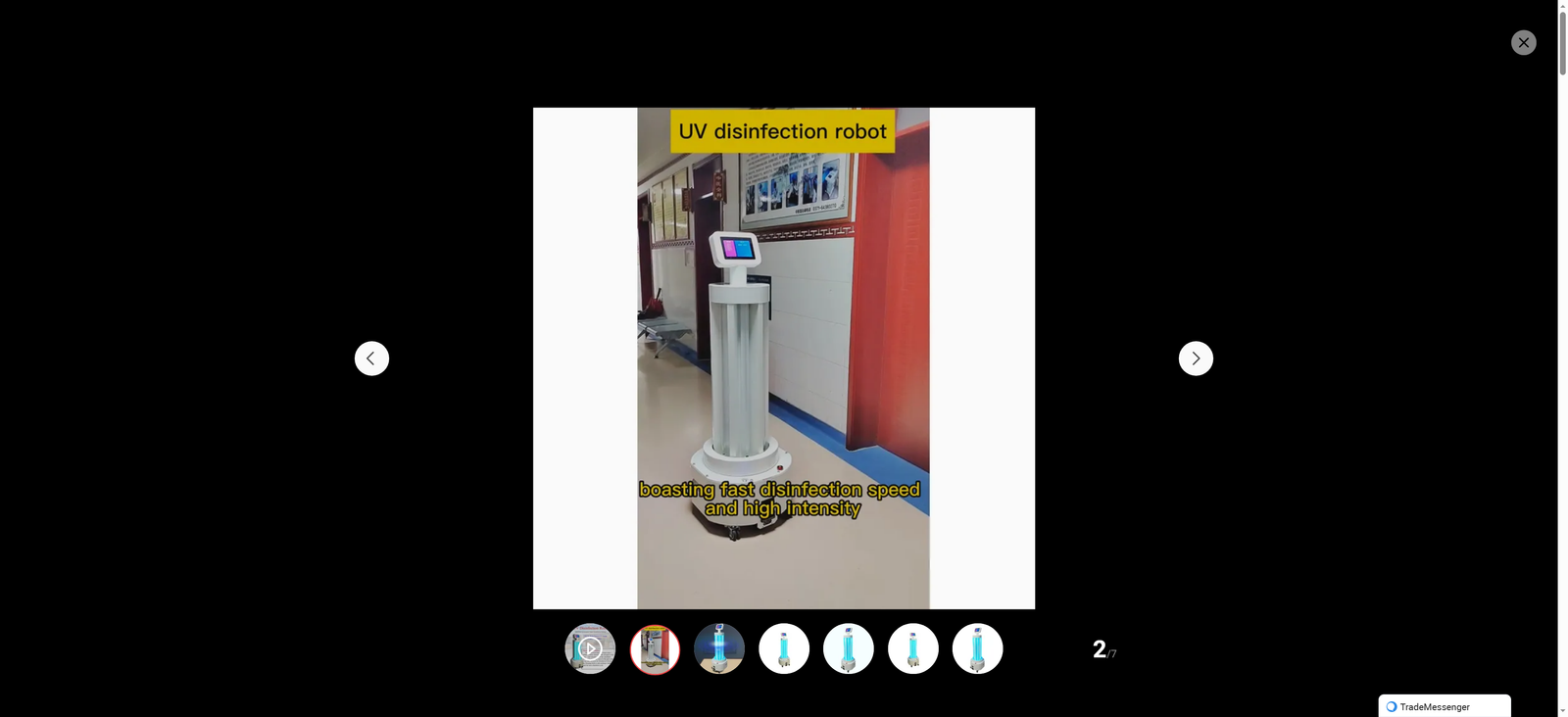
In an era where public health safety and environmental hygiene have become global priorities, traditional disinfection methods—relying heavily on manual labor and chemical agents—are increasingly struggling to meet the demands of efficiency, consistency, and safety. Against this backdrop, the high-tech UV sterilization robot, integrated with AI control, autonomous movement, and fully automatic disinfection capabilities, has emerged as a revolutionary solution, reshaping the landscape of hygiene management across various industries. This intelligent device combines cutting-edge technology to deliver a hands-free, high-performance disinfection experience, eliminating pathogens efficiently while minimizing human intervention and potential risks.
At the core of this advanced sterilization robot lies its AI-controlled system, which serves as the "brain" guiding all its operations and ensuring precision and reliability. Unlike conventional automated devices that follow fixed pre-programmed routes, the AI-powered control system enables the robot to perceive, analyze, and adapt to its environment in real time. Equipped with high-resolution cameras, ultrasonic sensors, infrared (IR) detectors, and lidar technology, the robot can scan its surroundings comprehensively, build dynamic spatial maps, and identify obstacles, high-touch surfaces, and even human presence with exceptional accuracy. The AI algorithm integrates object detection models to monitor the environment continuously; if a person is detected within the disinfection range, the robot immediately shuts off its UV light and pauses operation, preventing harmful exposure to ultraviolet radiation—a critical safety feature that addresses the inherent risk of traditional UV disinfection methods. Moreover, the AI system boasts self-learning capabilities: after the first use, it stores environmental data in its memory, optimizing path planning and disinfection strategies for subsequent tasks to enhance efficiency and coverage.
Complementing the AI control system is the robot’s autonomous movement capability, which ensures seamless navigation and comprehensive disinfection coverage in complex indoor spaces. Powered by advanced simultaneous localization and mapping (SLAM) technology and dual microcontroller architecture, the robot can navigate independently without the need for manual guidance or pre-installed markers. It effortlessly moves through corridors, around furniture, and into narrow corners, with some models featuring 360° in-place rotation to access hard-to-reach areas that are often missed by manual cleaning or fixed disinfection equipment. The integration of multiple sensors—including ultrasonic, infrared, and radar测距—enables smooth obstacle avoidance, allowing the robot to adjust its route in real time if objects or people block its path, ensuring uninterrupted operation and protecting both the device and the surrounding environment. Whether in large hospitals, crowded airports, spacious offices, or compact school classrooms, the robot’s autonomous movement ensures that no area is left untreated, delivering consistent disinfection across diverse spaces.
The culmination of AI control and autonomous movement is the robot’s fully automatic disinfection function, which realizes a complete hands-free hygiene solution from start to finish. Users only need to set basic parameters—such as disinfection area, intensity, and schedule—via a mobile app or control panel, and the robot will independently complete the entire disinfection process without any human supervision. The robot utilizes ultraviolet-C (UV-C) radiation with a wavelength of 200-280 nm, a proven technology that effectively inactivates bacteria, viruses, and other pathogens by disrupting their DNA or RNA structure, achieving a sterilization rate of up to 99.99% without the use of harmful chemical agents. This chemical-free disinfection not only avoids secondary pollution and residual odors but also reduces operational costs associated with chemical supplies and minimizes harm to human health and the environment. Additionally, the fully automatic system supports scheduled disinfection, allowing users to program the robot to operate during off-peak hours—such as nighttime in hospitals or after closing in shopping malls—ensuring disinfection does not disrupt normal operations while maximizing efficiency.
The versatility of the high-tech UV sterilization robot makes it indispensable across a wide range of application scenarios. In healthcare settings—hospitals, clinics, and laboratories—it plays a crucial role in preventing healthcare-associated infections (HAIs) by disinfecting operating rooms, isolation wards, ICU units, and medical equipment, protecting both patients and medical staff from cross-contamination. In public spaces—airports, railway stations, hotels, and shopping centers—it efficiently handles high-traffic areas, reducing the spread of pathogens in crowded environments. Educational institutions, food processing facilities, and office buildings also benefit significantly: the robot ensures a safe learning and working environment for students and employees, while meeting strict hygiene standards in food-related industries. Notably, its cost-effectiveness makes it accessible to small and medium-sized institutions, as some models are priced at a quarter of imported alternatives, without compromising on technology and performance.
As technology continues to evolve, the UV sterilization robot is poised to become even more intelligent and efficient. Future iterations may integrate IoT connectivity for remote monitoring and fleet management, allowing users to track disinfection progress and device status in real time via cloud platforms. Advancements in AI algorithms will further enhance its environmental adaptation capabilities, enabling it to handle more complex spaces and dynamic environments with greater precision. Additionally, the integration of additional functions—such as temperature measurement and facial recognition—will expand its utility, making it a comprehensive hygiene management tool rather than just a disinfection device.
In conclusion, the high-tech UV sterilization robot, with its AI-controlled intelligence, autonomous movement flexibility, and fully automatic disinfection efficiency, represents a pivotal advancement in modern hygiene management. It addresses the limitations of traditional disinfection methods—inefficiency, inconsistency, and safety risks—while delivering a reliable, cost-effective, and eco-friendly solution. As public health awareness continues to rise and the demand for intelligent hygiene solutions grows, this innovative robot will undoubtedly play an increasingly vital role in safeguarding human health and creating safer, cleaner environments across industries worldwide. It is not just a technological product, but a testament to how innovation can transform our approach to public health and daily safety.