
In the hospitality industry, where details determine service quality and cleanliness is the cornerstone of customer experience, floor cleaning has always been a core task that requires high efficiency, high standards, and zero negligence. Traditional manual cleaning methods, limited by factors such as labor intensity, uneven professional skills, and low work efficiency, often struggle to meet the strict requirements of high-end hotels for 24-hour clean and tidy public areas. Against this backdrop, the high quality commercial intelligent floor cleaning robot has emerged as a game-changer, integrating vacuum cleaning, intelligent navigation, and commercial-grade durability to redefine the new benchmark of hotel floor cleaning.
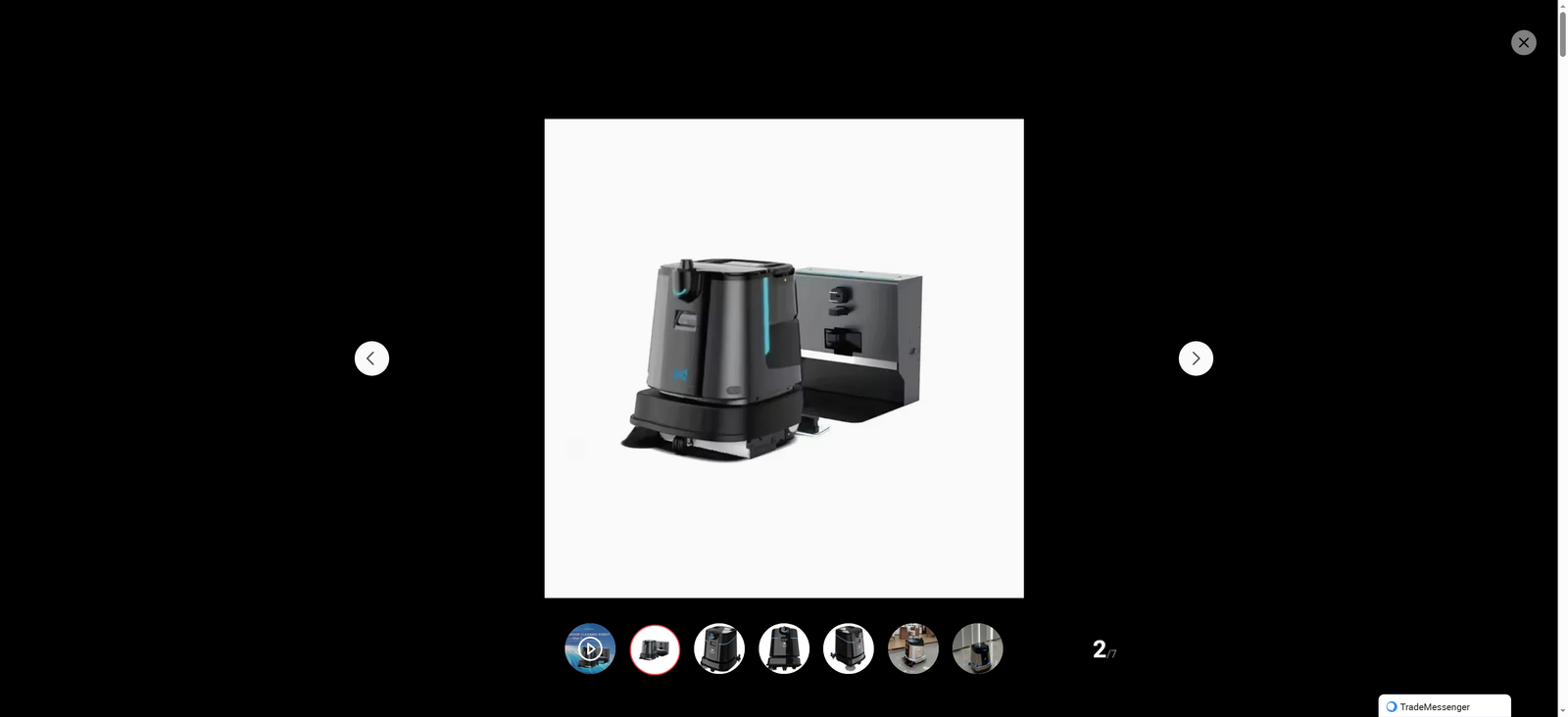
A high quality commercial intelligent floor cleaning robot for hotels is not a simple upgrade of household cleaning robots, but a professional equipment tailored to the complex and high-frequency cleaning needs of commercial scenarios. Unlike household robots that focus on small-space cleaning, commercial-grade products pay more attention to durability, cleaning coverage, and adaptability to diverse floor materials—all of which are crucial for hotels with large public areas, multiple floor types (such as marble, wood, carpet, and tile), and heavy foot traffic.
The core advantage of this type of intelligent robot lies in its high-precision intelligent navigation and full-coverage vacuum cleaning capability. Equipped with advanced sensors, laser navigation modules, and AI algorithm systems, the robot can quickly map the hotel's public areas (lobbies, corridors, meeting rooms, restaurants, etc.) after being activated, automatically plan the optimal cleaning path, and avoid obstacles such as furniture, flowerpots, and pedestrian traffic in real time. Unlike manual cleaning which may miss dead corners or repeat cleaning, the intelligent robot can achieve 99% cleaning coverage, ensuring that every corner of the floor is thoroughly cleaned. In terms of vacuum cleaning performance, commercial-grade robots are equipped with high-power suction motors—far more powerful than household models—which can easily absorb dust, hair, food residues, and even small debris on the floor. For carpeted areas, the robot can automatically adjust the suction power and cleaning mode to deeply remove dust embedded in the carpet fibers, solving the problem of difficult carpet cleaning that has long plagued hotels.
Another key highlight of high quality commercial intelligent floor cleaning robots is their commercial-grade durability and efficient work efficiency. Hotels often need 24-hour cleaning support to maintain a clean environment for guests at all times, and traditional manual cleaning requires shifting work, which not only increases labor costs but also may affect guest experience during peak hours. The commercial intelligent robot has a long battery life (usually 4-6 hours of continuous work) and supports automatic return to charge. When the power is low, it can independently return to the charging station to recharge, and then continue to complete the remaining cleaning tasks after charging—realizing unmanned operation for a long time. In addition, the robot's body is made of high-strength materials, with wear-resistant wheels and a waterproof and dustproof design, which can adapt to the high-frequency work intensity of hotels and have a longer service life, reducing the long-term operating costs of hotels.
For hotels, introducing high quality commercial intelligent floor cleaning robots is not only a way to improve cleaning quality and efficiency but also a manifestation of upgrading service quality and reducing operating costs. On the one hand, the robot can replace a large number of manual cleaning tasks, especially repetitive and heavy floor cleaning work, reducing the labor burden of cleaning staff and allowing them to focus on more detailed cleaning work (such as cleaning glass, disinfecting surfaces, etc.), thereby improving the overall cleaning standard of the hotel. On the other hand, the robot's unmanned operation mode can avoid the impact of manual cleaning on guests during peak hours (such as lobby cleaning during check-in/check-out peaks), creating a more comfortable and quiet environment for guests. At the same time, the robot can record cleaning data in real time (such as cleaning area, cleaning time, suction power adjustment, etc.), which is convenient for hotel management to monitor cleaning work and realize refined management of cleaning services.
In the context of the continuous upgrading of the hospitality industry and the increasing demand for intelligent services, high quality commercial intelligent floor cleaning robots have become a necessary choice for more and more high-end hotels. They are not only tools for improving cleaning efficiency but also important partners for hotels to build a high-quality service image. Compared with traditional manual cleaning, intelligent robots have obvious advantages in cleanliness, efficiency, cost control, and guest experience—they can ensure that the hotel's floors are always clean and tidy, lay a solid foundation for guest satisfaction, and help hotels gain more competitive advantages in the fierce market competition.
Looking to the future, with the continuous development of AI, sensor, and battery technology, commercial intelligent floor cleaning robots will be more intelligent and humanized—they may realize automatic disinfection while cleaning, adapt to more complex floor environments, and even connect with the hotel's intelligent management system to achieve integrated management of cleaning services. For hotels that pursue high quality and high efficiency, seizing the opportunity of intelligent cleaning transformation and introducing high-quality commercial intelligent floor cleaning robots will be an important step towards upgrading service quality and building a smart hotel.