
In the wave of intelligent transformation, guiding food delivery robots have emerged as a pivotal force, reshaping the service landscape of hotels, hospitals, restaurants, and other industries. These custom-designed robot waiters and delivery robots are no longer just novel technological displays but practical tools that enhance efficiency, optimize user experience, and reduce operational costs. From the busy dining halls of restaurants to the quiet corridors of hospitals, from the luxurious lobbies of hotels to the intricate layouts of catering venues, guiding food delivery robots are silently revolutionizing the way food is delivered and services are provided.
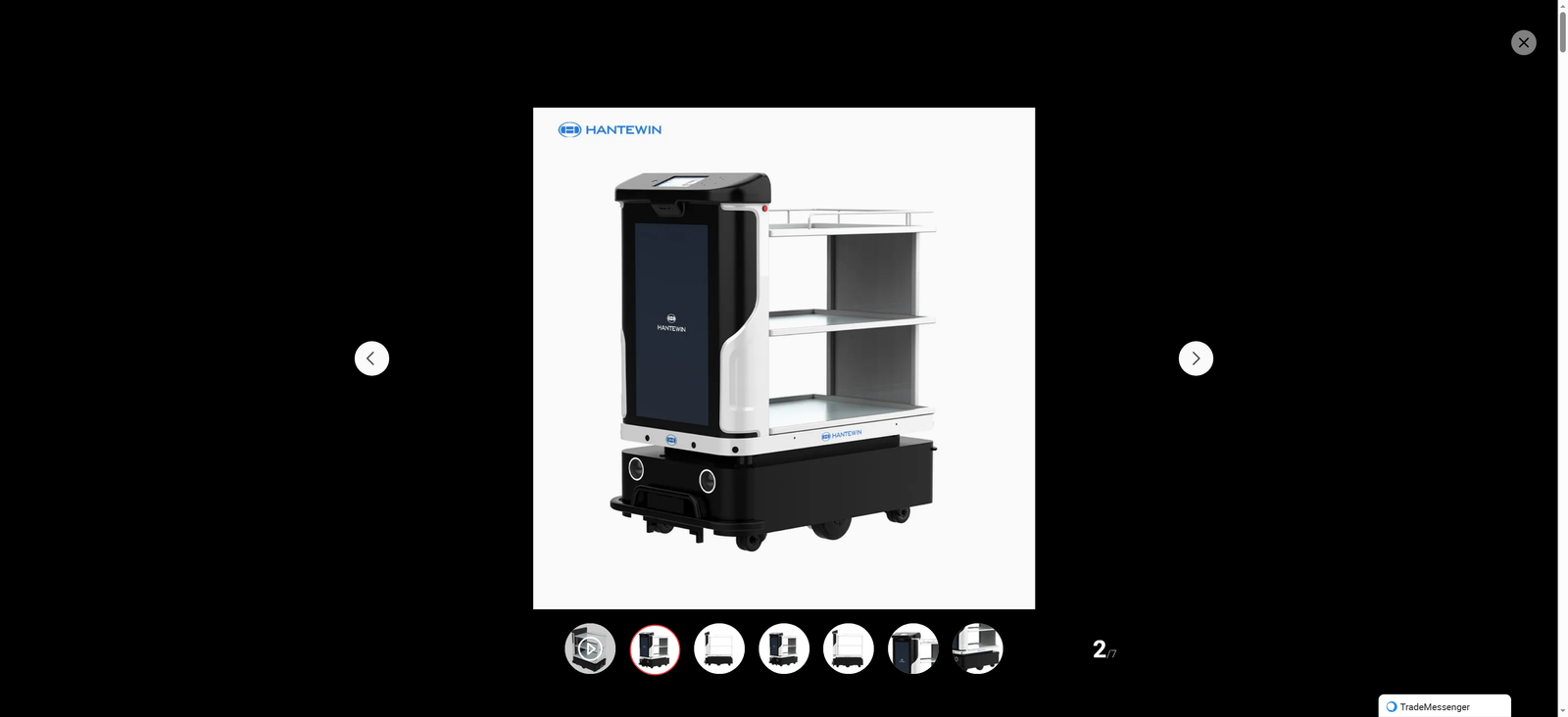
Customization is the core advantage that enables guiding food delivery robots to adapt to diverse scenarios. Different industries have distinct requirements for food delivery: restaurants need robots that can navigate through crowded dining areas, avoid obstacles flexibly, and interact friendly with customers; hotels require robots to maintain a professional and elegant image, accurately deliver meals to guest rooms, and integrate with the hotel's intelligent management system; hospitals demand robots with strict hygiene standards, stable operation, and the ability to deliver meals and supplies to specific wards without disrupting the medical order. To meet these varied needs, manufacturers design custom delivery food robots with tailored functions—such as adjustable storage compartments for different food sizes, advanced navigation systems for complex environments, and disinfection functions for medical scenarios. For example, in high-end restaurants, robot waiters can be customized with elegant appearances and voice interaction functions, greeting guests and guiding them to seats before delivering food, enhancing the overall dining experience.
The application of guiding food delivery robots in hospitals brings particularly significant value. Hospitals have high requirements for hygiene and timeliness of food delivery, and the traditional manual delivery method is prone to cross-infection and delivery delays. Custom hospital food delivery robots are equipped with high-level disinfection modules, which can automatically disinfect their surfaces during operation to ensure food safety. At the same time, relying on precise positioning and navigation technology, they can quickly and accurately deliver meals to each ward, reducing the workload of medical staff and allowing them to focus more on patient care. In addition, these robots can also be used to deliver medical supplies such as medicines and medical devices, further improving the operational efficiency of hospitals.
In hotels, food delivery robots have become a new symbol of intelligent service. When guests order food through the hotel's mobile app or room service system, the robot can receive the order immediately, pick up the food from the hotel restaurant, and navigate to the guest's room autonomously. It can even call the elevator automatically and notify the guest to pick up the food through a voice prompt or message. This not only improves the efficiency of food delivery but also reduces the disturbance to guests caused by manual door-to-door delivery, protecting the privacy of guests. For large hotels with complex layouts, the guiding function of the robot is particularly useful, as it can easily navigate through long corridors and multiple floors, ensuring that food is delivered to the correct room on time.
Restaurants, especially fast-food restaurants and large-scale catering venues, are among the earliest and most extensive users of food delivery robots. In peak dining hours, restaurants often face problems such as insufficient waiters and slow food delivery, which affect customer satisfaction. Guiding food delivery robots can work continuously without fatigue, quickly delivering food from the kitchen to the dining table. They can also avoid collisions with customers and waiters through their advanced obstacle avoidance systems, ensuring smooth operation in crowded environments. Some high-end restaurants also use robot waiters to provide personalized services, such as recommending dishes and explaining the ingredients and production methods of food, adding a unique technological flavor to the dining experience.
Looking to the future, with the continuous advancement of artificial intelligence, Internet of Things, and other technologies, guiding food delivery robots will become more intelligent and versatile. Their customization capabilities will be further enhanced, able to adapt to more specialized scenarios and meet more personalized needs. For example, they may have more accurate voice recognition and natural language processing capabilities, enabling more in-depth interactions with customers; they may also be equipped with more advanced sensors to perceive the surrounding environment more comprehensively, improving their navigation and obstacle avoidance capabilities. In addition, the integration of food delivery robots with other intelligent systems, such as restaurant management systems, hotel PMS systems, and hospital information systems, will be more seamless, realizing full-process intelligent management of food delivery and service.
In conclusion, guiding food delivery robots, including custom delivery food robots, hotel robots, hospital robots, and robot waiters, are playing an increasingly important role in transforming the service model of the catering and service industries. They not only improve operational efficiency and reduce costs for businesses but also enhance the quality of service and user experience. As technology continues to evolve, these intelligent robots will undoubtedly bring more changes and surprises to our lives and work, leading us into a more intelligent and convenient service era.