
In the wave of global intelligent transformation, the service industry, especially the hotel and hospital sectors that focus on efficiency, safety and user experience, is undergoing profound changes driven by technological innovation. Fully autonomous commercial intelligent service robots with multi-machine collaboration capabilities have emerged as a key force in this transformation. These robots break through the limitations of traditional manual services, relying on advanced autonomous navigation, intelligent perception and inter-machine communication technologies to realize efficient, accurate and continuous service delivery. From handling guest check-in procedures in hotels to transporting medical supplies in hospitals, they are reshaping the service landscape and bringing new possibilities for the high-quality development of the two industries.
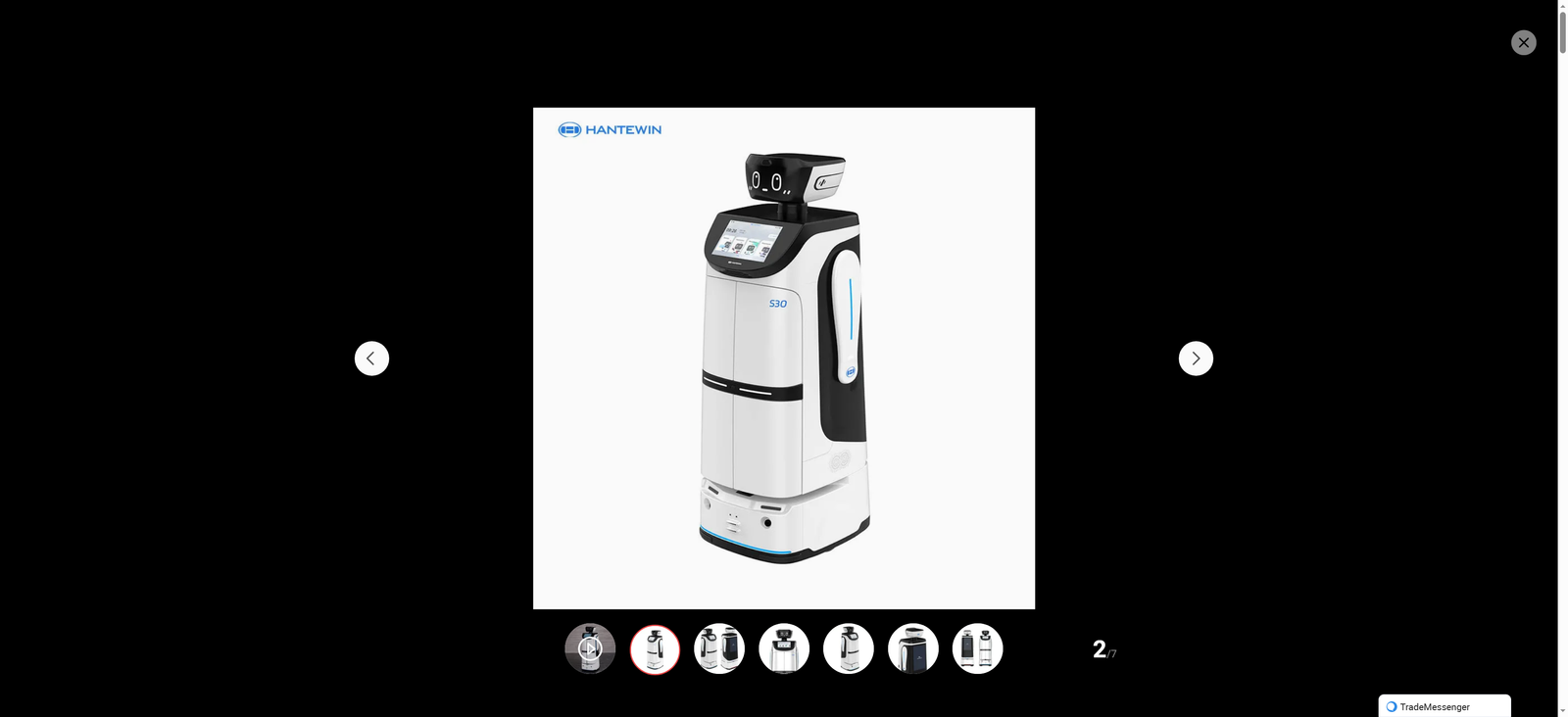
The core value of fully autonomous commercial intelligent service robots lies in their "full autonomy" capability, which is the foundation for their wide application in complex environments such as hotels and hospitals. Unlike semi-autonomous robots that require manual intervention, these robots are equipped with high-precision sensors (including lidar, visual cameras, ultrasonic sensors) and advanced SLAM (Simultaneous Localization and Mapping) algorithms. They can automatically build environmental maps, identify and avoid obstacles (such as pedestrians, luggage carts in hotels, medical equipment in hospitals), and plan the optimal movement paths in real time. In hotels, for example, a guest robot can independently navigate from the lobby to the designated guest room, avoiding crowded elevators and passing staff; in hospitals, a material transportation robot can accurately identify the signs of operating rooms, pharmacies and wards, and complete the transportation of drugs, surgical instruments and test samples without manual guidance. This full autonomy not only reduces the labor intensity of service personnel but also improves the stability and efficiency of services, ensuring that services are not affected by human factors such as fatigue and emotion.
On the basis of full autonomy, multi-machine collaboration capability further enhances the application value of intelligent service robots in hotels and hospitals. In large-scale hotels with multiple buildings and multiple floors, or in comprehensive hospitals with complex functional areas, a single robot often cannot meet the diverse and large-volume service needs. At this time, the multi-machine collaboration system enables multiple robots to achieve information sharing, task allocation and coordinated operation through wireless communication technologies such as 5G and IoT. For instance, in a hotel during the peak check-in period, the system can automatically assign multiple guest robots to handle check-in procedures for different guests at the same time, and arrange luggage-handling robots to synchronize with guest robots to transport luggage to guest rooms. In the event of a sudden increase in the demand for drug transportation in a hospital, the central control system can adjust the tasks of idle robots in other areas in real time, allowing them to assist in drug transportation, ensuring that emergency drugs are delivered to the designated ward in the shortest time. Moreover, multi-machine collaboration can also realize complementary functions between robots. For example, a cleaning robot can share the information of crowded areas with a guidance robot, and the guidance robot can then guide guests or patients to detour, ensuring the smooth progress of both cleaning work and guidance services.
The application of fully autonomous commercial intelligent service robots with multi-machine collaboration in hotels and hospitals also brings significant improvements in service quality and safety. In hotels, robots can provide 24-hour uninterrupted services, such as delivering food, water and daily necessities to guests at any time, which meets the personalized needs of guests and enhances their living experience. In hospitals, where cross-infection is a major concern, especially in the context of public health emergencies, robots can take on tasks such as transporting infected materials, disinfecting wards and measuring body temperature, reducing the direct contact between medical staff and patients, and lowering the risk of cross-infection. In addition, the intelligent management system of robots can record and analyze service data in real time, such as the frequency of guest requests in hotels and the efficiency of medical material transportation in hospitals. Managers can use these data to optimize service processes, adjust resource allocation, and further improve the level of refined management.
Of course, the popularization and application of such robots still face some challenges. On the one hand, the high cost of hardware and software development limits the large-scale adoption of small and medium-sized hotels and hospitals; on the other hand, there are still gaps in relevant laws and regulations regarding the liability definition and safety standards of robot services. In addition, the adaptability of robots to extreme environments (such as narrow corridors in old hospitals, sudden power outages) and the ability to interact with special groups (such as the elderly and children with limited expression ability) need to be further improved.
Looking to the future, with the continuous advancement of technologies such as artificial intelligence, 5G and IoT, the performance of fully autonomous commercial intelligent service robots will be continuously optimized, and the cost will gradually decrease. At the same time, with the improvement of relevant laws and regulations and the deepening of the integration of robots with the service industry, multi-machine collaboration robots will be more widely used in hotels and hospitals. They will not only be simple service tools but also become an important part of the intelligent management system, helping the hotel and hospital industries achieve a leap from "traditional service" to "intelligent service". In this process, the core of service will still be people, and robots will serve as a powerful supplement to human services, freeing up human resources to focus on more high-value and humanized service links, ultimately creating a more efficient, safe and warm service environment for society.