
Fully Automatic Intelligent Service Robots: Reshaping Service Scenarios Across Industries
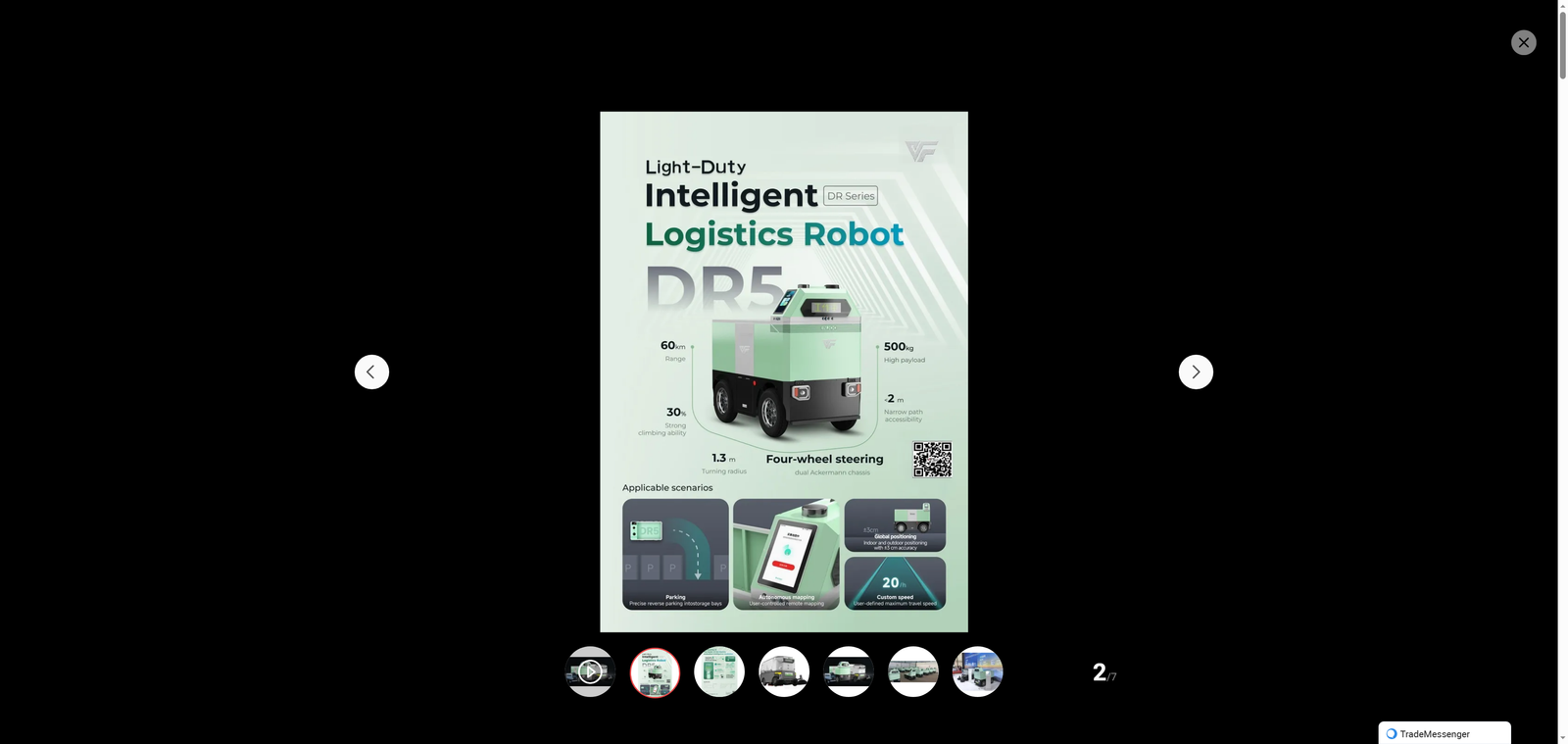
With the rapid advancement of artificial intelligence, Internet of Things, and autonomous navigation technologies, fully automatic intelligent service robots have evolved from conceptual prototypes to practical tools that penetrate various fields of social life. These robots, equipped with advanced sensors, intelligent control systems, and autonomous decision-making capabilities, are breaking through the limitations of traditional manual services, realizing 24/7 uninterrupted work, improving service efficiency, reducing operational costs, and bringing revolutionary changes to logistics, communities, schools, hospitals, offices, hotels, and restaurants. As a new force in the intelligent era, they are quietly reshaping the way people live, work, and receive services.
In the logistics industry, fully automatic intelligent service robots have become a core driving force for upgrading the supply chain. Traditional logistics links, such as warehousing sorting, last-mile delivery, and indoor distribution, are often faced with problems such as high labor intensity, low efficiency, and high error rates. Intelligent logistics robots, relying on laser navigation, visual recognition, and path planning technologies, can complete automatic sorting, loading, and unloading of goods in warehouses without manual intervention, greatly improving the turnover efficiency of goods. In urban last-mile delivery, unmanned distribution robots can navigate autonomously in complex road environments, avoid obstacles, and complete door-to-door delivery of packages, solving the pain points of difficult delivery in residential areas and office buildings. In addition, in closed scenarios such as factories and logistics parks, intelligent handling robots can realize efficient and accurate transfer of materials, forming a fully automated logistics operation system, which helps enterprises reduce labor costs and enhance market competitiveness.
In community life, fully automatic intelligent service robots are becoming "intelligent housekeepers" around residents, injecting new vitality into smart communities. With the acceleration of urbanization, the scale of communities is expanding, and the demand for community services such as security patrol, cleaning, and daily distribution is increasing. Intelligent security robots can carry out 24-hour patrol work in the community, monitor abnormal situations in real time through video surveillance and infrared detection, and send early warnings to the property management center in a timely manner, effectively improving the safety prevention level of the community. Cleaning robots, equipped with automatic sweeping, mopping, and dust collection functions, can clean public areas such as community corridors, squares, and roads, reducing the workload of cleaning staff and ensuring the cleanliness of the community environment. Moreover, community delivery robots can help residents receive express delivery, take-out, and daily necessities, solving the problem of residents being unable to receive goods in time due to work or other reasons, and improving the convenience of community life. These robots not only optimize the community service system but also enhance the sense of happiness and gain of residents.
Schools and hospitals, as important public service places, have strict requirements for service efficiency, accuracy, and safety. Fully automatic intelligent service robots are playing an increasingly important role in these fields, helping to improve the quality of public services. In schools, intelligent service robots can undertake multiple tasks such as campus patrol, teaching auxiliary services, and student management. Patrol robots can carry out safety inspections on campus, check potential safety hazards such as fire hazards and equipment failures, and ensure the safety of teachers and students. In classrooms, teaching assistant robots can help teachers distribute teaching materials, answer simple academic questions for students, and even carry out personalized tutoring, enriching the forms of teaching and learning. In hospitals, the application of intelligent service robots is more in line with the special needs of medical scenarios. Medical distribution robots can accurately deliver drugs, medical supplies, and test reports to various departments and wards, reducing the workload of medical staff and avoiding the risk of cross-infection caused by manual delivery. Guiding robots at the hospital entrance can provide patients with route guidance, registration services, and medical consultation, helping patients save time in seeking medical treatment. In addition, nursing robots can assist medical staff in completing simple nursing work such as measuring vital signs and turning over bedridden patients, freeing medical staff from heavy trivial work and allowing them to focus more on core medical services.
In office, hotel, and restaurant scenarios, fully automatic intelligent service robots are becoming important partners in improving service quality and operational efficiency. In modern offices, intelligent office robots can undertake daily office auxiliary work such as document delivery, water and tea delivery, and conference arrangement. They can accurately deliver documents to designated employees according to instructions, prepare meeting rooms in advance, and even remind employees of work schedules, helping to improve office efficiency and create a more intelligent office environment. In hotels, intelligent service robots have become a "new business card" for smart hotels. Guest room delivery robots can send towels, mineral water, and other items to guests' rooms according to their needs, avoiding the embarrassment of manual delivery and improving the privacy and convenience of guests' stay. Front desk guiding robots can provide guests with check-in guidance, hotel information inquiry, and route navigation services, reducing the work pressure of front desk staff. In restaurants, food delivery robots have become a common sight. These robots can accurately deliver meals from the kitchen to the dining table according to the order information, avoid the chaos of manual food delivery, improve the efficiency of food delivery, and reduce the error rate of order delivery. At the same time, food delivery robots can also interact with customers in a friendly manner, adding fun to the dining experience and enhancing the competitiveness of restaurants.
Although fully automatic intelligent service robots have achieved remarkable results in various fields, their development still faces some challenges, such as high technical costs, imperfect relevant laws and regulations, and the need to improve adaptability to complex environments. However, with the continuous progress of technology and the strong support of national policies, these problems will be gradually solved. In the future, fully automatic intelligent service robots will be more intelligent, miniaturized, and personalized, and will penetrate more fields of social life, bringing more convenience and surprises to people's life and work.
In conclusion, fully automatic intelligent service robots, with their unique advantages of high efficiency, accuracy, and 24-hour operation, are reshaping the service patterns of logistics, communities, schools, hospitals, offices, hotels, and restaurants. They are not only a powerful driving force for the intelligent transformation of various industries but also an important symbol of the progress of the times. With the continuous development of science and technology, we have reason to believe that fully automatic intelligent service robots will play a more important role in the future, creating a more intelligent and better life for human beings.