
Food Delivery Robots for Restaurants: Efficient Contactless Service Redefines Dining Experience
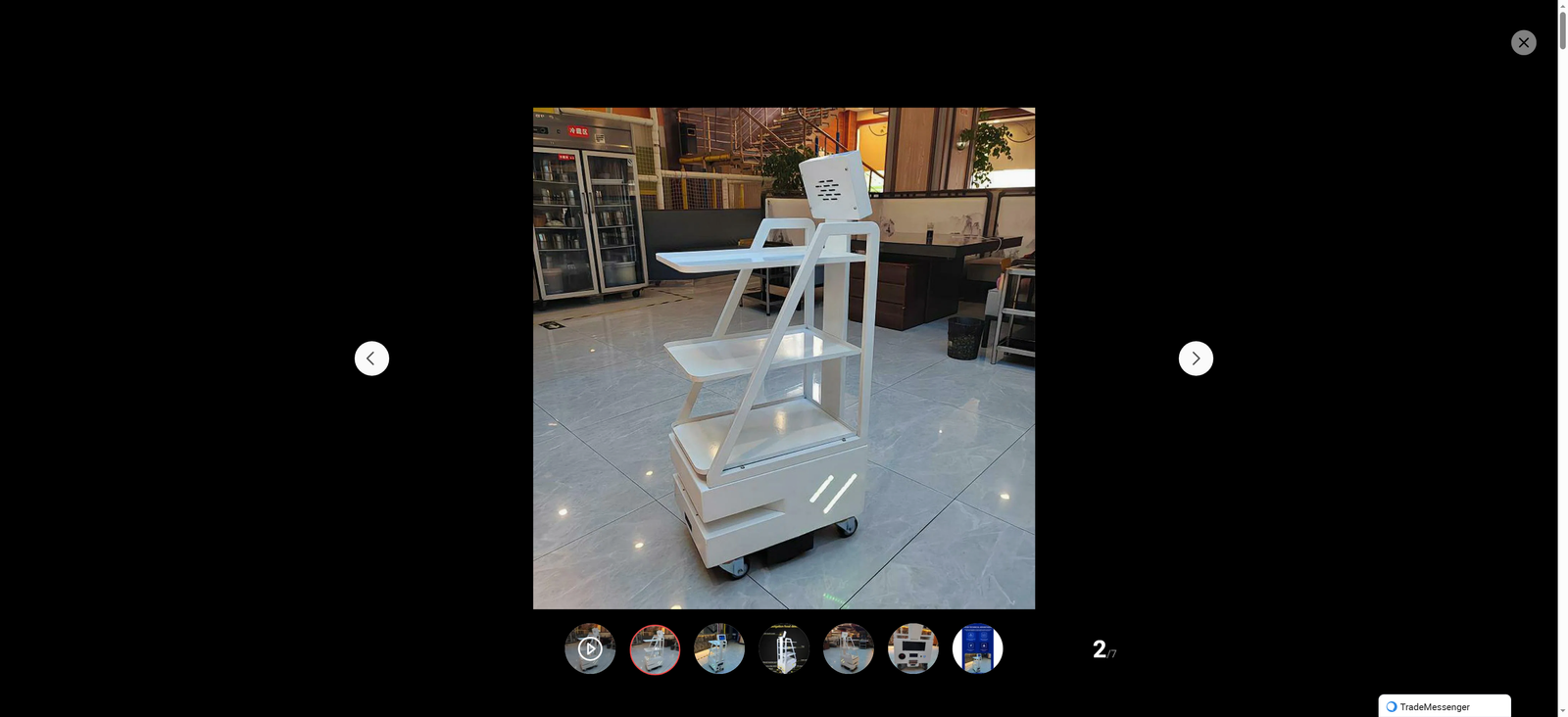
In an era where efficiency, safety, and customer experience are the cornerstones of successful restaurant operations, food delivery robots have emerged as transformative tools, reshaping how eateries deliver services and interact with patrons. What was once a novelty has quickly evolved into a necessity, especially as the demand for contactless service persists and restaurants grapple with labor shortages and rising operational costs. Food delivery robots are not just tech gadgets—they are reliable, cost-effective partners that streamline workflows, enhance safety, and elevate the overall dining experience, making them a staple in modern restaurants of all sizes, from local cafes to global chains.
The core value of food delivery robots lies in their ability to deliverefficient, contactless service—a dual advantage that addresses two critical pain points for today’s restaurants. Contactless service, popularized by post-pandemic health concerns, has become a non-negotiable expectation for many diners, who prioritize minimal human contact without sacrificing service quality. Delivery robots eliminate the need for servers to handle dishes directly from kitchen to table, reducing the risk of cross-contamination and providing peace of mind for both customers and staff. Unlike human servers, these robots operate without breaks, fatigue, or请假, ensuring consistent service even during peak dining hours, when restaurants are most likely to face bottlenecks in order delivery.
Behind their seamless operation is cutting-edge technology that enables precision, safety, and adaptability in dynamic restaurant environments. Most modern food delivery robots are powered by advanced navigation systems, such as Simultaneous Localization and Mapping (SLAM), which allows them to create real-time maps of their surroundings and navigate autonomously without pre-installed tracks. Equipped with high-precision lidar laser scanners, 3D visual sensors, and ultrasonic detectors, these robots can detect obstacles—whether it’s a bustling crowd, a misplaced chair, or a server rushing by—with a reaction time as fast as half a second, ensuring safe and smooth movement throughout the dining area. Leading models also feature intelligent interaction capabilities, such as voice prompts, LED indicators, and touch screens, which guide diners to retrieve their orders easily, further enhancing the contactless experience.
For restaurant owners and operators, the efficiency of food delivery robots translates to tangible cost savings and operational improvements. Labor costs are one of the biggest financial burdens for restaurants, and delivery robots offer a long-term, cost-effective alternative to hiring additional servers. Data from industry case studies shows that a single delivery robot can match the workload of 2-3 human servers, delivering 400-600 plates per day and operating for nearly 12 hours straight—far more than the average human server’s capacity. This not only reduces payroll expenses but also frees up existing staff from repetitive, physically demanding tasks, such as carrying heavy trays of hot food or navigating crowded spaces, allowing them to focus on high-value interactions, such as taking orders, recommending dishes, and addressing customer needs. The result is a more productive workforce, lower employee burnout, and higher staff retention rates—a critical advantage in an industry plagued by high turnover.
Beyond contactless delivery and cost savings, food delivery robots offer versatile functionality that adapts to the unique needs of different restaurant types. Quick-service restaurants (QSRs) and fast-casual chains benefit from the robots’ ability to handle high order volumes efficiently, reducing wait times for diners and increasing table turnover rates. Fine-dining establishments, on the other hand, can leverage the robots’ sleek design and quiet operation to maintain an elegant atmosphere while still offering contactless service. Many robots also support multi-functional tasks beyond food delivery, including greeting customers, leading them to their seats, promoting signature dishes, and even collecting used plates—a feature that further streamlines operations and improves table turnover. For example, in large theme park restaurants or busy airport eateries, delivery robots excel at handling high foot traffic, with some models capable of回收ing 2000-3000 dirty plates per day and operating for up to 16.5 hours straight.
The growing adoption of food delivery robots is also supported by a booming market and continuous technological innovation. According to industry reports, the global restaurant delivery robot market was valued at USD 13.9 billion in 2023 and is projected to grow at a CAGR of 23.84%, reaching approximately USD 95.0 billion by 2032. This exponential growth is driven by advancements in AI, sensor technology, and battery performance, which have made robots more reliable, affordable, and user-friendly. Leading manufacturers are constantly upgrading their products—for instance, integrating cloud-based management platforms that allow restaurant owners to monitor robot performance, track orders in real time, and schedule maintenance remotely. Some models even support multi-robot collaboration, using decentralized scheduling algorithms to coordinate tasks efficiently, much like a team of human servers working in sync.
Critics may argue that robots lack the “human touch” that defines the dining experience, but the reality is that food delivery robots complement human staff rather than replace them. By handling repetitive, time-consuming tasks, robots free up servers to focus on the personal interactions that make dining memorable—such as engaging with customers, accommodating special requests, and creating a warm, welcoming atmosphere. In fact, many diners find robots engaging and entertaining, with their interactive features adding a fun, tech-savvy element to the dining experience. Case studies from chain restaurants like Xi Jiade (Xijia De) show that robots deployed at store entrances can attract customers through singing, dancing, and voice interactions, increasing foot traffic and customer engagement.
As the restaurant industry continues to evolve, food delivery robots are no longer an optional upgrade—they are a strategic investment that helps restaurants stay competitive in a fast-changing market. They address critical challenges, from labor shortages and rising costs to the growing demand for contactless service, while also enhancing efficiency, safety, and customer satisfaction. Whether it’s a small neighborhood café looking to streamline operations or a large global chain aiming to standardize service across locations, food delivery robots offer a scalable, flexible solution that adapts to diverse needs.
In conclusion, food delivery robots are revolutionizing the restaurant industry by delivering efficient, contactless service that aligns with modern diners’ expectations and restaurant operators’ goals. Powered by advanced technology, these robots are reliable, cost-effective, and versatile, offering benefits that extend beyond simple food delivery. They free up human staff to focus on what matters most—creating meaningful connections with customers—while ensuring consistent, safe, and efficient service. As technology continues to advance and the market grows, food delivery robots will undoubtedly become an integral part of the dining experience, redefining what it means to run a successful, customer-centric restaurant in the 21st century.