
Food Delivery Robots and Robot Waitresses: Transforming Campus Catering with Intelligent Delivery
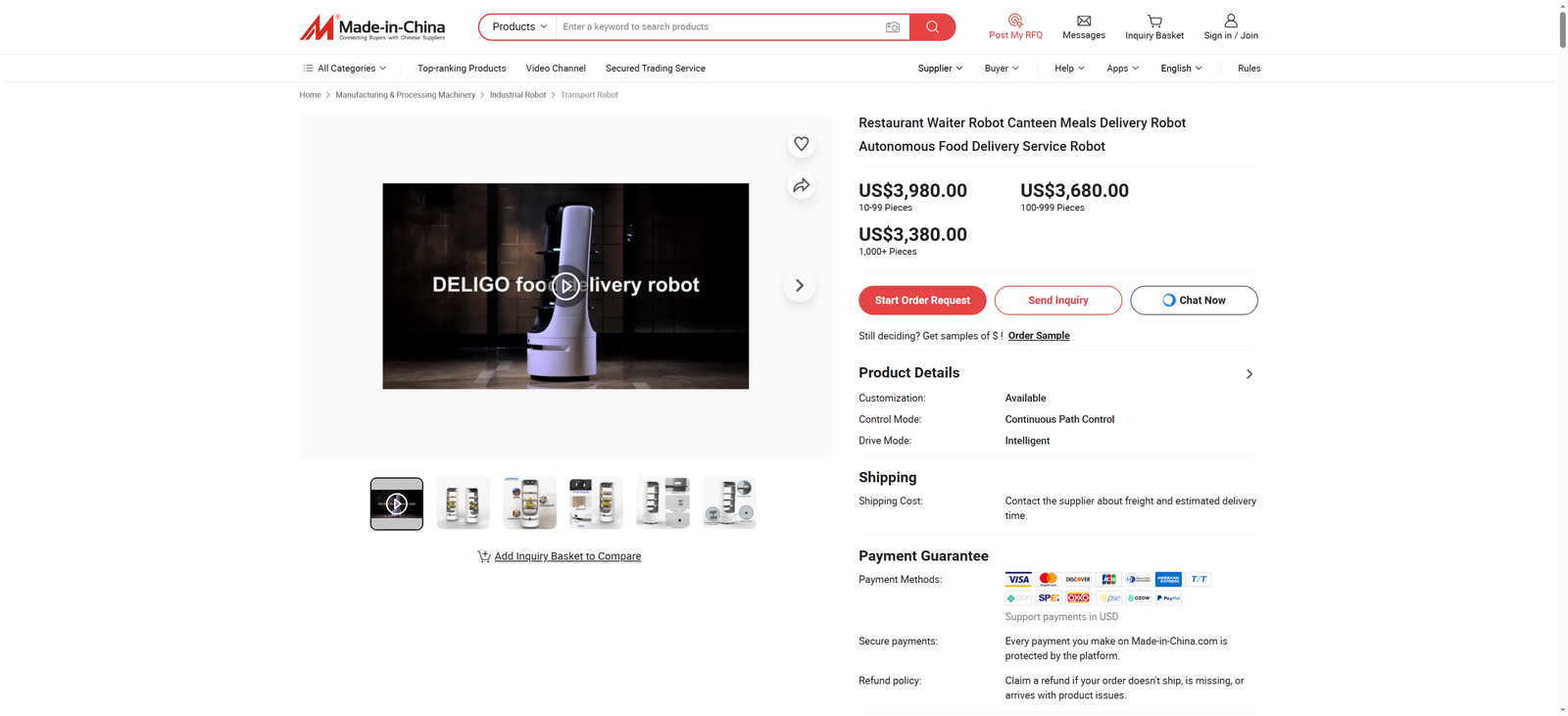
In the digital age, technological innovation is reshaping every aspect of daily life, and campus catering is no exception. Food delivery robots, robot waitresses, and intelligent robot delivery systems have gradually stepped out of the laboratory and become a common sight on university campuses around the world. These intelligent machines are not just a novelty; they are quietly revolutionizing the way students dine, integrating efficiency, convenience, and innovation into the campus ecosystem, and redefining the future of food delivery services.
Campuses have become an ideal testing ground and important application scenario for food delivery robots, thanks to the dense concentration of students and their diverse and irregular dining needs. Unlike traditional manual delivery, robots delivering food on campuses are equipped with advanced SLAM navigation, dynamic obstacle avoidance, and autonomous charging technologies, enabling them to move freely between teaching buildings, dormitory areas, and canteens without human intervention. Students only need to place an order through a mobile app, and the food delivery robot will pick up the meals from the canteen or campus restaurants, plan the optimal route through AI algorithms, and deliver the food to the designated pick-up point accurately. This seamless process not only saves students the time of queuing and going back and forth, but also solves the pain points of manual delivery such as delays during peak hours and inability to serve 24 hours a day.
The 24-hour uninterrupted service capability of food delivery robots is one of their biggest highlights, perfectly matching the diverse work and rest habits of college students. On many campuses, students often study late into the night during exam weeks or have sudden late-night snacks needs, and traditional manual delivery can hardly meet these demands due to time and labor constraints. Food delivery robots, however, are not affected by fatigue or time limits. They can respond to orders at any time, whether it is early morning or late at night, whether it is sunny or rainy, ensuring that students can enjoy hot and fresh food whenever they need it. For example, some universities in China and abroad have introduced food delivery robots, and the satisfaction rate of late-night snack orders has reached more than 90%, which not only improves students' quality of life but also reduces the safety risks of students going out at night.
In addition to food delivery robots, robot waitresses have also become a charming part of campus catering services, bringing a more interactive and personalized dining experience to students. These intelligent waitresses are deployed in campus canteens, cafes, and theme restaurants, taking on tasks such as greeting students, recommending dishes, delivering tableware, and cleaning tables. Equipped with voice interaction and touch screen control functions, robot waitresses can communicate with students in a friendly manner, answer their questions about dishes, and even adjust their service methods according to students' preferences. Unlike rigid manual service, robot waitresses combine technology with warmth; their cute appearance and patient service not only ease the pressure of busy canteen staff but also become a popular "check-in spot" for students, adding a sense of fun and innovation to the campus dining environment.
The widespread application of food delivery robots and robot waitresses on campuses is also driven by obvious economic and environmental benefits. From an economic perspective, although the initial investment in purchasing and deploying robots is relatively high—each food delivery robot costs about 50,000 to 100,000 yuan—the long-term operating costs are much lower than manual labor. Manual delivery requires paying salaries, social security, and training fees, with an annual cost of more than 100,000 yuan per person, while robot maintenance only requires regular battery replacement and software upgrades, with an annual maintenance cost of less than 20,000 yuan per unit. In large-scale campus applications, robots can recover their investment within 3 to 5 years and continue to reduce marginal costs, bringing considerable long-term benefits to campus catering operators. From an environmental perspective, electric food delivery robots produce almost no carbon emissions, which is more environmentally friendly than fuel-powered delivery vehicles, helping campuses achieve the goal of green and sustainable development.
The development of robot delivery technology is not without challenges. At present, some food delivery robots still face problems such as limited battery life, difficulty in adapting to extremely complex campus terrain, and high maintenance costs when operating outdoors. In addition, the interaction experience of robot waitresses still needs to be improved; their ability to handle unexpected situations is not as flexible as that of humans, and there is still room for optimization in terms of emotional communication. However, with the continuous progress of artificial intelligence, sensor technology, and 5G communication, these problems are being solved one by one. The continuous iteration of intelligent algorithms has improved the navigation accuracy and obstacle avoidance capability of robots; the upgrading of battery technology has extended their service life; and the improvement of human-computer interaction technology has made robot waitresses more intelligent and humanized.
Looking to the future, the integration of food delivery robots, robot waitresses, and campus catering services will become more in-depth and extensive. With the support of national science and technology policies and the continuous expansion of the intelligent robot market, the performance of these machines will be further optimized, and their functions will be more diversified—they may not only deliver food but also undertake tasks such as picking up and delivering express packages, sending daily necessities, and even providing simple consulting services for students. According to industry forecasts, the global food delivery robot market will grow at a high compound annual growth rate, and campuses will continue to be an important driver of this growth, promoting the popularization of intelligent delivery technology and providing a model for the application of service robots in other fields.
Food delivery robots, college robot waitresses, robots delivering food, and robot delivery systems—these keywords are no longer just symbols of technological progress; they have become an indispensable part of campus life, bringing convenience and surprises to every student. They witness the integration of technology and education, and interpret the concept that technology serves people. As intelligent technology continues to advance, we have reason to believe that these intelligent robots will bring more changes to campus catering, creating a more efficient, convenient, green, and intelligent dining environment for students, and planting the seeds of innovation and technology in the hearts of young people.