
In the context of the continuous upgrading of the hospitality industry, high-end hotel restaurants are constantly exploring ways to balance service quality, operational efficiency and customer experience. The emergence of flash food delivery robots tailored for multiple-table service has become a disruptive innovation in the operation mode of high-end hotel restaurants. Unlike traditional catering service tools, these robots integrate advanced technologies such as intelligent navigation, precise control and human-computer interaction, which not only break through the bottlenecks of traditional manual service in multi-table concurrent scenarios but also inject a new sense of technology and sophistication into the high-end catering experience.
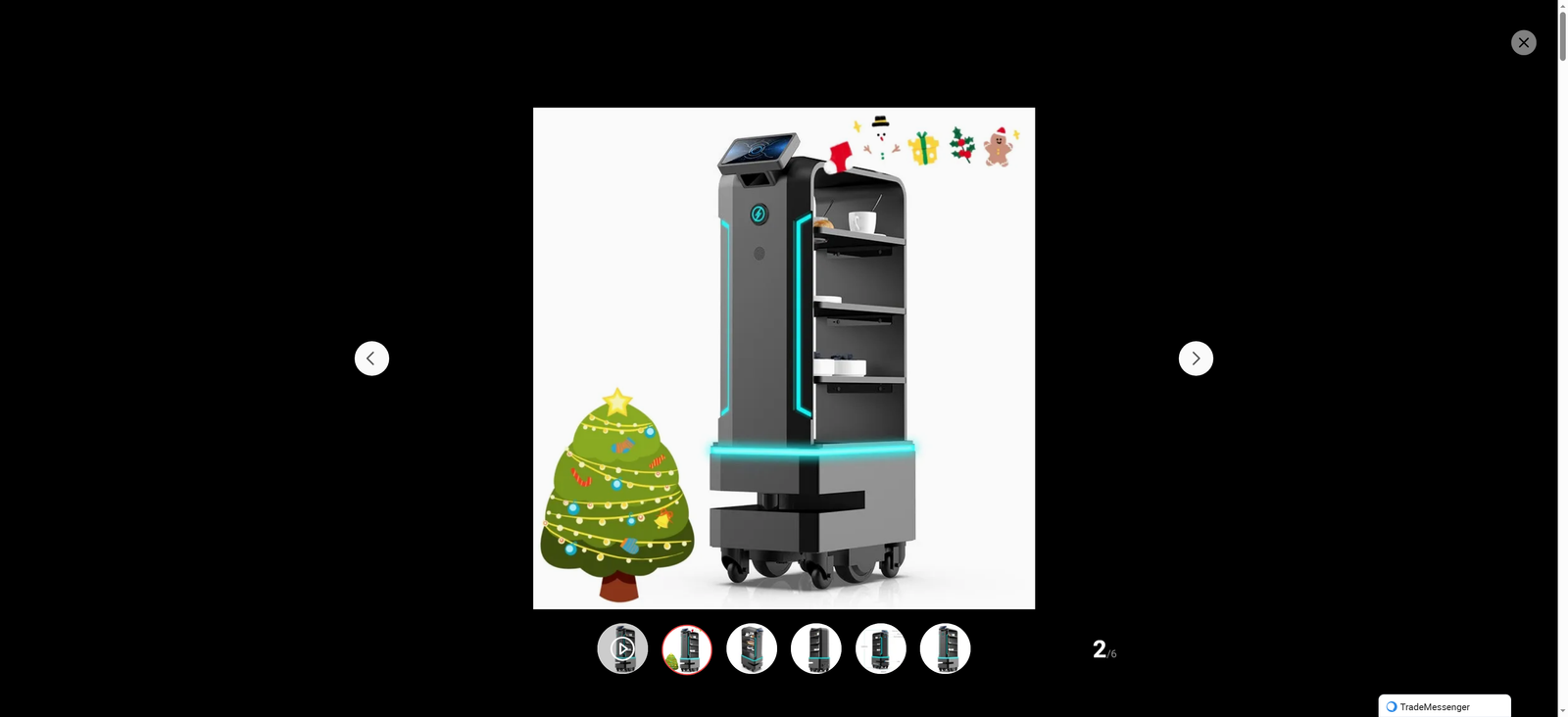
The core value of flash food delivery robots in high-end hotel restaurants lies in their excellent adaptability to multiple-table service scenarios. High-end hotel restaurants often have the characteristics of large space, complex layout, many private rooms and frequent peak dining periods. In such environments, manual service is often faced with problems such as delayed food delivery, easy confusion of orders and uneven service quality. Flash food delivery robots solve these pain points through systematic technical design. Equipped with high-precision laser radar and visual navigation modules, they can quickly map the restaurant environment, accurately identify obstacles such as tables, chairs and customers, and plan the optimal delivery route in real time. Even in the case of simultaneous service for dozens of tables, the robots can avoid mutual interference, ensure that each dish is delivered to the designated table within the specified time, and effectively improve the efficiency of multi-table concurrent service.
In addition to efficient delivery capabilities, flash food delivery robots also conform to the service positioning of high-end hotel restaurants and help enhance the overall customer experience. High-end catering pays attention to details and personalization. These robots are designed with a sense of high-end and fashion in appearance, which can be integrated with the luxurious decoration style of high-end hotels without appearing obtrusive. During the delivery process, the robots can realize intelligent interaction through voice broadcast and touch screen. For example, they can actively remind customers of the name and temperature of the dishes, and even answer simple catering consultation questions. This intelligent service method not only reduces the workload of waiters, allowing them to focus more on providing personalized services such as dish introduction and dining needs communication but also brings customers a novel and interesting dining experience, which helps to enhance the brand image of high-end hotels.
The stable operation of flash food delivery robots in multiple-table service scenarios also relies on powerful background technical support. The intelligent scheduling system behind the robots can realize real-time monitoring and unified management of multiple robots. The system can automatically allocate tasks according to the order quantity, table distribution and robot status, and adjust the delivery strategy dynamically. For example, when a new order is generated, the system can quickly assign the nearest idle robot to perform the delivery task; if a robot fails, the system can immediately transfer other robots to take over the task to ensure the continuity of service. At the same time, the background system can record detailed data such as delivery time, order completion rate and robot operation status, which provides data support for hotel managers to optimize the service process and adjust the operation strategy.
From the perspective of long-term development, flash food delivery robots will play a more important role in the multi-table service of high-end hotel restaurants. With the continuous progress of technologies such as artificial intelligence, Internet of Things and big data, the functions of these robots will be further upgraded. In the future, they may realize more intelligent functions such as precise recognition of customer preferences, automatic matching of dish recommendations and intelligent recycling of tableware. At the same time, with the continuous improvement of the maturity and cost performance of the technology, flash food delivery robots will be more widely used in high-end hotel restaurants, becoming an important part of the intelligent transformation of the hospitality industry.
In conclusion, flash food delivery robots suitable for multiple-table service in high-end hotel restaurants have significant advantages in improving service efficiency, enhancing customer experience and optimizing operation management. They not only meet the development needs of high-end catering for intelligence and refinement but also bring new development opportunities for the transformation and upgrading of the hospitality industry. With the continuous innovation and popularization of technology, these robots will surely become a new benchmark for service in high-end hotel restaurants, leading the new trend of intelligent catering service.