
The Rise of Service Robots: Transforming Fast Food, Hospitals, and Food Delivery Industries
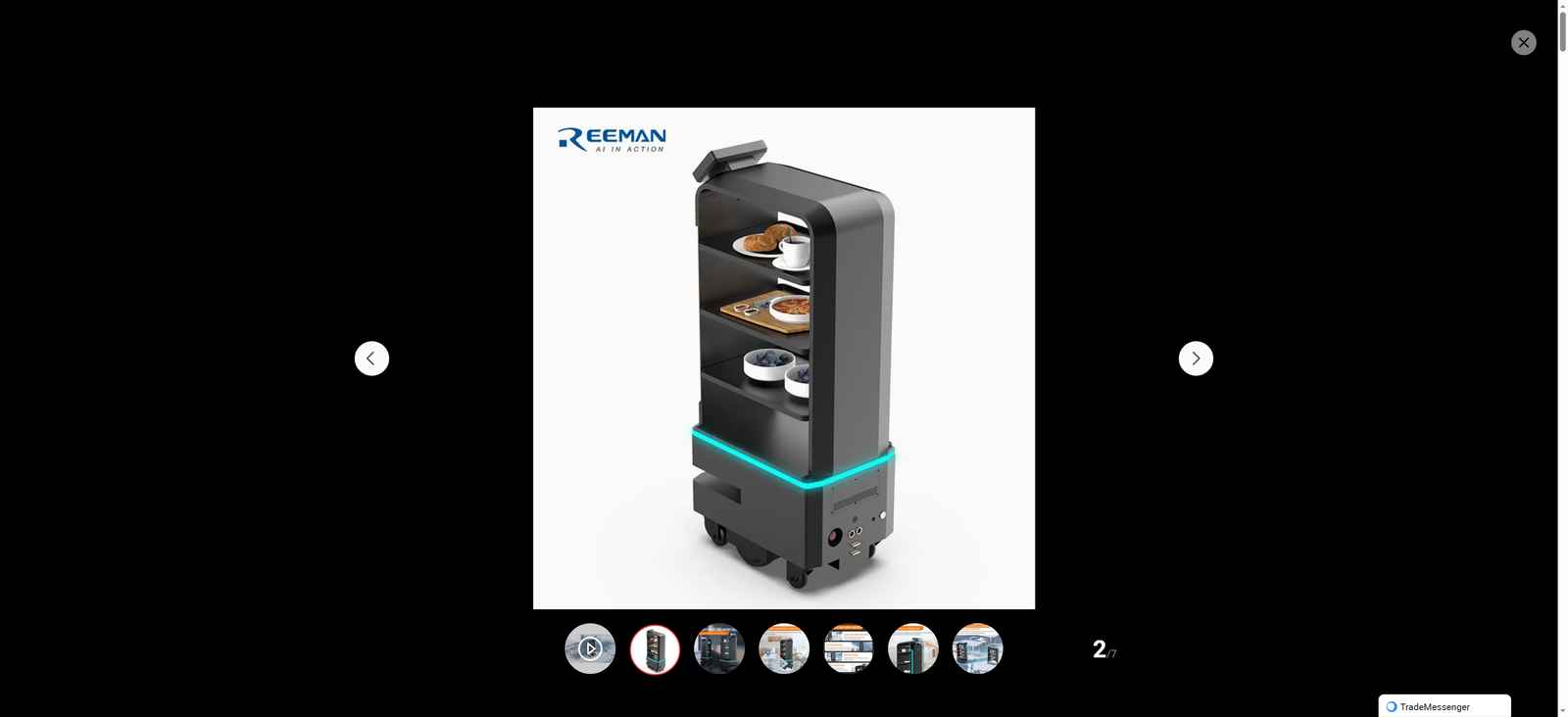
In an era driven by technological innovation, service robots have emerged as game-changers across multiple sectors, reshaping how businesses operate and enhancing efficiency, safety, and customer experience. Among the most in-demand solutions are fast food robot waiters, hospital delivery robots, and food delivery robots—each tailored to address the unique challenges of their respective industries. As the global market for service robots continues to expand, with projections showing significant growth in the coming decade, these robotic solutions are no longer a novelty but a practical investment for businesses seeking to stay competitive and adapt to evolving consumer needs.
Fast Food Robot Waiters: Revolutionizing Quick-Service Dining
The fast food industry thrives on speed, efficiency, and consistency—and fast food robot waiters are designed to amplify these core values. For businesses looking to streamline operations and reduce labor costs, fast food robot waiters for sale have become an increasingly popular choice, offering a reliable alternative to human staff for repetitive, time-consuming tasks. These robots are equipped with advanced AI navigation, sensor technology, and user-friendly interfaces, allowing them to move seamlessly through bustling dining areas, avoid obstacles, and interact with customers with precision.
Unlike human servers, fast food robot waiters do not experience fatigue, distractions, or fluctuations in performance, ensuring timely delivery of meals and reducing order errors. They can handle a range of tasks, from taking simple orders via touchscreen or voice recognition to delivering food and beverages to tables, and even assisting with clearing used dishes. This automation frees up human staff to focus on more personalized customer service, such as addressing special requests or resolving issues, thereby enhancing the overall dining experience. Additionally, these robots add a futuristic touch to fast food establishments, attracting tech-savvy customers and creating a unique selling point for businesses aiming to stand out in a crowded market. With models available in various sizes and configurations, businesses of all scales can find a fast food robot waiter that fits their space and operational needs, making it a flexible and cost-effective solution.
Hospital Delivery Robots: Enhancing Healthcare Logistics and Safety
In the healthcare sector, where accuracy, speed, and hygiene are critical, hospital delivery robots have emerged as indispensable tools, transforming院内 logistics and improving patient care. These specialized robots are designed to navigate the complex environment of hospitals—including corridors, elevators, and restricted areas—with precision, delivering essential items such as medications, medical supplies, test samples, and meals to patients and staff without human intervention.
One of the key advantages of hospital delivery robots is their ability to minimize human contact, reducing the risk of cross-contamination and enhancing infection control—especially crucial in post-pandemic healthcare settings. Equipped with temperature-controlled compartments, these robots can safely transport sensitive items like chemotherapy drugs or vaccines, maintaining optimal conditions throughout the delivery process. They also feature real-time tracking and traceability, allowing hospital staff to monitor the location of deliveries at all times and ensure timely arrival. By automating routine delivery tasks, hospital delivery robots free up nurses and other medical personnel from time-consuming logistics work, allowing them to focus on direct patient care. This not only improves operational efficiency but also reduces staff burnout and enhances the quality of healthcare services. From small clinics to large tertiary hospitals, these robots are becoming a standard fixture, offering a reliable and cost-effective solution to the challenges of healthcare logistics.
Food Delivery Robots: Reimagining Last-Mile Delivery
The food delivery industry has experienced exponential growth in recent years, driven by changing consumer habits and the rise of food delivery platforms. To meet the growing demand for fast, efficient, and contactless delivery, food delivery robots have become a key innovation, reimagining the last-mile delivery process and addressing the limitations of traditional human delivery services.
Food delivery robots are equipped with advanced AI and machine learning technologies, enabling them to optimize routes, avoid obstacles in real time, and adapt to changing urban environments. They are designed to handle short-distance deliveries—ideal for urban areas where traffic congestion and parking issues often delay human delivery drivers. These robots are also eco-friendly, with many models powered by electricity or solar energy, reducing carbon emissions and aligning with global sustainability goals. For food delivery platforms and restaurants, food delivery robots offer significant cost savings, as they eliminate the need for human delivery drivers and reduce labor costs by 40-60% compared to traditional delivery methods. They also improve delivery speed and reliability, reducing the risk of late or missing deliveries and enhancing customer satisfaction. With pilot programs already proving successful in cities around the world, food delivery robots are quickly becoming a mainstream solution, bridging the gap between restaurants and customers and transforming the future of food delivery.
The Future of Service Robots: Growth and Innovation
As technology continues to advance, the capabilities of fast food robot waiters, hospital delivery robots, and food delivery robots will only expand. The global market for these service robots is projected to grow at a rapid pace, driven by increasing demand for automation, rising labor costs, and growing awareness of the benefits of robotic solutions. Innovations such as 5G connectivity, multi-modal perception, and human-robot interaction will further enhance the performance and versatility of these robots, allowing them to adapt to even more complex scenarios.
For businesses, investing in these robotic solutions is not just a trend but a strategic decision to improve operational efficiency, reduce costs, and enhance customer and patient experience. Whether it’s a fast food restaurant looking to speed up service, a hospital aiming to improve logistics and safety, or a food delivery platform seeking to optimize last-mile delivery, there is a robotic solution tailored to meet these needs. As more businesses recognize the value of these robots, they will become an integral part of our daily lives, transforming industries and setting new standards for efficiency and convenience.
In conclusion, fast food robot waiters, hospital delivery robots, and food delivery robots are revolutionizing their respective industries, offering practical, efficient, and innovative solutions to long-standing challenges. With a growing market and continuous technological advancements, these service robots are poised to shape the future of business operations, making them a worthwhile investment for any organization looking to thrive in the digital age.