
Factory Vigil Inspection Patrol Robot for Automated Quality Safety Assurance From China
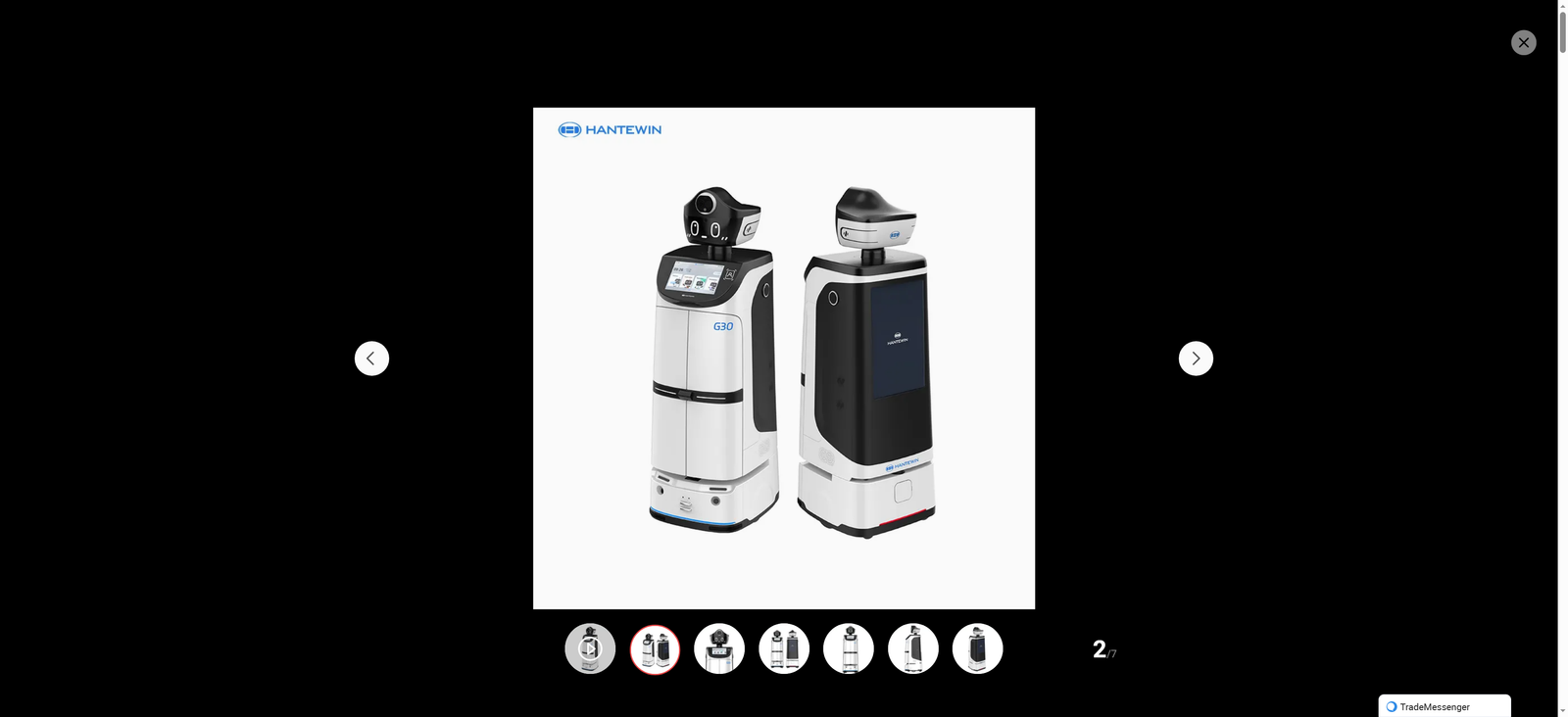
In the wave of global industrial intelligence, quality and safety assurance have become the core competitiveness of manufacturing enterprises. As a global leader in intelligent manufacturing, China has continuously innovated and broken through in the field of industrial inspection, and the factory vigil inspection patrol robot has emerged as a key equipment, injecting strong intelligent power into automated quality and safety assurance in factories around the world. This kind of high-tech equipment, which integrates multiple cutting-edge technologies, is gradually replacing traditional manual inspection, solving the pain points of low efficiency, high risk and poor accuracy in traditional quality and safety supervision, and becoming an indispensable "intelligent guard" for modern factories.
China's factory vigil inspection patrol robot is designed based on the actual needs of industrial production scenarios, with the core positioning of "full-process automation, all-round inspection and whole-chain safety assurance". Different from the single-function inspection equipment in the past, this kind of robot integrates advanced technologies such as artificial intelligence (AI), machine vision, infrared thermal imaging, laser radar and 5G communication, forming a comprehensive inspection system that can cover quality detection, safety hazard early warning, equipment status monitoring and other multiple links of the factory, realizing the organic combination of "vigilance, inspection and patrol" and building a solid barrier for factory quality and safety.
In terms of automated quality assurance, China's factory vigil inspection patrol robot has shown outstanding performance, which can accurately complete the detection tasks of various products and production links with its high-precision perception and intelligent analysis capabilities. Taking the industrial embodied quality inspection robot independently developed in China as an example, it adopts a "hand-eye-brain" collaborative technical architecture, which can simulate the flexible operation and judgment logic of human quality inspectors, and even surpass the manual level in some high-precision scenarios. The "eye" of the robot is composed of a multi-spectral perception system with three groups of cameras, which can realize large-field scanning and micron-level precise detection, and effectively identify defects of workpieces of different materials, complex curved surfaces and high reflectivity, such as scratches on mobile phone casings, tiny cracks on auto parts and burrs on motor stators. The "brain" is a self-developed AI platform based on a large number of industrial quality inspection data, which has the ability of small-sample migration between categories in the industry. It can guide identification through language description and realize multi-modal fusion detection, ensuring the accuracy and comprehensiveness of quality inspection even for non-standard defects. In the production line of 3C electronics, automobiles, semiconductors and other industries, this kind of robot can complete the detection of hundreds of workpieces per hour, with a detection accuracy of more than 99.9%, which not only greatly improves the efficiency of quality inspection, but also avoids the errors caused by manual visual fatigue and subjective judgment, ensuring the consistency of product quality.
In terms of safety assurance, the factory vigil inspection patrol robot has strong environmental adaptability and all-weather work capability, which can effectively solve the safety risks existing in manual inspection. In some harsh factory environments such as high temperature, high humidity, strong magnetism, dust and even explosion-proof requirements, the robot can operate stably through special protective design. For example, the explosion-proof wheeled inspection robot independently developed in China can work stably in high-temperature, humid and highly corrosive petrochemical plants, relying on its cooling system and sealed protective shell to ensure that core components are not affected by the environment. In the high-voltage power distribution room and rectifier room of aluminum factories, the track-type inspection robot can slide stably along the track, use infrared thermal imaging technology to conduct full-coverage temperature measurement of electrical equipment, and use high-definition cameras to capture the state of instruments and indicator lights in real time. Once abnormal temperature or equipment failure is found, it can immediately lock the problem point and transmit data and images back to the control platform in real time to issue an alarm, providing a key basis for emergency disposal. At the same time, the robot can work 24 hours a day without interruption, replacing manual work in dangerous areas such as high altitude, high voltage and flammable and explosive areas, fundamentally reducing the risk of safety accidents and protecting the personal safety of employees.
The intelligent and integrated design of China's factory vigil inspection patrol robot also brings great convenience to factory management and operation. The robot adopts advanced navigation technologies such as SLAM mapping and vision-inertial navigation, which can automatically build maps of the factory, plan patrol routes independently, avoid obstacles accurately, and adapt flexibly even if the factory layout changes. After completing the patrol task, it can automatically return to the charging room to complete automatic charging, realizing the whole process of unmanned operation from patrol, detection to charging. In terms of group deployment, multiple robots can be centrally managed through the cloud platform, realizing "one-machine training, group deployment". The inspection knowledge and data between robots can be quickly migrated, enabling enterprises to quickly deploy efficient quality and safety inspection capabilities in different factories and production lines, and greatly reducing the cost of intelligent transformation of enterprises. In addition, the robot's modular design allows flexible replacement of mechanical arms, fixtures, vision systems and algorithm modules according to actual needs, extending the service life of the equipment and adapting to the needs of product model replacement and production line upgrading.
With the continuous maturity of technology and the expansion of application scenarios, China's factory vigil inspection patrol robot has not only been widely applied in domestic factories, covering nearly 20 provinces in China, and used in petrochemical, aluminum smelting, machinery manufacturing,生物医药 and other fields, but also gradually entered the international market, winning wide recognition from global customers. From the petrochemical stations in Benin, Africa to the manufacturing workshops in Europe and Asia, China's factory vigil inspection patrol robots have shown excellent performance, injecting reliable "Made in China" intelligence into the quality and safety assurance of global factories. This not only reflects the continuous improvement of China's intelligent manufacturing level, but also promotes the transformation and upgrading of the global industrial quality and safety supervision model, helping enterprises in various countries reduce costs, improve efficiency and enhance core competitiveness.
Looking to the future, with the in-depth integration of technologies such as 5G, AI large models and edge computing, China's factory vigil inspection patrol robot will usher in a new round of upgrading. It will be more intelligent in perception, more flexible in operation and more comprehensive in function, and will gradually realize the integration of air-ground joint inspection with drones, and the remote guidance of experts with AR glasses, further expanding the application boundaries of automated quality and safety assurance in factories. As a powerful tool for industrial intelligent transformation, China's factory vigil inspection patrol robot will continue to adhere to the concept of innovation-driven, focus on the actual needs of global manufacturing enterprises, provide more high-quality, efficient and reliable automated quality and safety assurance solutions, and make greater contributions to the high-quality development of the global manufacturing industry.