
Environmental Protection Catering and Hotel Customized Commercial Service Delivery Robot: Empowering Green Operations in the Hospitality Industry
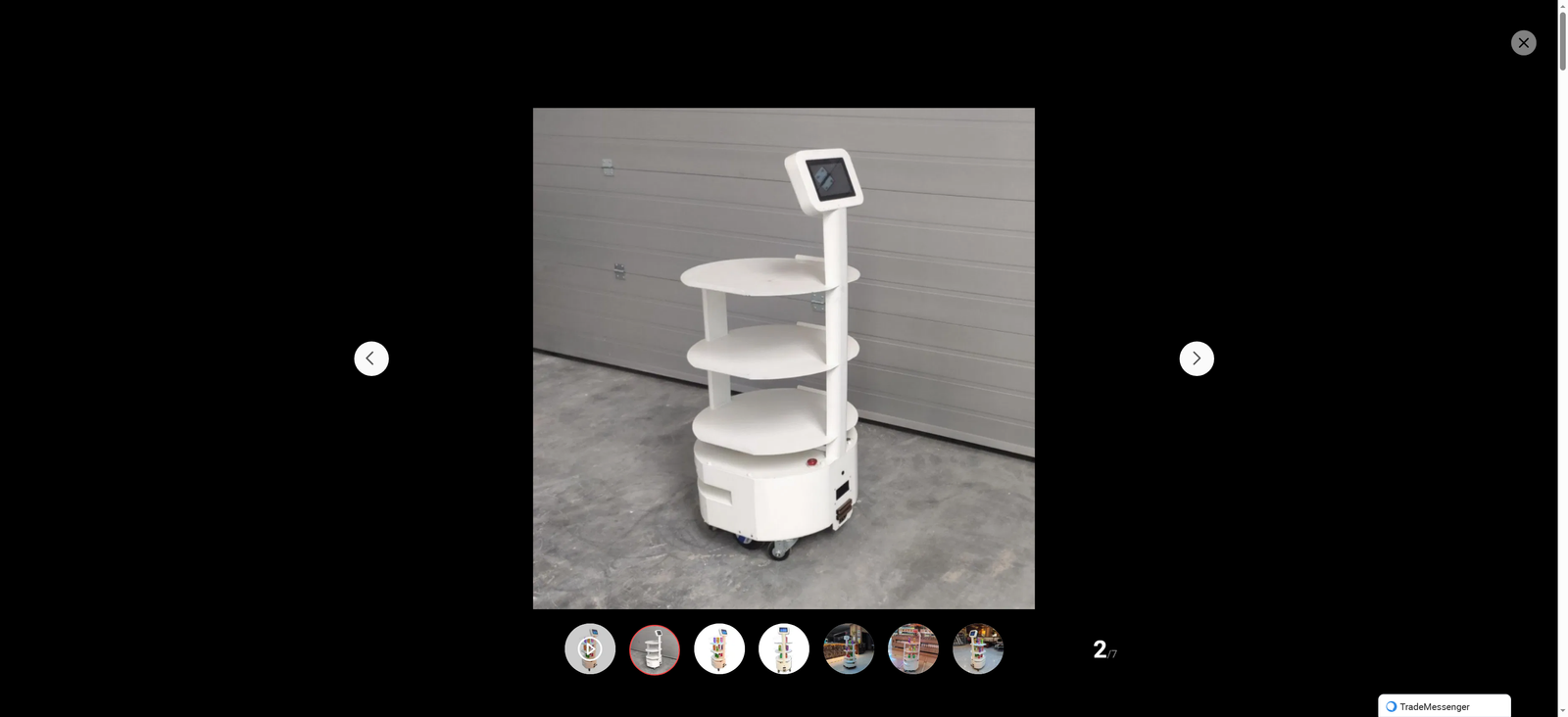
In the context of global carbon peaking and carbon neutrality goals, the catering and hotel industry, as a key field of service consumption, is facing the dual demands of upgrading service quality and practicing environmental protection responsibilities. Against this backdrop, the environmental protection catering and hotel customized commercial service delivery robot (hereinafter referred to as "green service robot") has emerged as a new force, integrating environmental protection technology, intelligent service and scenario customization. It not only solves the pain points of high labor costs, low service efficiency and difficult environmental protection supervision in the industry, but also opens up a new path for the green and intelligent transformation of the catering and hotel industry.
The green service robot is not a simple combination of "robot environmental protection materials", but a systematic innovation based on the deep needs of catering and hotel scenarios. Different from ordinary commercial robots, it takes "environmental protection" as the core design concept and "customization" as the service criterion, realizing the organic integration of functional practicality, environmental protection value and scenario adaptability. From the selection of materials to the design of energy consumption, from the optimization of service processes to the recycling of equipment, every link reflects the concept of green development, which is precisely the core connotation of the green service robot.
In terms of environmental protection design, green service robots have achieved breakthroughs in multiple dimensions to reduce carbon emissions and resource consumption. Firstly, in material selection, they mainly adopt recyclable, degradable and low-pollution environmental protection materials, such as food-grade degradable plastic, recyclable aluminum alloy and water-based environmentally friendly coatings, which fundamentally reduce the environmental pollution caused by plastic waste and harmful coatings. Compared with traditional robots using non-degradable materials, the environmental protection materials used in green service robots can reduce more than 60% of solid waste pollution during the whole life cycle. Secondly, in energy consumption control, green service robots are equipped with high-efficiency energy-saving batteries and intelligent energy management systems. They can automatically adjust energy consumption according to service intensity, such as reducing power output during idle periods and automatically entering sleep mode when not in use. At the same time, some models support solar charging, which further improves energy utilization efficiency and reduces dependence on traditional electric energy. Data shows that the energy consumption of green service robots is about 30% lower than that of ordinary commercial robots, and the carbon emission per unit service time is reduced by nearly 40%.
The customization feature of green service robots makes it highly adaptable to the diverse needs of catering and hotel scenarios, and maximizes the role of green operations. In the catering industry, different types of catering institutions have different service needs: high-end restaurants pay attention to service refinement and experience sense, while fast-food restaurants focus on service efficiency and order accuracy. Green service robots can be customized according to these needs: for high-end restaurants, they can be equipped with silent driving systems, elegant appearance designs and intelligent voice interaction functions, which can accurately deliver dishes and drinks without disturbing the dining atmosphere of customers; for fast-food restaurants, they can be designed with large-capacity storage compartments, fast navigation and positioning functions, which can realize batch delivery of meals, reduce the number of manual deliveries, and at the same time avoid food waste caused by manual mistakes. In addition, the catering robot can also be connected with the restaurant's intelligent ordering system to automatically receive orders, distribute meals and settle accounts, forming a closed-loop service, which not only improves service efficiency, but also reduces the use of paper menus and receipts, and practices the concept of paperless operation.
In the hotel industry, green service robots show more diversified application value through customization. From the lobby reception to the guest room service, from the laundry delivery to the garbage recycling, green service robots can undertake a variety of tedious and repetitive work. For example, the guest room delivery robot can be customized with a temperature-controlled compartment to deliver meals, fruits, drinks and other items to the guest room door accurately according to the guest's order, avoiding the contact between hotel staff and guests and improving the safety of service; the garbage classification and recycling robot can be equipped with intelligent identification and classification functions, which can automatically identify and classify the garbage in the public areas of the hotel, guide guests to carry out garbage classification, and reduce the labor pressure of cleaning staff and the difficulty of garbage treatment. In addition, the hotel can also customize the appearance and function of the robot according to its own positioning and style. For example, the theme hotel can design the robot into a style consistent with the theme, which not only undertakes the service function, but also becomes a part of the hotel's cultural display, improving the guest's experience sense while realizing green service.
The popularization and application of green service robots not only brings direct environmental protection benefits and economic benefits to catering and hotel enterprises, but also promotes the overall upgrading of the industry's green development level. From the perspective of economic benefits, green service robots can replace a large number of manual labor in the long run, reducing the labor cost, training cost and management cost of enterprises. For example, a medium-sized hotel can reduce 5-8 cleaning and service staff after introducing 3-5 green service robots, and the annual cost saving can reach hundreds of thousands of yuan. At the same time, the energy-saving and material-saving design of the robot can also reduce the operation cost of enterprises, such as reducing the cost of electricity, water and garbage treatment. From the perspective of social benefits, green service robots set a model for the green transformation of the service industry, guiding more enterprises to pay attention to environmental protection and practice social responsibilities. At the same time, the intelligent service of robots also improves the overall service level of the industry, enhances customer satisfaction and loyalty, and promotes the high-quality development of the catering and hotel industry.
Of course, the development of green service robots is still in the growth stage, and there are still some problems to be solved, such as high initial investment cost, imperfect after-sales service system, and limited adaptability to complex scenarios. However, with the continuous progress of science and technology, the continuous strengthening of national environmental protection policies, and the increasing demand of enterprises for green operations, the green service robot industry will surely usher in a broader development space. In the future, with the iteration of technology, green service robots will be more intelligent, low-cost and environmentally friendly. They will not only realize more refined customization services, but also realize interconnection and collaborative operation with other intelligent equipment in catering and hotels, building a full-scenario green intelligent service system.
In conclusion, the environmental protection catering and hotel customized commercial service delivery robot is an important carrier of the integration of green development and intelligent service in the catering and hotel industry. It is not only a tool to improve service efficiency and reduce operation costs, but also a practice of environmental protection responsibilities and a promoter of industry upgrading. With the continuous popularization and application of green service robots, the catering and hotel industry will surely take a more solid step on the road of green and intelligent development, contributing more strength to the realization of the global carbon neutrality goal and the construction of a green and low-carbon society.