
Efficient Automatic Unmanned Assistant Intelligent Food Delivery Service Robot for Hotel: Redefining the New Paradigm of Hotel Catering Service
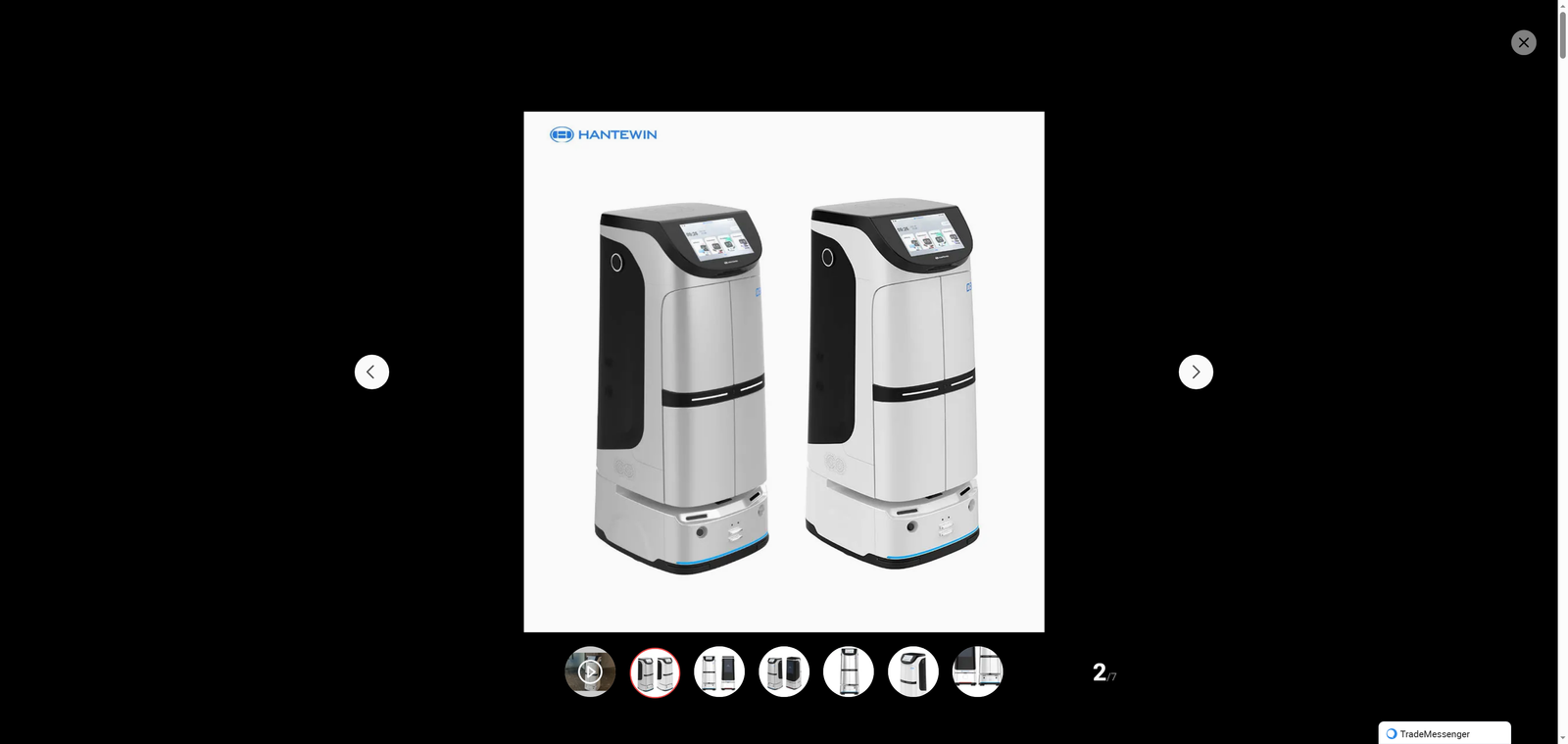
With the rapid development of artificial intelligence, Internet of Things and automatic control technology, the hotel industry, as a benchmark field of the service industry, is undergoing a profound digital transformation. Among them, the efficient automatic unmanned assistant intelligent food delivery service robot (hereinafter referred to as "hotel food delivery robot") has gradually become a core intelligent device in hotel operations, breaking the limitations of traditional manual food delivery, optimizing service processes, and injecting new vitality into the high-quality development of the hotel industry. This article will deeply explore the technical characteristics, application value and future development trend of hotel food delivery robots, and interpret how they reshape the new ecology of hotel catering services.
The hotel food delivery robot is a comprehensive intelligent equipment integrating multiple cutting-edge technologies such as autonomous navigation, obstacle avoidance, intelligent scheduling and human-computer interaction. Its core advantage lies in "efficiency, intelligence and unmanned operation", which fundamentally solves the pain points of traditional hotel food delivery services such as high labor cost, low delivery efficiency and uneven service quality. In terms of technical support, the robot is equipped with advanced laser radar, visual sensors and ultrasonic sensors, which can accurately perceive the hotel's internal environment, including corridors, elevators, corners and obstacles, and realize high-precision autonomous positioning and path planning. Even in complex scenarios with dense pedestrians and frequent elevator switching, it can flexibly adjust its route, avoid obstacles in real time, and ensure that food is delivered to the designated room or dining area accurately and on time.
At the same time, the intelligent scheduling system of the hotel food delivery robot has become the "brain" of its efficient operation. Through the connection with the hotel's PMS (Property Management System) and catering order system, the robot can automatically receive order information, classify and sort orders according to factors such as room number, meal type and delivery urgency, and formulate the optimal delivery plan. For example, when multiple orders are generated at the same time, the system can reasonably allocate robot resources, avoid route conflicts, and maximize delivery efficiency. In addition, the robot is also equipped with a smart food box with constant temperature and anti-spill functions, which can effectively maintain the temperature and taste of food, ensuring that customers can enjoy high-quality catering services even when the hotel is in peak business hours.
The application of hotel food delivery robots has brought a win-win situation for hotels and customers, and its practical value is increasingly prominent. For hotels, the first is to reduce labor costs significantly. Traditional hotel food delivery usually requires a large number of waiters to be on duty, especially during breakfast, lunch and dinner peaks, which often requires overtime work to meet the service demand. The introduction of food delivery robots can replace most of the manual delivery work, reducing the hotel's labor recruitment, training and management costs, and improving the overall operation efficiency. Secondly, it can standardize the service process and improve service quality. Unlike manual services which are easily affected by factors such as mood, physical strength and proficiency, robots can provide standardized and consistent delivery services 24 hours a day, avoiding problems such as wrong delivery, delayed delivery and missed delivery, and enhancing customer satisfaction and loyalty. Finally, it can create a characteristic intelligent brand image. In the current hotel industry where homogenization competition is fierce, intelligent equipment such as food delivery robots has become a new "business card" for hotels. It can not only attract young customers who pursue fashion and intelligence, but also enhance the hotel's market competitiveness and brand influence.
For customers, the hotel food delivery robot brings a more convenient, fast and private catering experience. When customers need to order food in the room, they only need to place an order through the hotel's mobile app or in-room control panel, and the robot can deliver the food to the door of the room in a short time. During the delivery process, customers can check the real-time location and delivery progress of the robot through the app, which avoids the trouble of waiting for a long time. In addition, the robot's human-computer interaction function is also very user-friendly. It can realize voice reminders, automatic door opening and other operations, and even carry out simple voice communication with customers, bringing a more intimate service experience. At the same time, the unmanned delivery mode also reduces direct contact between people, which is more in line with the health and safety needs of customers in the post-epidemic era, and improves the sense of security of customers during their stay.
Although the hotel food delivery robot has achieved remarkable results in practical application, with the continuous upgrading of market demand and technological progress, it still has a broad space for development in the future. In terms of technological iteration, the future food delivery robot will be more intelligent and humanized. On the one hand, with the development of big data and artificial intelligence technology, the robot will have the ability of user preference analysis. It can record the customer's dining habits, taste preferences and other information, and provide personalized catering recommendations and delivery services for customers. On the other hand, the robot's movement performance and environmental adaptability will be further improved. It can adapt to more complex hotel layouts, such as stairs, narrow corridors and other scenarios, and even realize multi-floor delivery without relying on elevators. In addition, the integration of multi-functional modules will become a development trend. Future food delivery robots may integrate functions such as meal recycling, laundry delivery and information consultation, becoming a comprehensive intelligent service terminal in hotels, and further enriching the service content of hotels.
In terms of industry application, the popularization of hotel food delivery robots will be further accelerated. At present, most of the robots are applied in high-end hotels. In the future, with the reduction of production costs and the maturity of technology, middle and low-end hotels, boutique hotels and other types of hotels will also gradually introduce food delivery robots, forming a full-scenario application pattern. At the same time, the cross-border integration of robots will be more in-depth. For example, it will realize seamless connection with catering enterprises, takeaway platforms and other institutions, expand the source of hotel catering orders, and form a more complete intelligent service chain. In addition, the standardization and industrialization of hotel food delivery robots will also be gradually improved. Relevant national departments and industry associations will formulate unified technical standards and service specifications, guiding the healthy and orderly development of the industry.
It is undeniable that the popularization of hotel food delivery robots will also bring certain challenges, such as the maintenance of equipment, the update of technology and the transformation of the employment structure of hotel employees. However, from the perspective of the long-term development of the hotel industry, the advantages of intelligent transformation are far greater than the challenges. Hotels need to actively respond to the trend of technological development, strengthen the training of employees, improve their ability to cooperate with intelligent equipment, and realize the organic combination of human services and intelligent services. At the same time, robot manufacturers need to continuously carry out technological innovation, optimize product performance, and provide more suitable intelligent solutions for hotels of different types and scales.
In conclusion, the efficient automatic unmanned assistant intelligent food delivery service robot is not only a technological innovation product, but also a key force promoting the transformation and upgrading of the hotel industry. It has redefined the mode of hotel catering service with its efficient, intelligent and humanized characteristics, bringing tangible benefits to hotels and customers. With the continuous progress of technology and the continuous expansion of application scenarios, hotel food delivery robots will play a more important role in the future, helping the hotel industry move towards a more intelligent, efficient and high-quality development path, and creating a better service experience for global travelers.