
The New Era of Hotel Services: Durable Autonomous Delivery Robots Reshape Efficiency and Experience
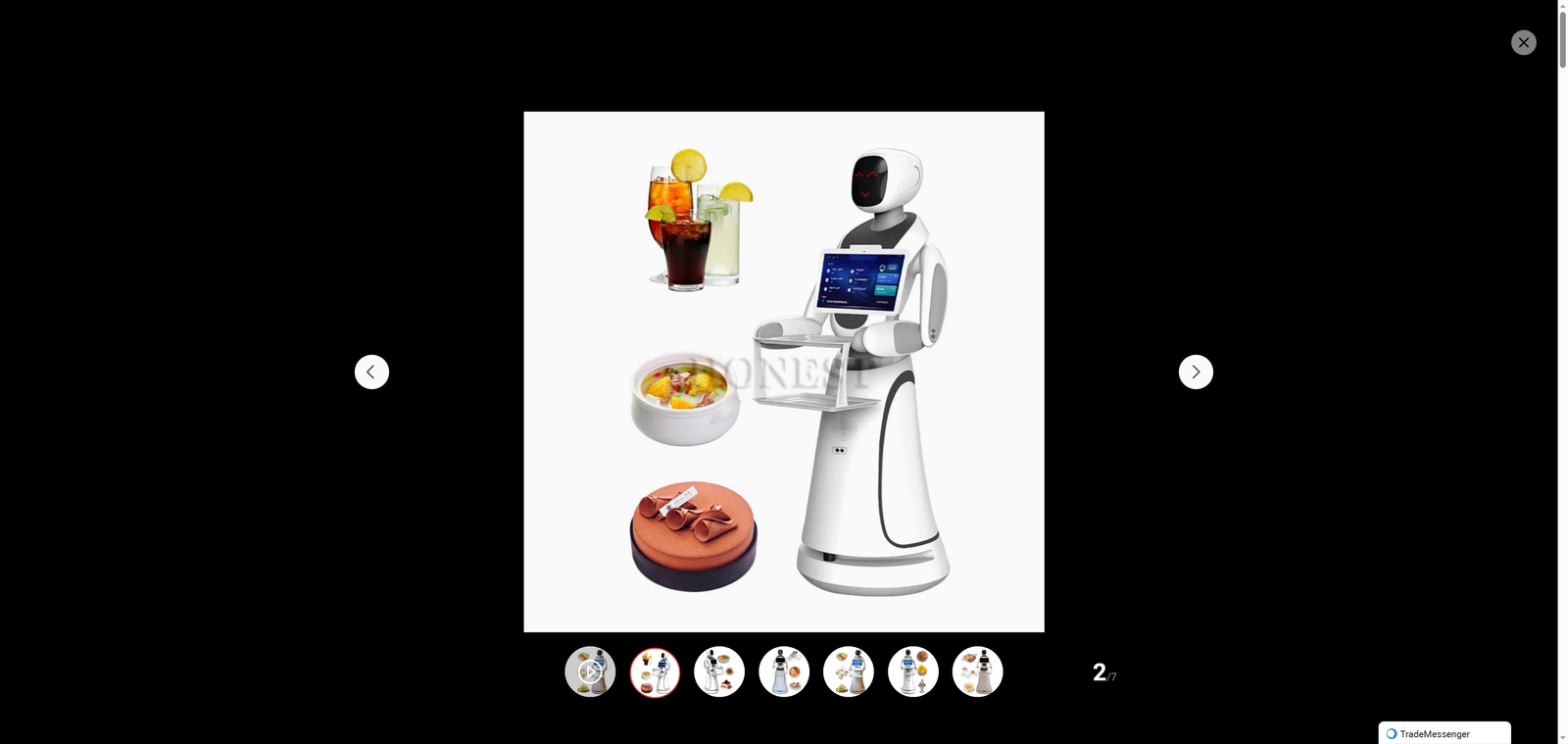
With the accelerated digital transformation of the hospitality industry, intelligent service solutions have become a key driving force for hotels to enhance operational efficiency and customer experience. Among them, durable autonomous hotel delivery robots, as a representative of intelligent service robots, have gradually moved from concept to practical application, breaking through the limitations of traditional manual services and injecting new vitality into the hotel industry. This article will explore the core value, technical characteristics of durable autonomous hotel delivery robots and the pricing logic behind service robots, revealing how they are reshaping the new pattern of hotel services.
Durability and autonomy are the two core labels of hotel delivery robots, and they are also the key factors for their ability to adapt to the complex and high-frequency service scenarios of hotels. Unlike ordinary service robots, hotel delivery robots need to face long hours of continuous operation, frequent door opening and closing, elevator taking, and contact with different guests and environments every day. Therefore, durability has become a rigid demand for such robots. High-quality robot bodies are usually made of wear-resistant, anti-collision and corrosion-resistant materials, which can withstand the test of long-term high-intensity work; optimized internal structure design ensures the stability of core components such as batteries and navigation modules, reducing failure rates and maintenance costs. For hotels, a durable delivery robot can not only extend the service life, but also avoid service interruptions caused by robot failures, ensuring the continuity and stability of the service process.
Autonomy is another core advantage of hotel delivery robots, which is mainly reflected in intelligent navigation, autonomous obstacle avoidance and independent task execution. With the support of advanced technologies such as SLAM (Simultaneous Localization and Mapping), laser radar and visual sensors, intelligent robots can quickly build a map of the hotel environment, accurately locate their own position, and plan the optimal delivery route in real time. Whether it is a narrow corridor, a suddenly appearing guest, or a moving elevator, the robot can flexibly avoid obstacles, smoothly complete the elevator call and ride, and accurately deliver items to the designated room door. This autonomous service mode not only frees hotel service personnel from tedious and repetitive delivery work (such as delivering towels, mineral water, takeaways, express delivery, etc.), but also realizes 24-hour uninterrupted service. Guests no longer need to wait for manual delivery, and can receive the required items in a timely manner at any time, which greatly improves the efficiency of service and guest satisfaction.
As an important part of intelligent service robots, the pricing of hotel delivery robots has always been the focus of attention of hotel operators when making purchasing decisions. Unlike consumer-grade robots, service robots for commercial scenarios such as hotels have higher requirements for performance, stability and after-sales service, so their pricing is affected by multiple factors and shows a relatively obvious hierarchical difference.
First of all, core technical configuration is the primary factor determining the price of service robots. Robots equipped with high-precision laser radar, advanced navigation algorithms and high-capacity long-life batteries usually have higher positioning accuracy, better obstacle avoidance performance and longer battery life, and their prices are relatively higher, generally ranging from 30,000 to 80,000 US dollars. Such robots are more suitable for high-end hotels, large-scale resorts and other scenarios with high service quality requirements and complex environments. On the contrary, robots with basic navigation functions and ordinary configuration have lower costs, and their prices are usually between 15,000 and 30,000 US dollars, which are more in line with the budget needs of mid-range hotels, boutique hotels and other institutions.
Secondly, durability and after-sales service also have a significant impact on pricing. Robots with better durability (using high-quality materials and mature structural design) usually have higher production costs, but they can bring lower maintenance costs and longer service life to hotels in the long run, so their pricing will be appropriately higher. At the same time, perfect after-sales service (such as on-site maintenance, technical support, software upgrade services, etc.) is also an important part of the service robot price. Reputable robot manufacturers will include after-sales service into the overall solution, which also leads to a certain increase in the product price, but it can effectively solve the worries of hotel operators in the process of use.
In addition, functional customization and brand influence will also affect the price of service robots. Some high-end hotels may need to customize robot functions according to their own service characteristics, such as adding multilingual voice interaction, guest information inquiry, room control and other functions. Customized services will increase the R&D and production costs of robots, thus pushing up the price. Well-known brands with strong technical strength and market reputation usually have higher brand premiums, and their products are more trusted by hotel operators, so their prices are also higher than those of little-known brands.
It is worth noting that although the initial purchase cost of hotel delivery robots is relatively high, from the perspective of long-term operation, they can bring significant cost savings to hotels. A delivery robot can replace 1-2 full-time service personnel, reducing the hotel's labor costs (salary, social security, training, etc.) by a large margin; at the same time, the robot's efficient service can reduce guest complaints caused by manual mistakes and improve the hotel's reputation and occupancy rate. According to relevant data, hotels that use delivery robots can recover the initial investment in 1-2 years on average, and obtain long-term economic benefits and brand value enhancement.
With the continuous progress of artificial intelligence, sensor and battery technology, durable autonomous hotel delivery robots will show a more diversified development trend in the future. On the one hand, the technical level will continue to improve, and the navigation accuracy, obstacle avoidance ability and battery life will be further optimized, making the robot more adaptable to complex hotel environments; on the other hand, the functional scope will continue to expand, from simple item delivery to integrating multiple services such as front desk reception, guide, cleaning and disinfection, becoming a comprehensive intelligent service terminal. In terms of pricing, with the expansion of the market scale of service robots and the maturity of production technology, the cost of robots will gradually decrease, and the price will become more civilian, allowing more hotels to enjoy the dividends of intelligent services.
In conclusion, durable autonomous hotel delivery robots, as an important carrier of intelligent transformation in the hotel industry, are changing the traditional service mode with their unique advantages of durability, autonomy and high efficiency. For hotel operators, choosing a suitable service robot according to their own needs and budget is not only an investment in improving service quality and operational efficiency, but also a strategic layout to adapt to the development trend of the industry. In the near future, with the widespread application of intelligent robots, the hotel industry will usher in a new era of more efficient, high-quality and intelligent services, bringing a better experience to guests and creating more value for hotels.